



Antique Fire Back
An antique fire back protects the masonry behind a hearth while radiating heat back into the room.
Antique Fire Back
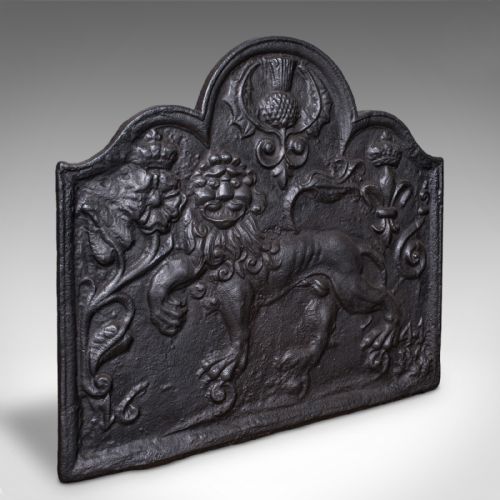
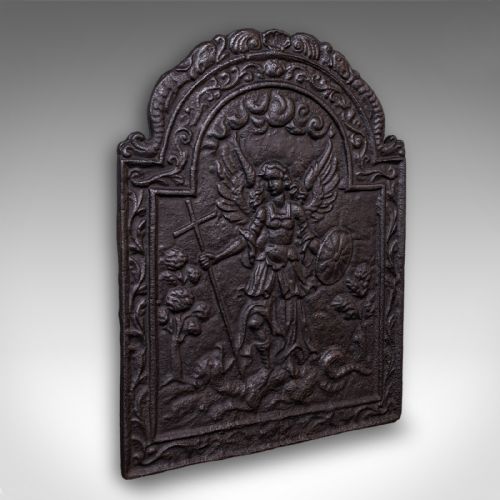
An antique fire back sits at the rear of an open fireplace, serving both a functional and a decorative role. Buyers encounter heavy iron plates designed to shield the chimney breast from intense heat while throwing warmth forward into the living space.
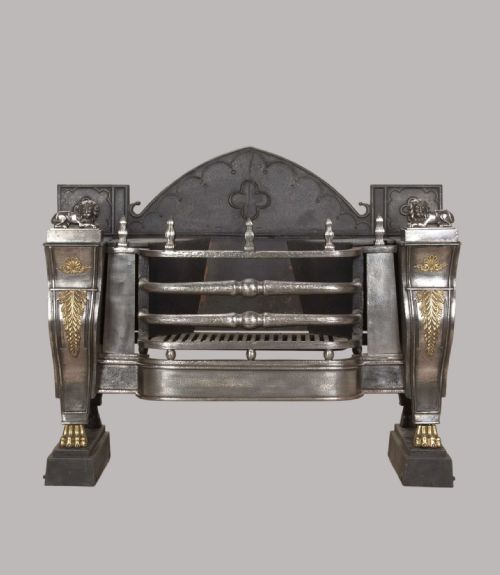
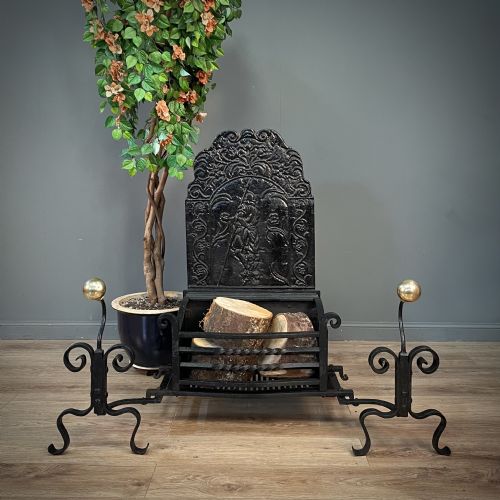
The pieces appearing on this page span the Victorian era, the nineteenth century, and the Georgian period, alongside occasional twentieth-century examples. Many take the form of flat or arch-topped cast iron panels, while others arrive combined with grates, fire baskets, and andirons.
Origins lean heavily toward English foundries, though continental pieces such as French and German castings occasionally surface. Decorative schemes draw on historical revivals, featuring heraldic motifs, royal crests, and classical relief work.
Distinctions in Craft and Casting
Quality rests in the crispness of the casting and the depth of the relief work. Finer examples display sharp, well-defined heraldic details and clean edges from carefully prepared moulds, whereas lesser pieces suffer from soft, muddy surface textures.
Weight and thickness further separate standard utilitarian plates from superior decorative commissions. Substantial iron thickness ensured greater durability against the repeated thermal shock of open coal and wood fires.
Antique Fire Back Retail Price Guide 2026
Typical asking prices for fire back among the pieces listed under this phrase on Sellingantiques today, from the lower quarter to the upper quarter. They describe what is for sale here now, not the wider market.
Some nineteenth-century foundries cast domestic hearth plates with unexpected subjects, including military crests and Da Vinci's Last Supper.
The Antique Fire Back Glossary
- Fire back
- A heavy metal plate placed at the back of a fireplace to protect the wall and reflect heat. These panels often feature decorative relief moulding.
- Fire basket
- An open metal container designed to hold solid fuel within a hearth. They frequently appear paired with a matching fire back.
- Andirons
- Horizontal metal bars supported by vertical pillars placed on the hearth to hold logs. They are often used alongside a fire back and grate.
- Reflector
- A secondary term historically applied to fire backs for their ability to throw warmth back into the room. This description appears frequently in older English listings.
- Relief
- Sculptural projection from a flat background surface. Foundry workers achieved this effect by pressing wooden or metal patterns into the moulding sand.
Antique Fire Back: Frequently Asked Questions
How do I choose the right size?
Measure the height and width of your fireplace opening carefully before selecting a plate. Ensure the back fits comfortably against the rear wall without obstructing grates or andirons.
Weight is another practical consideration for installation. Heavier iron plates require adequate hearth support and careful positioning against the masonry.
How do I clean an iron fire back?
Remove soot and ash gently using a soft brush or dry cloth. Avoid harsh chemical cleaners that can strip the historic surface finish of the iron.
Light applications of grate polish or oil help maintain the dark patina. Regular maintenance prevents surface rust from forming in damp unheated rooms.
What do heraldic motifs signify?
Coat of arms and royal crests reflect historical revival styles popular during the nineteenth century. Foundries frequently copied earlier Tudor and Stuart designs for Victorian homes.
These decorative elements do not necessarily indicate true antiquity. Many ornate armorial plates date from the Victorian period rather than the seventeenth century.