
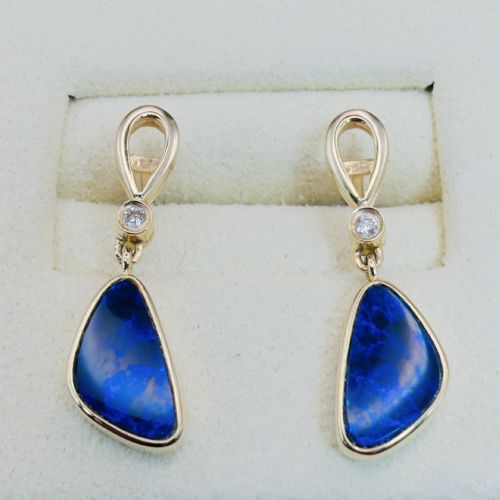
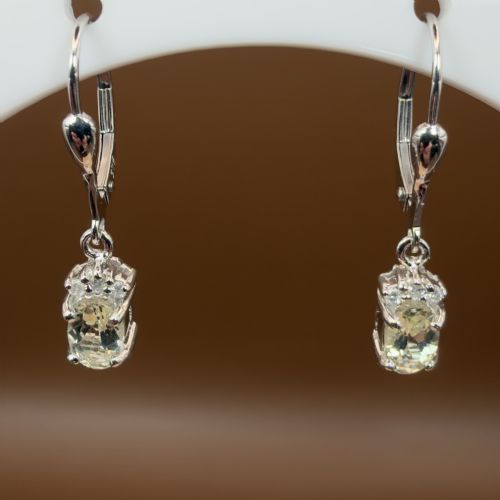
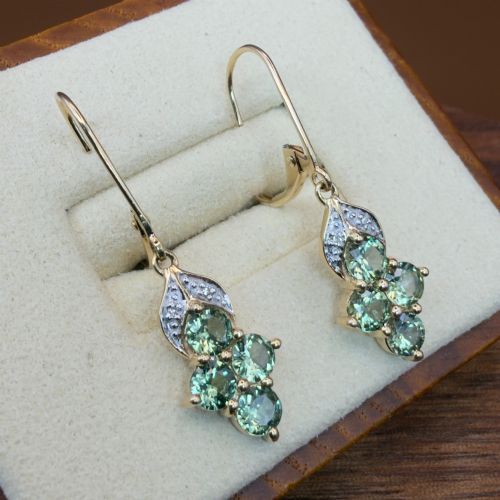
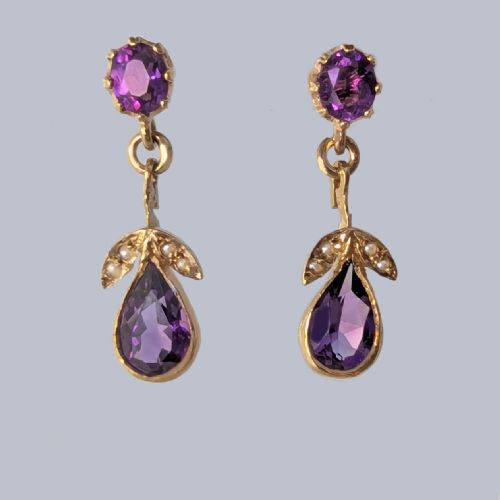


Antique Fine Drop Earrings
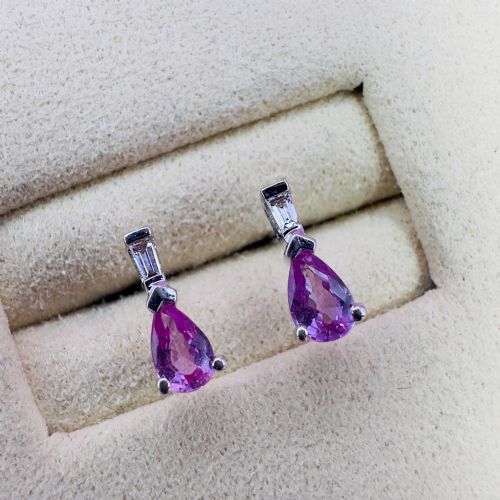
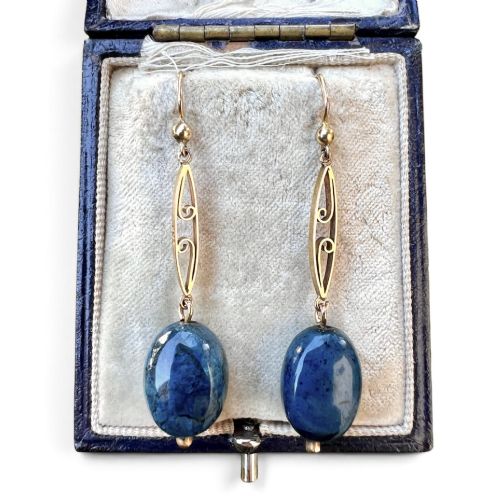
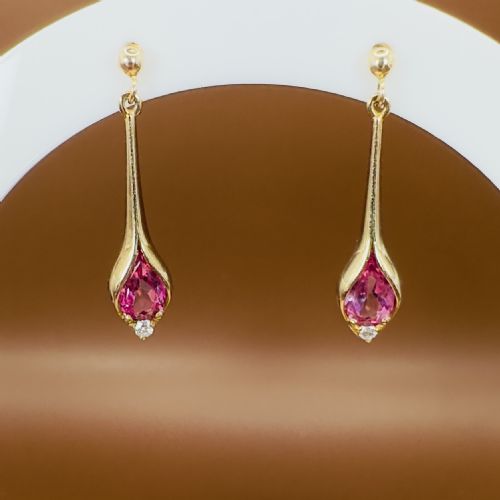
These antique fine drop earrings span Victorian, Edwardian and Art Deco periods, bringing together diamonds, platinum, gold and natural pearls to move gracefully with the wearer.
Antique Fine Drop Earrings
Antique fine drop earrings suspend gemstones or pearls below the earlobe, catching the light with every turn of the head. When searching for antique fine drop earrings, collectors encounter forms ranging from delicate Edwardian platinum strands to geometric Art Deco platinum and diamond clusters.
The selection on this page draws heavily from Victorian, Edwardian and Art Deco periods, alongside mid-century interpretations. Pieces appear in 9ct gold, 15ct yellow gold, 18ct white gold, and platinum, frequently set with diamonds, sapphires, emeralds, pearls and coral.
Makers utilised diverse stones such as tourmaline, aquamarine, amethyst and turquoise to create drops that swing from secure fittings. These items often reflect the distinct aesthetic movements of their decade, from intricate Victorian foliate mounts to clean lines of the 1920s and 1930s.
How they were made
Craftsmen shaped precious metals including platinum, 18ct white gold and various grades of yellow gold to form the drop structures and settings. Stones such as old cut diamonds, sapphires and emeralds were hand-set into detailed mounts, often complemented by silver foliate or enamel work.
Artisans combined natural pearls, baroque pearls and coral with calibrated gemstones, soldering links and hinges to permit fluid movement. Pierced ear fittings and screw backs developed alongside the changing fashions of the late nineteenth and early twentieth centuries.
Current listings feature platinum and various gold purities, including 9ct, 14ct, 15ct and 18ct white and yellow gold.
What varies in quality
Quality rests upon the proportion of the drop, the precision of the metalwork, and the selection of matched stones. Superior pairs display meticulous piercing, crisp geometric lines in Art Deco items, or delicate wirework in Edwardian examples.
The choice of gemstones dictates distinction, with fine saturated emeralds, clean pink tourmalines and well-matched old cut diamonds elevating a pair. Original configuration and intact settings also separate exceptional survivals from altered pieces.
The Antique Fine Drop Earrings Glossary
- Drop earrings
- Earrings designed to hang below the earlobe rather than sit directly on the ear. They incorporate a fixed top section with a suspended element that moves independently.
- Old cut diamond
- A hand-faceted diamond cut before modern machinery standardised proportions. These stones typically exhibit smaller tables and open culets that catch candlelight warmly.
- Platinum
- A dense, durable white metal utilised extensively in Edwardian and Art Deco jewellery. Its strength permitted exceptionally fine claw settings and delicate pierced work without risking stone loss.
- Natural pearl
- A pearl formed organically in an oyster without human intervention. They are valued for their organic lustre and subtle variations in shape and tone.
- Art Deco
- A design style spanning the 1920s and 1930s prioritising geometric symmetry, linear forms and contrasting materials. Pieces from this period frequently pair platinum with diamonds, emeralds, sapphires or onyx.
Antique Fine Drop Earrings: Frequently Asked Questions
How do I care for antique pearl earrings?
Pearls are organic and sensitive to acids, cosmetics and perfumes. Wipe them gently with a soft cloth after wearing and store them separately to avoid scratching.
Keep them away from ultrasonic cleaners and harsh chemical dips. Restringing may be necessary over time if the original silk thread weakens.
What is the difference between Edwardian and Art Deco drop earrings?
Edwardian drop earrings utilise platinum and yellow gold with lace-like pierced motifs, garlands and bows. They favour soft white diamonds and natural pearls.
Art Deco earrings introduce sharp geometric shapes, calibrated coloured gemstones like emeralds and sapphires, and streamlined platinum mountings.
Can antique screw back earrings be converted?
Many pairs designed for non-pierced ears feature screw backs or clip mechanisms. Jewellers can often convert these to post and butterfly fittings.
Conversion depends on the original construction of the top section and whether altering it risks damaging maker's marks or delicate metalwork.
How can I tell if a gemstone is natural?
Examination under magnification reveals internal inclusions characteristic of natural origin, such as mineral crystals in emeralds or growth lines in sapphires. Gemmological testing confirms treatment and provenance.
Many antique pieces feature stones cut by hand, displaying slight irregularities unique to period polishing techniques.