


Antique Figurine Table Lamp
These antique figurine table lamps combine sculptural figures with functional illumination, offering a striking focal point for any room.
Antique Figurine Table Lamp
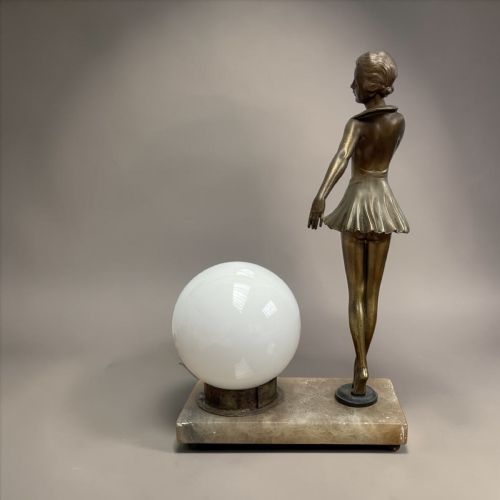
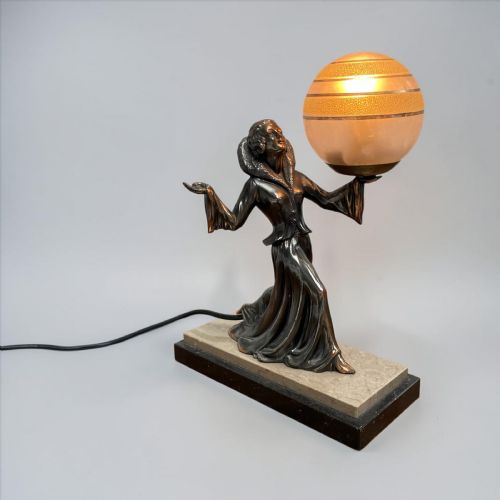
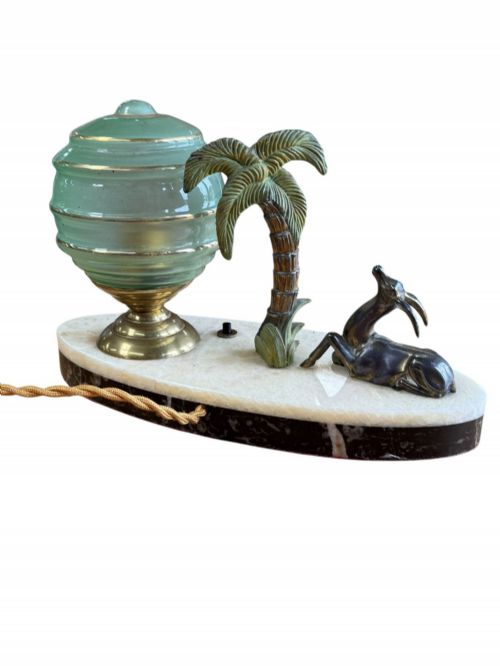
When you search for an antique figurine table lamp, you are examining sculptural lighting pieces that feature human or animal figures as the central design element. The selection includes works from the Victorian period through to the Art Deco era, spanning styles such as French Neoclassical, Rococo Revival, and Qing Dynasty. You will frequently encounter table lamps and converted sculptures that integrate figures into the base or stem.
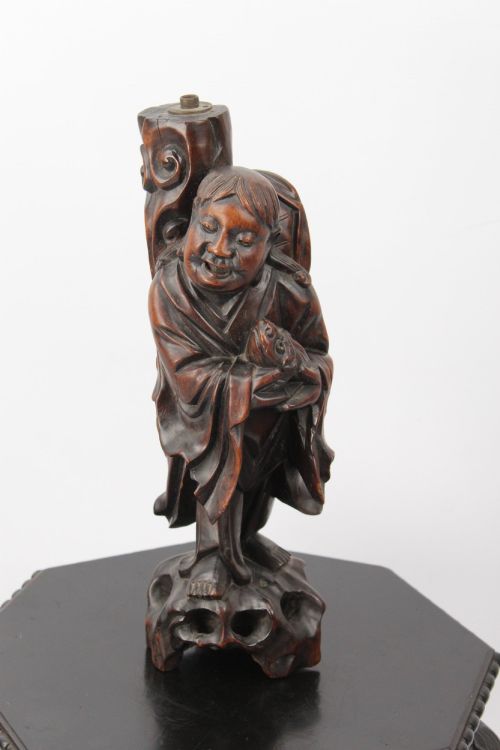
The pieces on this page represent a diverse range of artistic traditions and manufacturing origins, notably French, German, and Chinese works. Figures range from Art Deco ladies and sporting subjects like tennis players to mythological cherubs, Daoist immortals, and animals such as Spitz dogs. These objects function simultaneously as ornamental statues and practical sources of domestic light.
Materials and construction
Makers utilised a combination of cast metals, ceramics, and natural stones to construct these sculptural bases. Bronze, spelter, and brass provide sturdy metallic structures, often paired with marble bases to add weight and stability. Porcelain and frosted glass are frequently employed for the figural components or night light shades.
Many items incorporate mixed media, such as patinated bronze mounted on marble, or porcelain combined with gilt bronze. Several pieces originate from conversions, where older bronze cherub statuettes, night lights, or carved Chinese objects were later adapted into table lamps with fabric elements.
German porcelain Spitz dogs and accordion-playing Pierrots keep careful watch over bedside tables in this eclectic gathering of figures.
Distinguishing quality
The standard of modeling and casting defines the upper tier of these pieces, particularly in the crispness of detail seen in bronze and spelter figures. Finer examples display subtle facial expressions, expressive posture, and careful hand-painting on porcelain elements such as those by Karl Ens. The integration of the figural sculpture with the lamp fittings dictates the overall cohesion of the design.
Materials also play a substantial role in perceived quality, with heavy carved marble bases, genuine French ormolu, and high-grade Baccarat frosted glass elevating a piece. Lesser examples rely on simpler cast metal finishes or generic components that lack the distinct artistic attribution seen in signed or marked workshop productions.
Karl Ens·Anton Buschelberger·Moreau·Baccarat
The Antique Figurine Table Lamp Glossary
- Spelter
- A zinc alloy commonly used as a cost-effective substitute for bronze in decorative figures and lamps. It was frequently patinated to mimic heavier metals during the late nineteenth and early twentieth centuries.
- Ormolu
- Gilded bronze achieved through a mercury amalgamation process or electrochemical coating. This technique imparts a rich golden finish to metal mounts and decorative elements.
- Veilleuse
- A French term for a small ceramic or porcelain night light. Many of these delicate figural pieces were later adapted to serve as small table lamps.
- Patinated
- The surface treatment applied to metals to alter colour and protect the material. It creates aged tones ranging from deep browns to green verdigris.
Antique Figurine Table Lamp: Frequently Asked Questions
What is an antique figurine table lamp?
An antique figurine table lamp is a lighting fixture that incorporates a carved, cast, or moulded figure as its primary decorative base. These objects blend sculptural art with functional electrical illumination.
They originate from periods spanning the late nineteenth century through the Art Deco era of the 1930s, utilising materials like bronze, porcelain, and marble.
How do I date these lamps?
Dating relies on stylistic indicators such as Art Deco geometric lines, Victorian ornamentation, or the clothing and hairstyles depicted on the figures. Material analysis of the base, such as spelter versus bronze, also assists in determining the era.
Maker marks, workshop stamps, and signatures etched onto the porcelain or metal further clarify the production period.
Were all these lamps made as lighting originally?
Many items in this category started life as standalone bronze statuettes, night lights, or carved ornaments before being converted into table lamps later in their existence. Conversions are common, particularly with nineteenth-century decorative bronzes.
Others, such as specialised porcelain figural lamps from the early twentieth century, were produced specifically to illuminate domestic interiors from the outset.
Where should I place a figurine lamp?
These lamps function best on sturdy side tables, desks, or mantelpieces where their sculptural details can be appreciated from multiple angles. Their combined height and decorative presence make them natural focal points in a room.
Care should be taken to pair them with appropriate fabric shades that complement the proportions and period style of the underlying figure.