
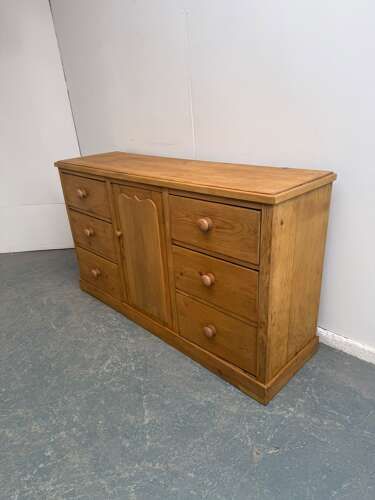
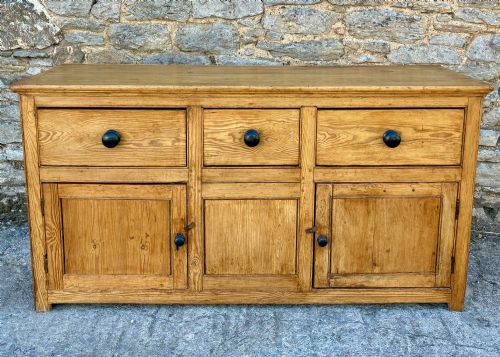
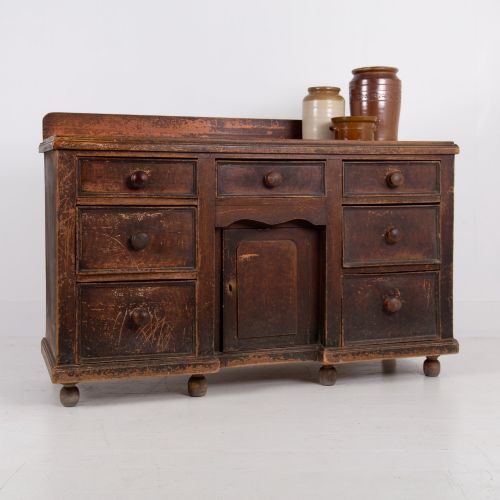
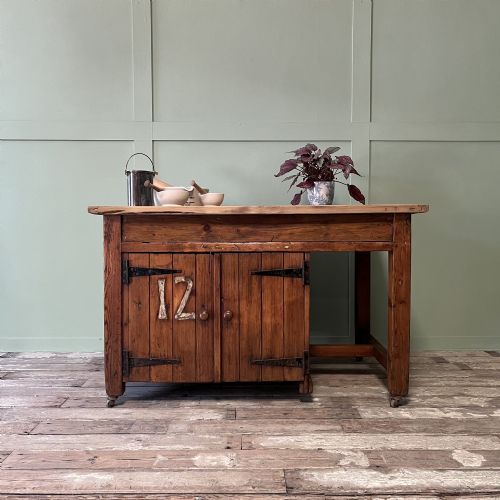
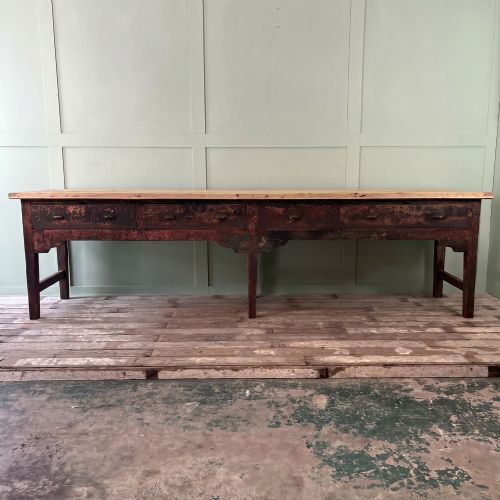


Antique Farmhouse Sideboard
An antique farmhouse sideboard brings robust utility and honest timber grain into a modern room, offering generous surface space and deep storage drawers built for country life.
Antique Farmhouse Sideboard
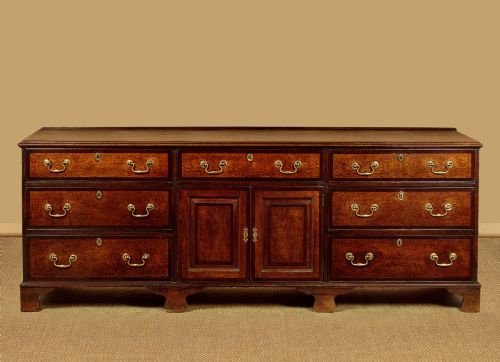
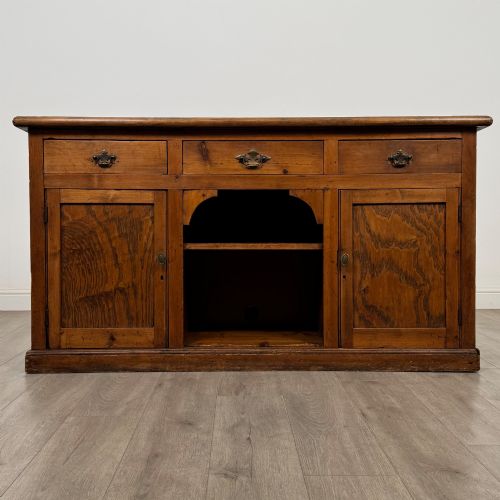
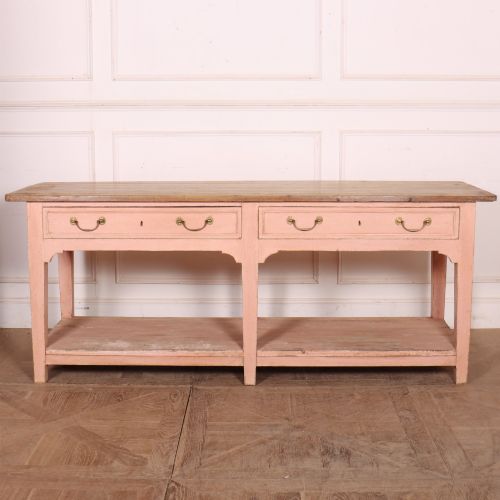
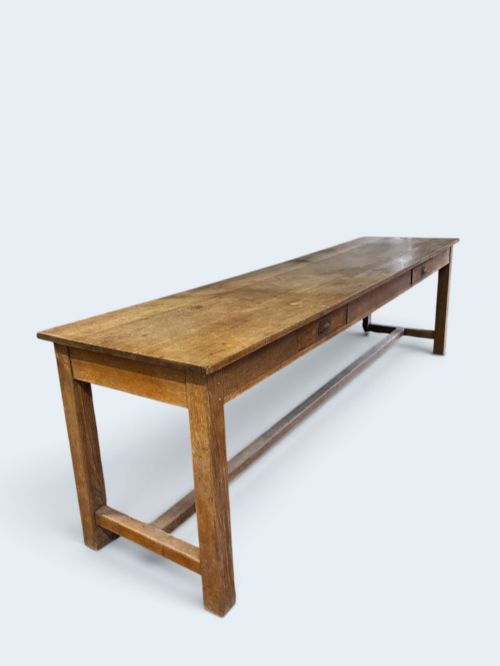
An antique farmhouse sideboard encompasses sturdy country furniture forms such as dresser bases, serving tables, and potboard servers designed for daily utility in domestic kitchens and dining rooms. These pieces originate across the nineteenth century and earlier, drawing on Georgian, Victorian, and regional European rural traditions.
The aesthetic relies on honest proportion and timber patination rather than elaborate carving, reflecting centuries of practical use in rural households. Each variant displays regional characteristics, from the waxed pine surfaces of English country kitchens to the panelled chestnut typical of French provincial workshops.
Materials and construction methods
Makers relied on solid native timbers such as pine, oak, chestnut, and cherry, selected for local availability and structural strength rather than decorative veneer. Boards were jointed by hand, with drawers often featuring traditional dovetail construction to withstand heavy daily use.
Surfaces were treated simply, utilising natural wax, linseed oil, or historical paint finishes that accumulated character and wear over generations of domestic service. Iron and brass hardware, from drop handles to key escutcheons, fastened the doors and drawers using straightforward mechanical fixings.
Several pieces still bear the flour dust and knife marks embedded by generations of rural bakers and cooks.
Judging quality and proportion
Quality rests in the integrity of the timber framing, the retention of original surface patination, and the balance of proportions between the top surface and the supporting base. Pieces retaining their original potboards, backboards, and drawer linings command greater interest among purists.
Lower quality often manifests in unsympathetic modern timber replacements, stripped surfaces that lose historical depth, or structural sagging caused by decades of damp conditions and excessive weight.
The Antique Farmhouse Sideboard Glossary
- Dresser base
- A lower cabinetry unit featuring drawers and sometimes a potboard shelf beneath, originally used for food preparation and storage.
- Potboard
- An open slatted lower shelf built into a sideboard or dresser base, traditionally designed to hold heavy ceramic pots and dishes.
- Dovetail
- A traditional interlocking woodworking joint used to secure drawer corners together with high tensile strength without relying on metal fasteners.
- Patina
- The surface sheen and colour acquired by wood and paint through decades of natural ageing, handling, and polishing.
Antique Farmhouse Sideboard: Frequently Asked Questions
How were farmhouse sideboards used originally?
These pieces served as the central working surface in rural kitchens, used for kneading bread, preparing meat, and housing heavy earthenware and cooking utensils.
The lower potboards and deep drawers kept everyday provisions and tableware within arm's reach of the hearth and dining table.
Can I use a dresser base as a dining room sideboard?
Their generous surface area and practical storage depth make them well suited for modern dining rooms, serving as an ideal station for food and drink during gatherings.
The shallow profile of many country servers allows them to fit comfortably along hallways or living room walls without blocking walkways.
How do I distinguish pine from oak pieces?
Pine displays a softer, lighter grain structure with warm knot formations, frequently finished with wax or historical paint.
Oak offers a denser, heavier feel with distinct medullary rays and a harder surface that resists heavy impacts more effectively.
What is the difference between a sideboard and a dresser base?
A dresser base specifically denotes a lower kitchen cabinet designed to stand alone or originally sit beneath a plate rack, while a sideboard often incorporates refined serving table proportions.
Both categories overlap considerably in rural vernacular furniture, sharing similar drawer configurations and sturdy leg supports.