



Antique Fan Screen
An antique fan screen shields the room from the hearth's glare while spreading metal petals across the floor.
Antique Fan Screen
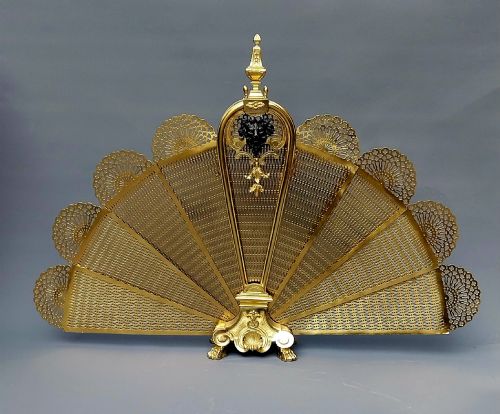
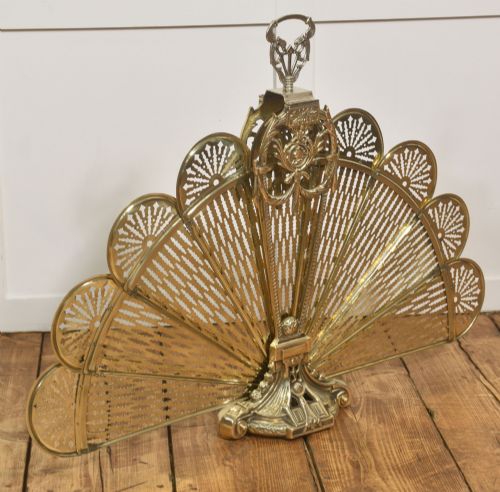
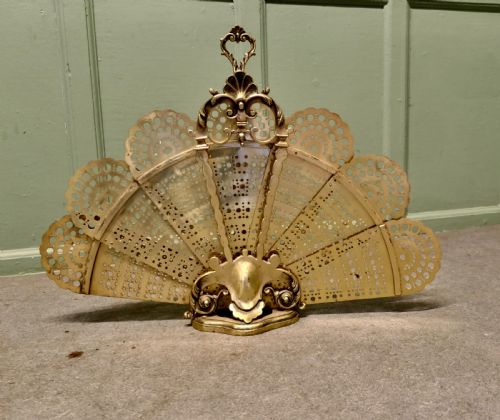
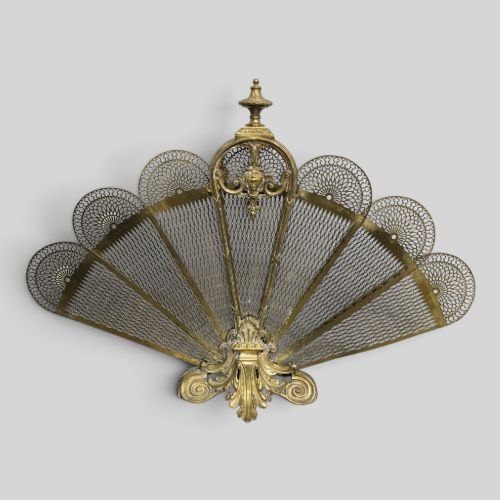
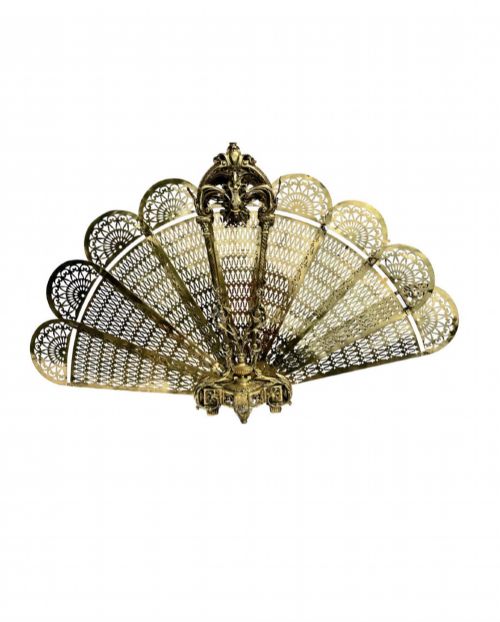
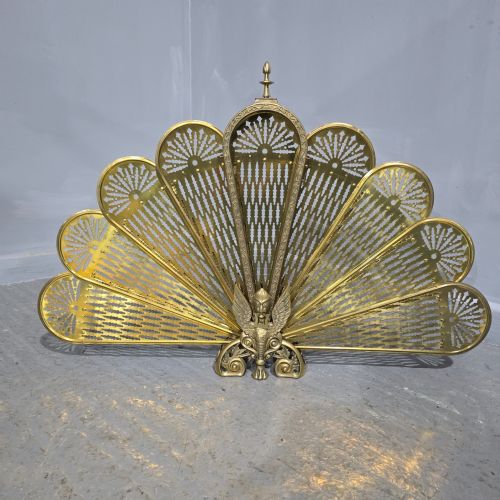
An antique fan screen is a hearth accessory designed to expand and contract like a folding hand fan, managing the heat and light of an open fire. These objects appear primarily in brass, cast brass, and ormolu, taking the distinctive form of a peacock's tail when fully opened.
The pieces listed here span the Victorian era, the nineteenth century, and the early decades of the twentieth century, with French Rococo Revival styles appearing alongside utilitarian folding designs. Most examples found on this page function as fire screens for the hearth, though smaller face screens in materials such as papier-mache also occur.
Collectors encounter folding brass fire screens most frequently, often featuring articulated blades that rotate around a central pivot. These range from simple space-saving guards to ornate French chateau pieces finished in gilt bronze or cast metal.
How they were made
Metals form the foundation of these objects, utilising cast brass, ormolu, and gilt bronze shaped into individual overlapping segments that mimic avian feathers. Makers employed casting and stamping techniques to produce the rigid framework and the delicate pierced or engraved blades of the fan.
Paper-mache serves as the primary material for smaller hand-held face screens, providing a lightweight surface capable of holding decorative finishes near the fire. Articulated joints and folding mechanisms allow the metal or paper leaves to collapse neatly into a compact base when not in use.
Antique Fan Screen Retail Price Guide 2026
Typical asking prices for fan screen among the pieces listed under this phrase on Sellingantiques today, from the lower quarter to the upper quarter. They describe what is for sale here now, not the wider market.
Victorian etiquette required ladies to hold delicate face screens so the hearth heat did not melt their face powder.
What varies in quality
The distinction between standard domestic guards and finer salon pieces lies in the crispness of the casting and the articulation of the individual blades. Heavy cast brass and chased ormolu demonstrate superior weight and definition compared to thin stamped sheet metal.
Finish and patination set the better examples apart, particularly on French Rococo Revival models where gilt bronze and detailed mounts show intentional hand-finishing. The smoothness of the opening mechanism and the rigidity of the base when fully extended indicate the original standard of manufacture.
The Antique Fan Screen Glossary
- Fan screen
- A hearth guard composed of folding metal blades that open outward like a hand fan. It protects the room from sudden bursts of heat.
- Ormolu
- Gilded bronze or brass applied to decorative metalwork. This finish gives the metal a rich, golden appearance.
- Face screen
- A small hand-held guard used to protect the complexion from the direct heat of an open fire. These often use papier-mache.
- Rococo Revival
- A decorative style popular in the nineteenth century characterised by asymmetrical scrolls, C-curves, and naturalistic motifs. It heavily influenced French fireplace accessories.
Antique Fan Screen: Frequently Asked Questions
How do you open an antique fan screen?
Most folding screens operate on a central pivot pin where the individual metal blades rotate outward in an arc. Gently separate the top edges until the fan locks into its full semicircular display.
Avoid forcing stiff joints if the pivot has accumulated dust or old polish. A careful clean allows the segments to glide past one another without scratching the brass.
Were these screens used for actual fires?
Large brass and ormolu examples stood before the hearth to block radiant heat when the fire burned low or to hide the empty grate in summer. Their metal construction easily withstood the warmth of the room.
Smaller hand screens made of papier-mache stayed in the hands of seated guests to shield their faces from the direct blaze of open coal or wood fires.
How do I date a brass fan screen?
Examine the weight of the metal and the style of the base, as Victorian and nineteenth-century examples often feature heavier cast brass and ornate French revival detailing. Twentieth-century pieces tend toward simpler lines and lighter construction.
Patina also offers clues, though polished brass can obscure the true age of the metal. Look at the construction of the hinge and pivot pin for manufacturing methods of the period.