



Brass Folding Spark Screen
A brass folding spark screen stands before a hearth to catch stray embers while bringing gleaming metalwork to the fireplace.
Brass Folding Spark Screen
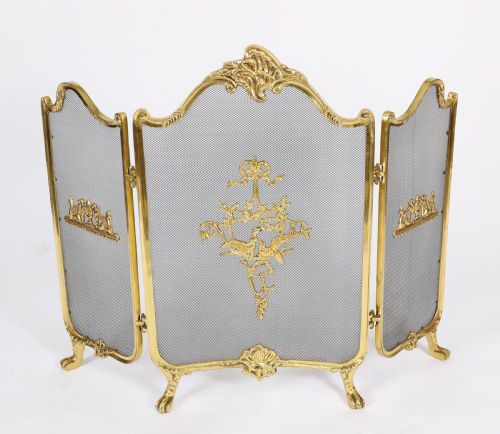
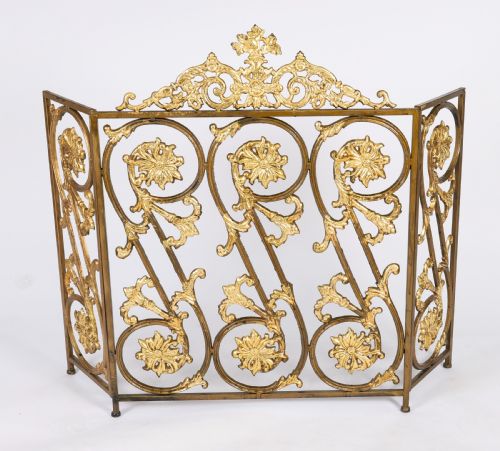
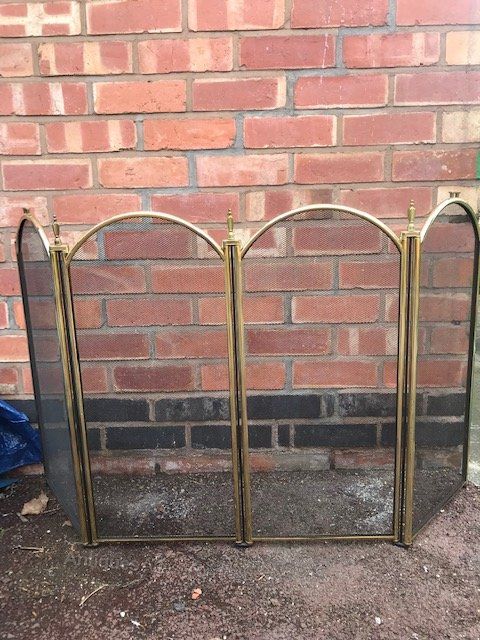
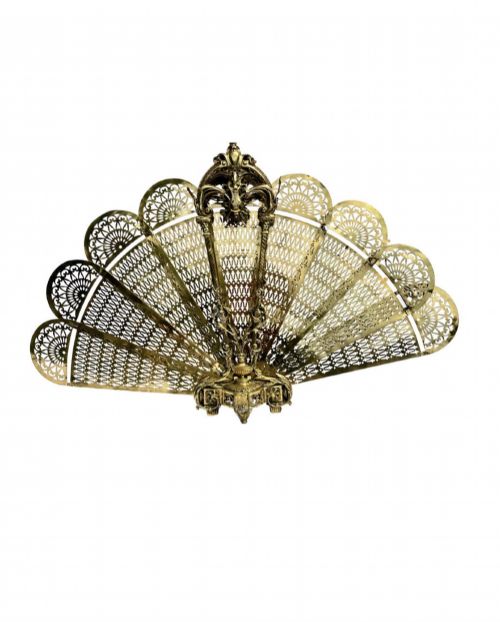
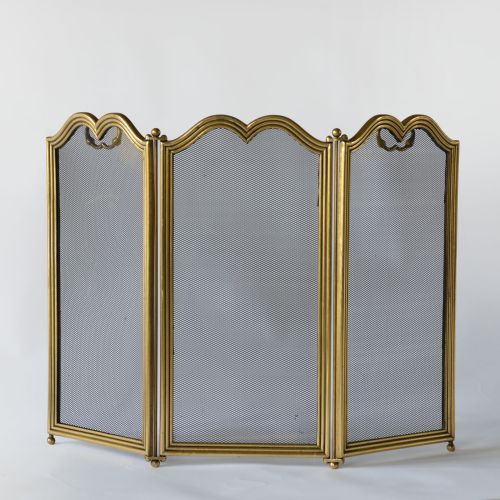
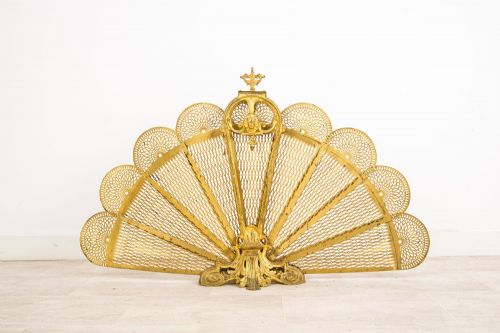
A brass folding spark screen is a fireplace accessory designed to protect rooms from flying embers while framing the hearth in polished metal. Buyers searching for a brass folding spark screen encounter folding forms ranging from tripartite panels to expanding peacock fan designs. These domestic pieces serve both a practical containment role and a decorative function during seasons when fires burn.
The selection includes Victorian and Edwardian examples alongside French revival pieces spanning the nineteenth and early twentieth centuries. French Rococo and Louis XIV Revival items sit alongside simpler four-folding section guards and peacock fan screens. Most variations utilise folding hinges or radiating blades to adjust across hearth openings of different widths.
Origin details in the evidence point heavily towards British Victorian and Edwardian workshops alongside French makers influenced by Rococo taste. Forms vary from simple wire mesh and iron frames to heavily gilded bronze and cast brass panels. A buyer meets everything from compact tripartite spark guards to wide fan screens depending on the period.
How they were made
Craftsmen built these guards using sheet brass, cast brass, and wire mesh supported by iron or steel frames. Metalworkers shaped the outer frames through casting, hammering, and joining, applying gilt bronze or ormolu finishes to French revival pieces. Fine mesh inserts allowed heat to radiate into the room while catching stray sparks.
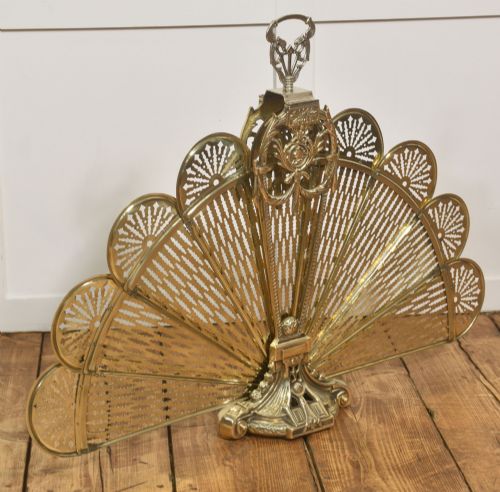
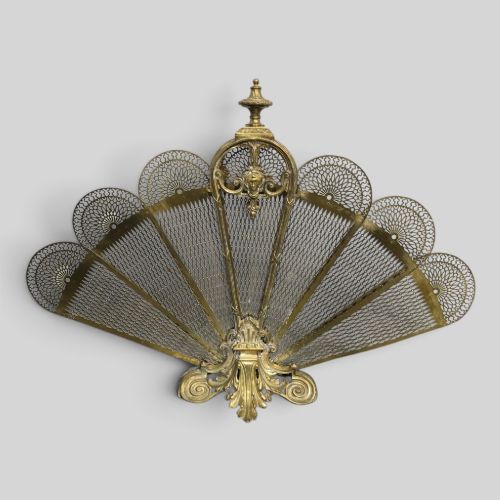
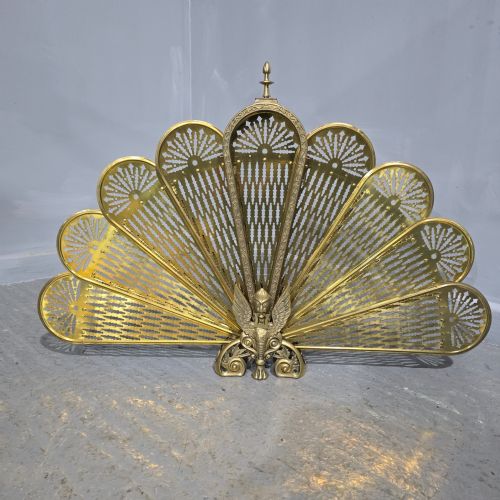
Peacock fan versions relied on pivoting brass blades that folded neatly together like a handheld fan when not in use. Multi-fold panels utilised hinges to connect individual sections of brass and wire mesh. Black finishes appeared alongside polished brass and gilt surfaces to suit different interior schemes.
Victorian homes deployed metal peacocks by the hearth, letting an iron bird fan its golden tail to keep the sitting room safe.
What varies in quality
Quality in a brass folding spark screen reveals itself in the weight of the metal and the precision of the hinge work. Substantial cast brass frames and heavy gilt bronze mounts show greater skill than thin sheet metal alternatives. The tightness of the wire mesh and the smooth action of folding sections distinguish finer pieces.
Decorative ambition separates standard domestic guards from elaborate French Rococo and Louis XIV Revival items. Pierced tracery, cast flaming torch motifs, and fire-gilded ormolu surfaces indicate higher workshop input. Simpler Victorian wire mesh guards prioritise functional utility over sculptural decoration.
The Brass Folding Spark Screen Glossary
- Tripartite
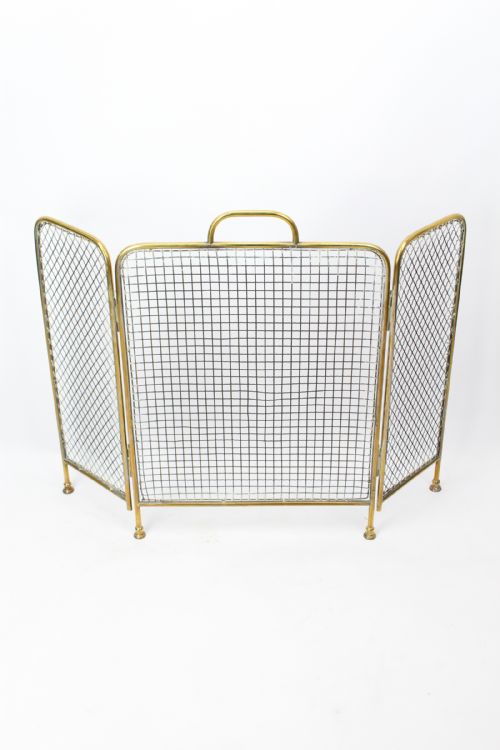
- Divided into three parts or sections. A tripartite folding screen uses three hinged panels to enclose a hearth.
- Ormolu
- Finely ground high-carat gold-mercury amalgam applied to a bronze or brass object. This French finishing technique provides a rich, warm golden glow.
- Spark Guard
- A protective barrier placed in front of an open fire to catch flying embers. These screens use fine wire mesh to stop sparks while letting warmth through.
- Peacock Fan Screen
- A folding hearth screen composed of radiating metal blades that expand outward like a peacock tail. They became popular during the Victorian period.
Brass Folding Spark Screen: Frequently Asked Questions
How do you use a folding spark screen?
Place the screen directly in front of the active fireplace opening to catch sparks and embers. The folding sections adjust to fit the specific width of the hearth.
Fold the screen flat or collapse the fan blades against the fireplace surround when the fire is extinguished.
What periods do these screens come from?
These fireplace accessories date from the nineteenth and early twentieth centuries. Victorian and Edwardian examples are common alongside pieces from the eighteen-eighties and nineteen-twenties.
French revival styles inspired by Louis the Fourteenth and Rococo aesthetics also appear across the nineteenth century.
What materials are used in their construction?
Primary materials include brass, cast brass, gilt bronze, and wire mesh supported by iron or steel. Some examples incorporate copper panels and black finishes.
Finer French pieces feature ormolu and gilt bronze mounts paired with intricate cast metalwork.
How do you clean antique brass screens?
Dust the wire mesh and metal frames gently with a soft dry cloth to remove soot and debris. Avoid harsh chemical polishes that strip historic patination from the brass.
Treat gilt bronze and ormolu surfaces with particular care to preserve the original gilding.