



Antique Fairground Art
Antique fairground art brings the bold colours and hand-carved theatre of the historic funfair directly into domestic spaces.
Antique Fairground Art
Antique fairground art encompasses the surviving carved figures, painted panels, architectural salvage and related works created for nineteenth and early twentieth-century amusement rides and attractions. These pieces range from large carousel animals and organ figures to target boards and decorative wall panels.
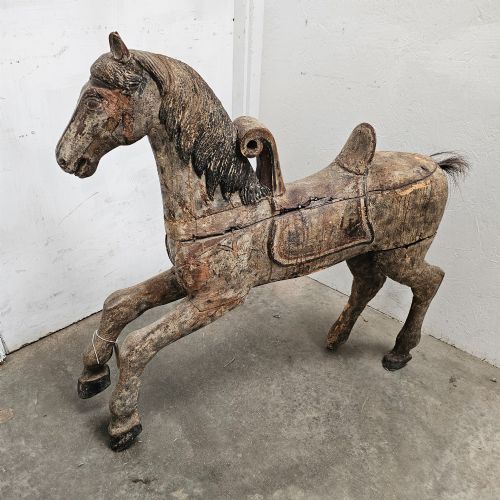
The version most commonly met on this page is the carved wooden carousel animal or decorative ride panel, usually originating from English, French or continental workshops. These objects carry the rich layers of polychrome paint and weathering accumulated through decades of outdoor operation.
How antique fairground art was made
Carved wood forms the structural core of these pieces, shaping figures like horses, pigs and dragons from substantial blocks. Artisans utilised iron hardware and horsehair additions to complete the dynamic figures required for fast-moving rides.
Polychrome paint and paper finishes were applied in layers to create high-visibility displays that would catch the eye under fairground lights. These painted surfaces often underwent repeated repainting throughout the working life of the ride.
A surviving carousel pig stands ready to offer a remarkably unusual alternative to the traditional galloping horse.
What varies in quality in antique fairground art
The distinction between ordinary and exceptional pieces rests upon the depth of the carving and the attribution to known makers or notable workshops. Master carvers brought a sense of anatomical movement and expressive personality to figures that mass-produced items lack.
The integrity of the original paint surface heavily influences the character of a piece. Retained layers of early polychrome pigment demonstrate authenticity and visual richness, whereas excessive overpainting obscures the hand of the original decorator.
Bayol·Limonaire·Gavioli
The Antique Fairground Art Glossary
- Polychrome paint
- The multi-coloured surface decoration applied to wood and metal carvings. It defined the vibrant visual impact of fairground attractions.
- Architectural salvage
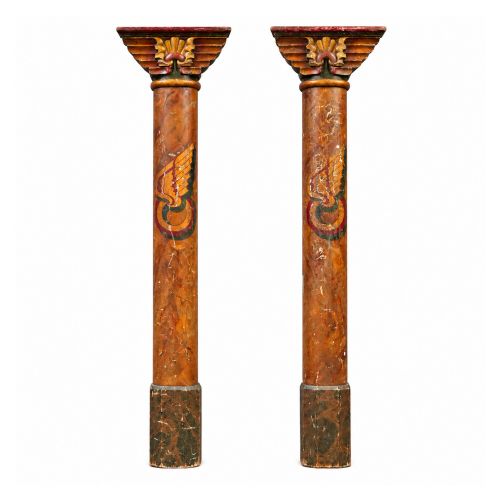
- Structural elements rescued from dismantled rides or fairground buildings. These items preserve decorative columns and panels for interior display.
- Folk art
- Traditional craft produced outside mainstream academic fine art traditions. Much fairground material sits comfortably within this expressive category.
- Organ figure
- Animated or static carved figures mounted on fairground organs. They often moved or struck bells in time with the music.
Antique Fairground Art: Frequently Asked Questions
How were carousel figures displayed originally?
These carved animals and figures were mounted on revolving platforms inside large travelling or permanent roundabouts. They served both as seating for riders and as kinetic public sculpture.
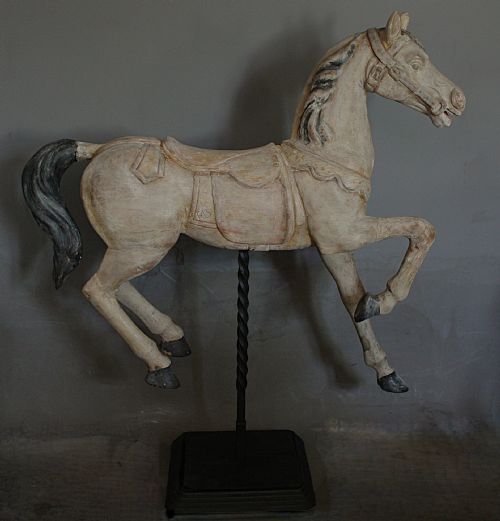
Today, collectors mount them securely on static metal stands or display them against walls as large-scale sculptural objects.
Can these carved panels be hung on walls?
Many flat panels and boards feature structural framing that suits them for vertical display. Their robust construction requires secure fixings to support the weight of the timber.
Placing them in interior spaces brings a distinct architectural presence to large rooms.
How do I distinguish nineteenth-century pieces from later examples?
Nineteenth-century items often display heavier timber construction and denser accumulations of early paint layers. Stylistic details such as simpler harness work or distinct facial carving point towards earlier periods.
Twentieth-century examples tend toward streamlined forms and brighter commercial pigments associated with later fairground development.
What maintenance do painted wooden pieces require?
Preserving these surfaces requires stable indoor humidity and protection from direct sunlight. Avoiding harsh cleaning agents ensures the delicate layers of historical paint remain intact.
Occasional dusting with a soft brush keeps the carved details clear without disturbing the surface.