

Antique Fainting Sofa
An antique fainting sofa provides a reclining seat for nineteenth-century rest, pairing timber frames with padded upholstery.
Antique Fainting Sofa
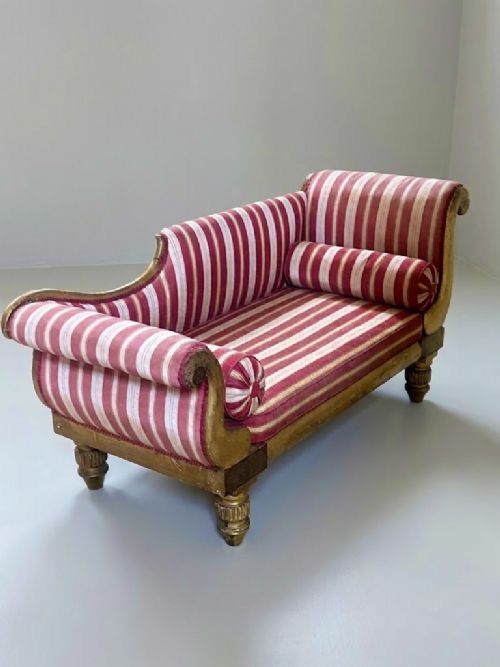
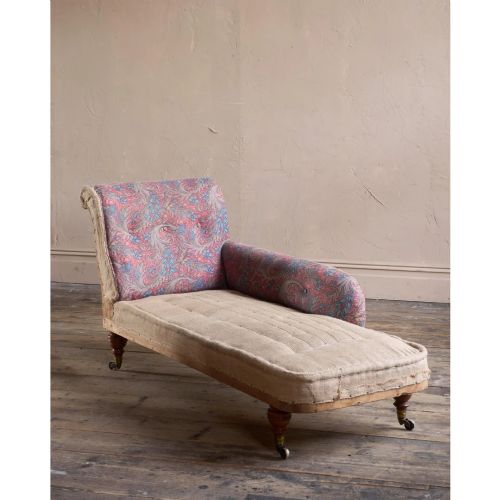
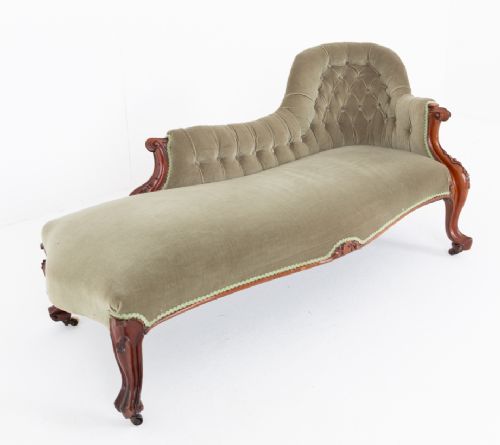
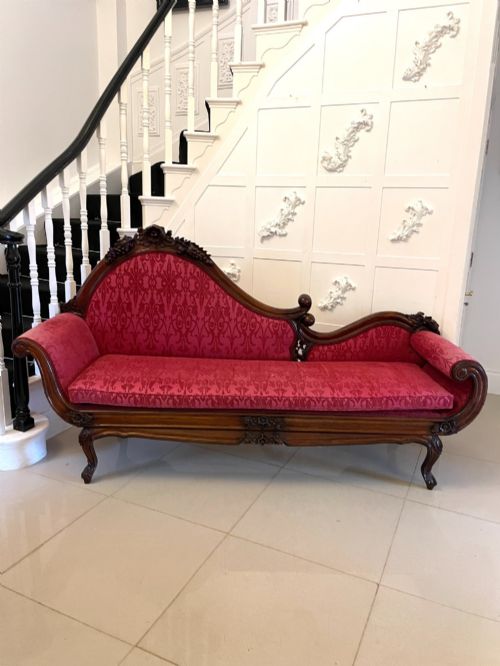
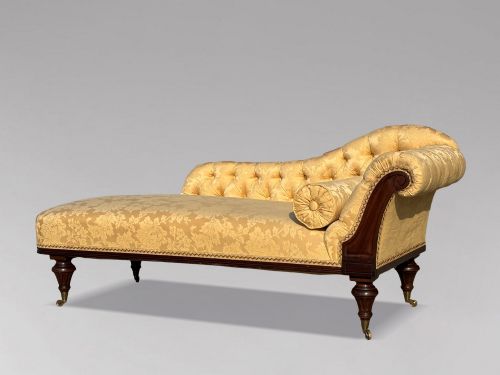
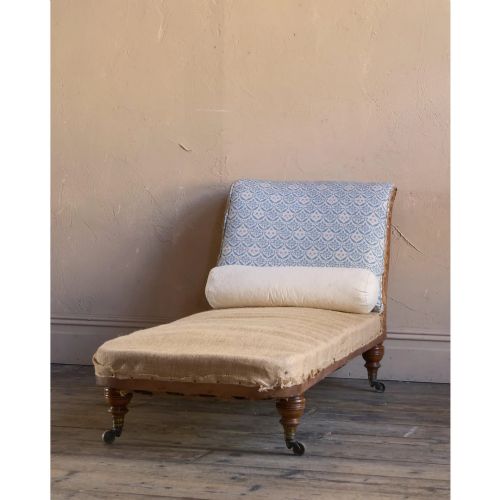
An antique fainting sofa is a single-ended daybed designed for reclining in the nineteenth century. These pieces appear as chaise longues, daybeds, and scroll-end sofas across this page.
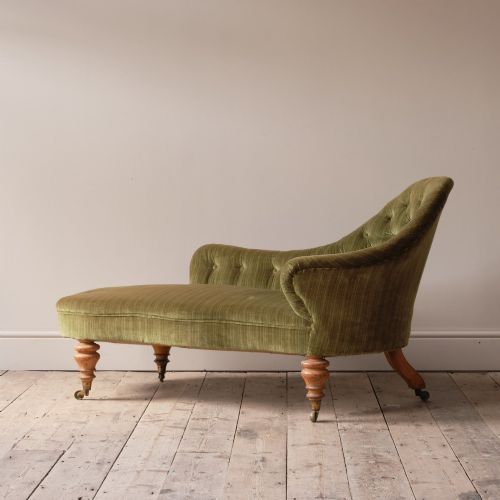
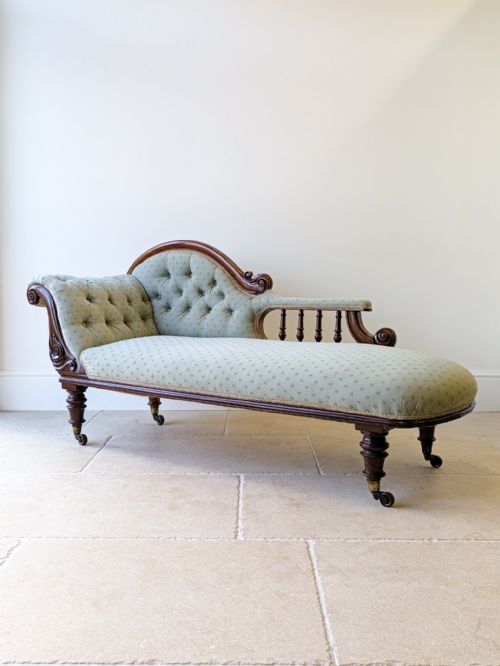
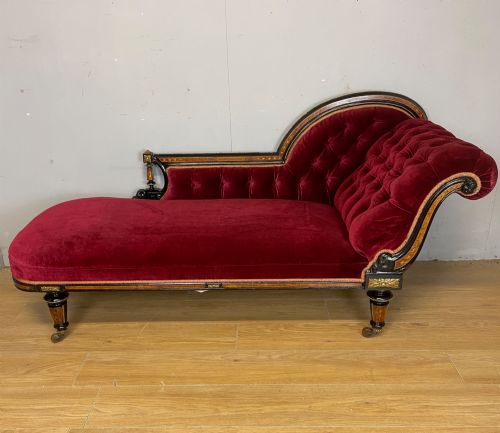
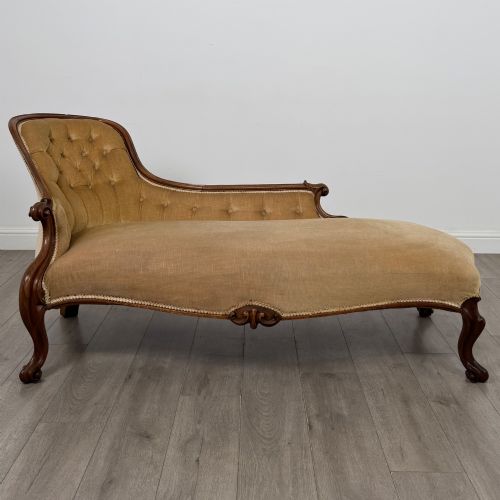
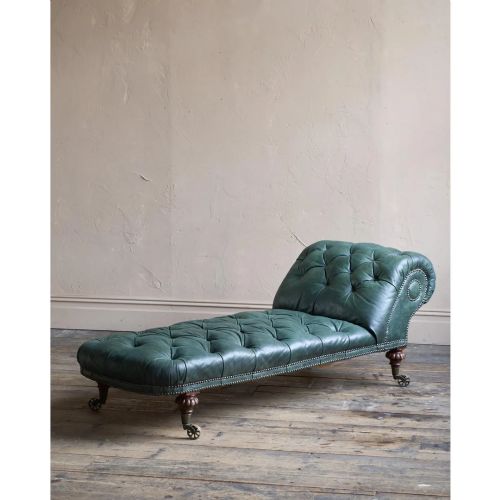
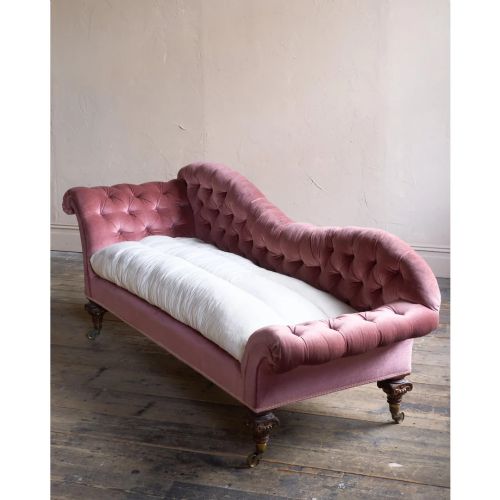
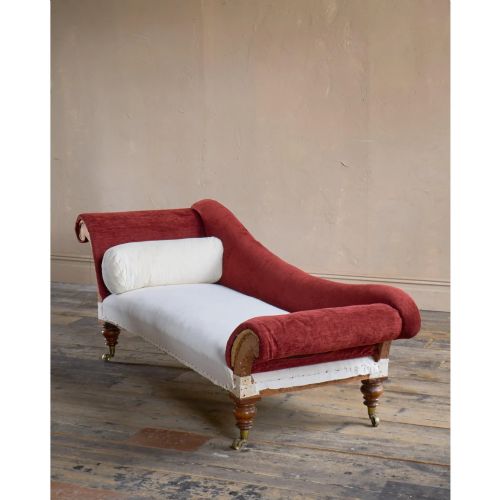
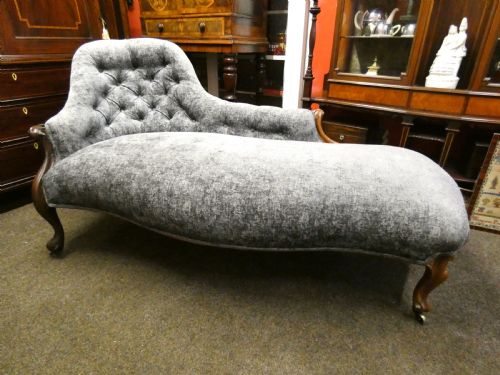
Most examples date from the Regency, William IV, and Victorian periods. Makers shaped solid wood frames in mahogany, rosewood, and walnut, often upholstering the single raised back and sloping arm in velvet, leather, or fabric.
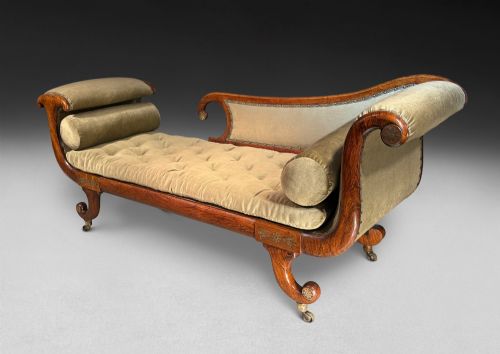
Forms range from grand Regency frames with brass inlay to carved Victorian rosewood designs and later Edwardian oak daybeds. Miniature furniture pieces also appear alongside full-scale seating.
How they were made
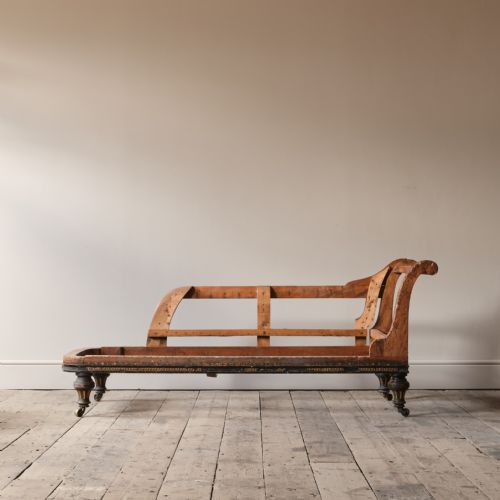
Cabinetmakers constructed the structural frames from dense hardwoods such as mahogany, rosewood, walnut, and ebonised wood. Some pieces incorporate brass inlay, ormolu decoration, and inlaid walnut panels to ornament the timber rails.
Upholstered surfaces rely on traditional stuffing enclosed in silk, damask, green leather, or striped fabric. Structural supports frequently feature turned wooden legs fitted with original castors for mobility.
Antique Fainting Sofa Retail Price Guide 2026
Typical asking prices for fainting sofa among the pieces listed under this phrase on Sellingantiques today, from the lower quarter to the upper quarter. They describe what is for sale here now, not the wider market.
Listings feature eighteenth-century transitional styles through to early twentieth-century Edwardian oak and Victorian walnut daybeds.
What varies in quality
The sophistication of the timber carving and the crispness of the scroll arms separate standard production from superior examples. Master workshops invested considerable labour in shaping mahogany and rosewood frames with intricate detail.
Attribution to notable cabinetmaking firms elevates a piece through documented craftsmanship and proportional balance. The integration of decorative elements like brass inlay or ormolu mounts indicates a higher tier of manufacture.
Holland and Sons·Howard and Sons·H. Goodall and Sons·Gillows
The Antique Fainting Sofa Glossary
- Récamier
- A type of daybed with two raised ends, named after Madame Récamier who was painted reclining on one in the early nineteenth century. These pieces offer symmetrical scroll ends.
- Ormolu
- Gilded bronze ornamentation applied to furniture mounts. This technique adds metallic contrast to dark woods like ebonised timber and rosewood.
- Piecrust
- A decorative raised border shaped in undulating waves, seen on the woodwork of specific Victorian frames. The edge resembles pastry crust crimping.
- Castor
- A small wheel fitted to the base of furniture legs to aid movement across floors. Original brass or ceramic castors remain sought after by collectors.
Antique Fainting Sofa: Frequently Asked Questions
What is an antique fainting sofa?
An antique fainting sofa is a nineteenth-century daybed designed for half-sitting and half-lying. It combines a single raised backrest with an extended seat for resting.
These pieces emerged in various styles from Regency elegance to Victorian ornamentation. They served as comfortable daytime seating in drawing rooms and parlours.
How do I date an antique fainting sofa?
Dating relies on timber choices, decorative motifs, and structural forms. Regency examples often feature brass inlay and simulated rosewood, while Victorian pieces show heavier carved mahogany or rosewood frames.
Later Edwardian versions appear in solid oak on turned legs. Examining the underframe and secondary woods helps confirm the manufacturing era.
Where were these sofas used?
These daybeds occupied principal reception rooms, sitting rooms, and private boudoirs. Their asymmetric design allowed individuals to recline comfortably without retiring to a bedroom.
Country houses and townhouses alike accommodated them for daytime resting. They suited spaces dedicated to entertaining and casual social gatherings.
How do I care for the wood and upholstery?
Protect the timber frames from direct sunlight and steady temperature fluctuations to prevent wood splitting. Dust rosewood and mahogany regularly with a dry cloth.
Upholstered surfaces require gentle vacuuming with a soft brush attachment. Professional cleaning preserves delicate fabrics like silk and antique damask.