



Antique Etched Glass Centerpiece
These antique etched glass centrepiece options range from Victorian silver-plated stands to Bohemian bowls, bringing a striking centre of attention to any table.
Antique Etched Glass Centerpiece
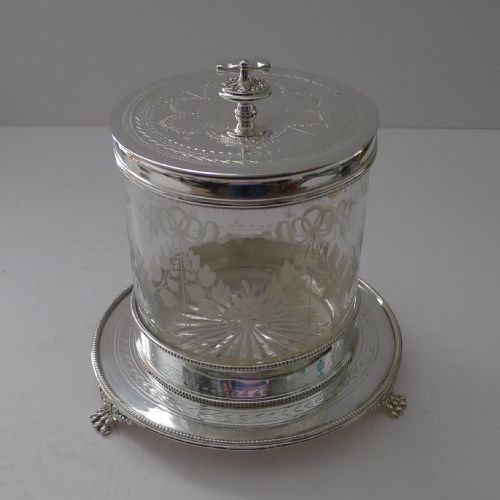
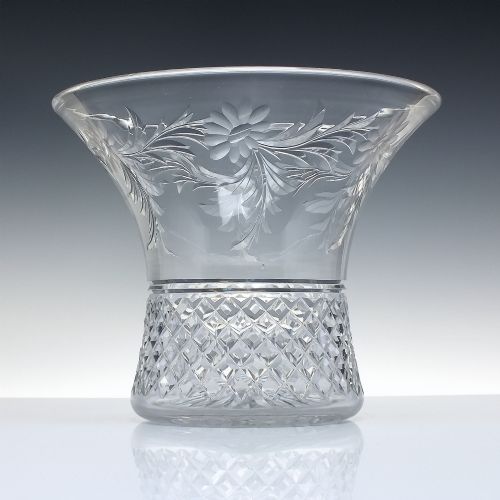
An antique etched glass centrepiece acts as the visual anchor of a formal table arrangement, holding fruit, flowers or standing alone as a decorative statement. The examples met on this page span from the 19th Century through to the early decades of the twentieth century, including Victorian and Edwardian periods.
Forms vary from large bowls and tazzas to pedestal stands, mirror plateaus, and elaborate epergnes. Materials frequently combine glass, lead crystal, clear glass, frosted glass, and cobalt glass with mounts of silver plate, gilt bronze, or carved wood.
How they were made
The manufacture of these pieces relies on blown or moulded glass combined with surface decoration such as wheel-cutting and acid-etching to produce crisp motifs. Lead crystal and clear glass provide the heavy, resonant body required for deep cutting and fine surface work.
Support structures involve cast metals like silver plate and gilt bronze, or carved wood bases such as Black Forest frames, securely fitted to hold heavy glass bowls and mirror plateaus.
Antique Etched Glass Centerpiece Retail Price Guide 2026
Typical asking prices for etched glass centerpiece among the pieces listed under this phrase on Sellingantiques today, from the lower quarter to the upper quarter. They describe what is for sale here now, not the wider market.
Some Victorian dining tables required entire wooden and bronze engineering feats just to keep a heavily laden crystal epergne from wobbling.
What varies in quality
The distinction between standard production and superior work lies in the crispness of the etching and the depth of the glass cutting. Heavier lead crystal and complex motifs indicate a higher grade of craftsmanship.
The integration of secondary materials also dictates quality, where finely cast silver-plate mounts or substantial gilt bronze frames elevate the piece far beyond simple glassware.
Walker & Hall·Baccarat Crystal
The Antique Etched Glass Centerpiece Glossary
- Centrepiece
- A large decorative object placed in the middle of a dining table. It often takes the form of an elaborate bowl or stand.
- Tazza
- A shallow bowl raised on a high foot or pedestal. These are frequently used for serving fruit or sweets.
- Epergne
- An ornamental centrepiece featuring a central dish with multiple branching arms and hanging baskets. They are designed to hold flowers or sweetmeats.
- Mirror Plateau
- A mirrored tray placed on the table surface to reflect candlelight and tableware. They often feature decorative metal or wooden frames.
- Lead Crystal
- A heavy, high-clarity glass containing lead oxide. It offers superior brilliance and allows for deep, sharp cutting.
Antique Etched Glass Centerpiece: Frequently Asked Questions
What is an antique etched glass centrepiece?
An antique etched glass centrepiece is a decorative table vessel, such as a bowl, tazza, or epergne, featuring surface engraving from the Victorian or Edwardian eras.
These objects were designed to anchor formal dining tables, often holding fruit, flowers, or simply reflecting light from a mirror plateau.
How do I date an etched glass centrepiece?
Dating relies on stylistic clues, glass weight, and framing materials that correspond to periods like the Victorian era or the early twentieth century.
Evidence from makers and material combinations, such as silver plate or gilt bronze mounts, helps narrow down the decade of manufacture.
What styles are common in these centrepieces?
Common styles include ornate Victorian, Bohemian, Black Forest, Art Deco, and Neoclassical designs. Each style brings distinct decorative motifs and mounting materials.
Victorian and Edwardian pieces frequently incorporate floral etchings, while Bohemian works often showcase coloured glass and animal decorations.
How were epergne centrepieces used?
Epergnes served as multi-tiered table decorations used during formal meals to display flowers, fruit, or small sweetmeats. Their branching arms created a vertical element on the dining table.
They combine glass trumpets or baskets with heavy metal or wooden bases for stability.