





Antique Equestrian Ceramic
Antique equestrian ceramic pieces capture horses, riders and hunts in earthenware and porcelain, offering a tangible link to past domestic display and spirited sporting traditions.
Antique Equestrian Ceramic
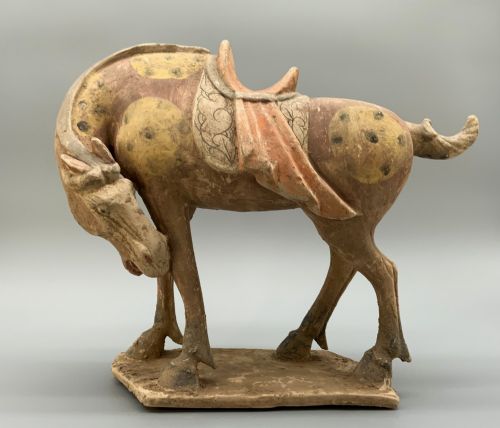
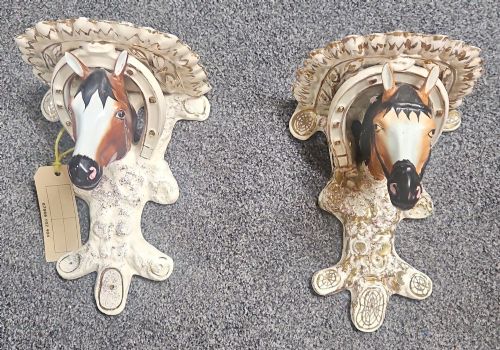
When you examine antique equestrian ceramic items, you encounter figures, wall brackets, chargers and stirrup cups depicting horses, mounted figures and hunting scenes. These objects range from English Victorian Staffordshire flatbacks and Scottish Portobello figures to earlier Chinese Tang dynasty pottery horses and Persian lustre bowls.
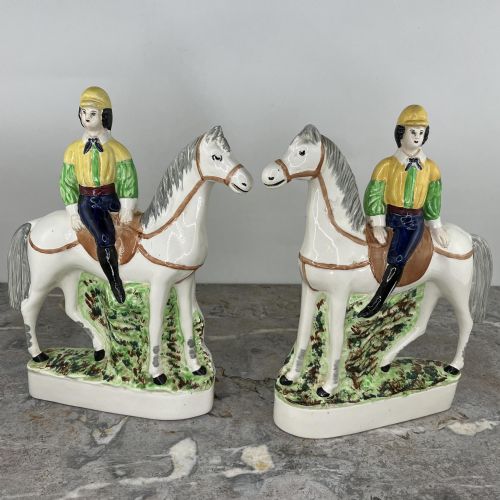
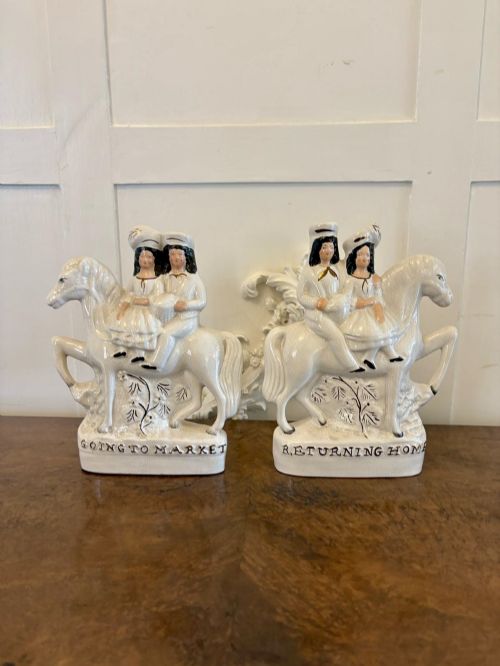
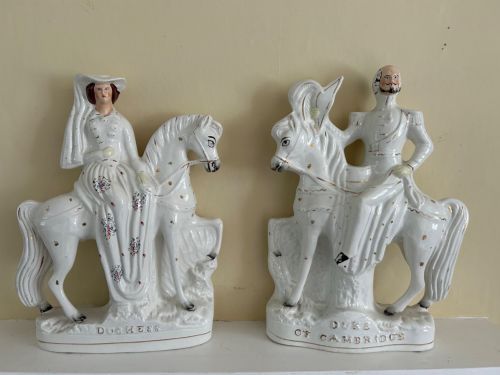
The most common examples on this page are Victorian Staffordshire earthenware figures of riders, jockeys and historical or literary figures on horseback. These flatback models were made to stand on mantelshelves, presenting a decorative front view to the room.
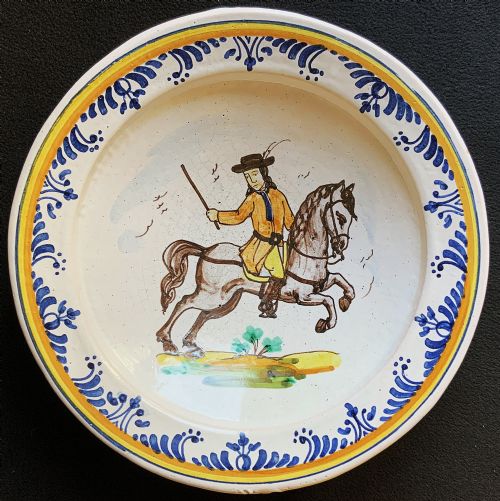
Beyond earthenware figures, the category encompasses French porcelain plates, Spanish Delft faience chargers and transfer-printed loving mugs decorated with hunting scenes. Each form reflects the specific ceramic traditions and domestic tastes of its period of origin.
How they were made
Makers shaped these pieces using earthenware, porcelain, terracotta and faience, applying glazes and enamel colours to the surfaces before firing. Staffordshire figures typically relied on slip-casting or pressing clay into moulds, followed by hand-painting and glazing.
Transfer printing appeared on utilitarian vessels such as loving mugs, applying detailed hunting scenes mechanically before manual touches were added. More complex items, such as French porcelain potpourris and chargers, involved delicate painting over white grounds and sometimes gilding.
Antique Equestrian Ceramic Retail Price Guide 2026
Typical asking prices for equestrian ceramic among the pieces listed under this phrase on Sellingantiques today, from the lower quarter to the upper quarter. They describe what is for sale here now, not the wider market.
Materials represented include earthenware, porcelain, terracotta, faience, enamel and gilt bronze.
What varies in quality
The sophistication of the palette and the preservation of original enamel colours also divide standard production from finer pieces. Early wares derive their distinction from the harmony of their glazes and the fidelity of their regional or period styles.
Royal Staffordshire·Royal Dux·Helena Wolfsohn
The Antique Equestrian Ceramic Glossary
- Flatback
- A ceramic figure modelled fully on the front and sides but left flat or unpainted at the back. This design suited pieces intended to stand directly against a wall or mantelpiece.
- Stirrup cup
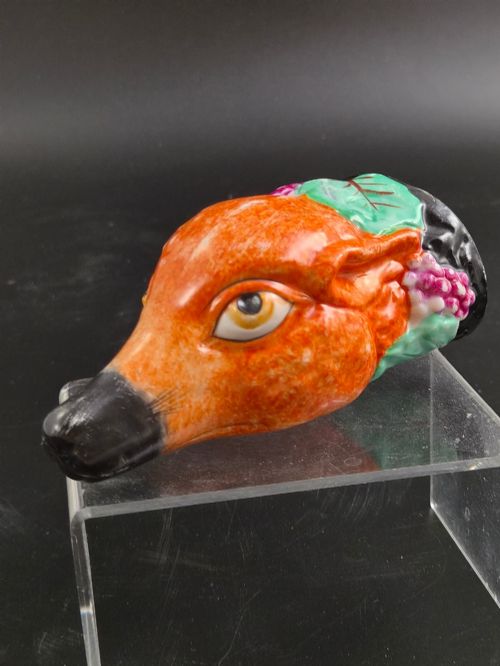
- A ceramic drinking vessel shaped like an animal head, often a fox or hound, given to riders before a hunt. They sat stably on tables or were held until the toast was drunk.
- Faience
- Tin-glazed earthenware produced across Europe, particularly in Spain and France. It provides an opaque white background suitable for vibrant painted decoration.
- Sancai
- A Tang dynasty three-colour lead glaze technique typically combining amber, green and cream tones. It ran naturally across the surface of pottery horses and figures during firing.
- Pratt Ware
- English earthenware associated with multi-coloured underglaze decoration in blue, ochre, brown and yellow. It often took the form of moulded jars and plaques.
Antique Equestrian Ceramic: Frequently Asked Questions
What are Staffordshire flatback figures?
Staffordshire flatbacks are earthenware figures designed in the nineteenth century for display on mantelpieces. Their flat unpainted backs allowed them to sit flush against cottage and parlour walls.
Potters cast these pieces in moulds and finished them with bright enamel colours. They depicted contemporary royalty, military heroes, literary characters and local animals.
How do I care for antique ceramic horses?
Keep antique ceramics out of direct sunlight to prevent enamel colours from fading over time. Dust them gently with a soft dry brush rather than using water or chemical cleaners.
Avoid moving heavy figures by fragile parts such as reins, protruding limbs or riders' heads. Support the base securely whenever you lift or rearrange them.
What is a stirrup cup used for?
Stirrup cups were traditional drinking vessels handed to mounted huntsmen before they set off into the field. Because the cups had rounded or animal-headed bases, riders could not set them down and had to finish their drink in the saddle.
Potters modelled these cups as foxes, stags or hounds. Today they survive as decorative ceramic ornaments on sideboards and display shelves.
How can I tell a Victorian figure from an earlier piece?
Victorian figures generally feature bright enamel colours over dense earthenware bodies with simple flat backs. Earlier pieces, such as Tang dynasty or Persian examples, display distinctive regional glazing styles and different clay bodies.
Examining the underside, crazing in the glaze and the style of the modelling helps distinguish nineteenth-century Staffordshire production from ancient or medieval items.