




Antique English Country Scene
When you search for an antique english country scene, you enter a visual record of fields, rivers, and village life painted across the nineteenth and early twentieth centuries.
Antique English Country Scene
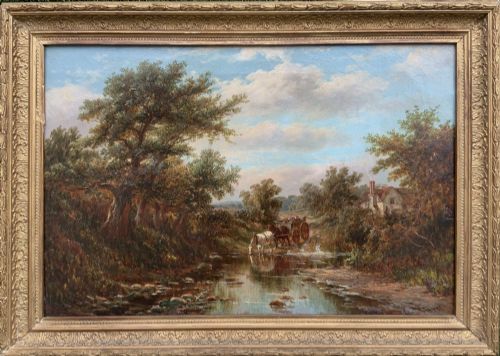
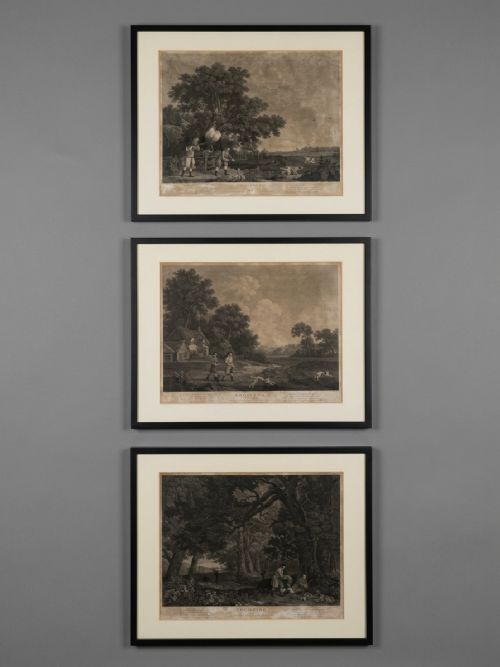
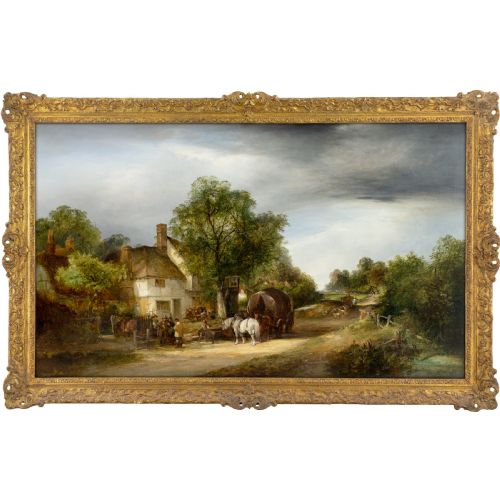
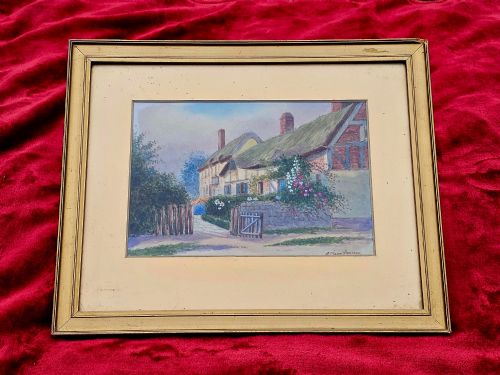
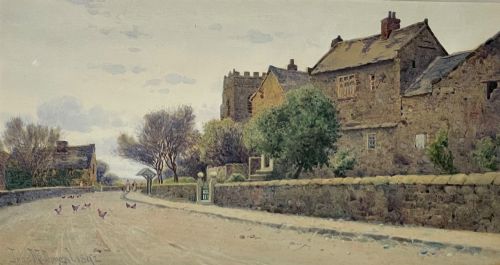
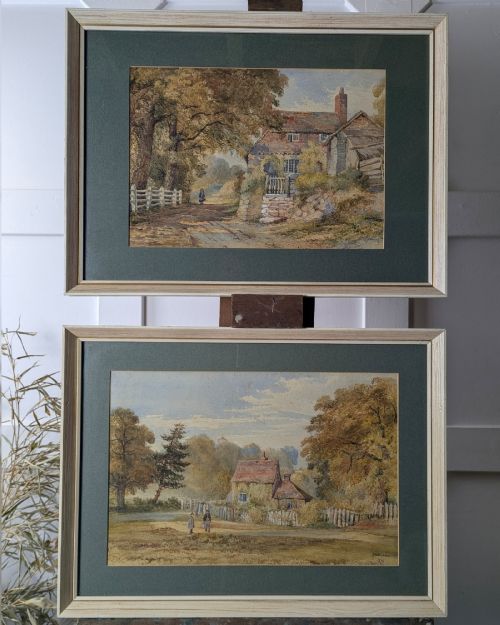
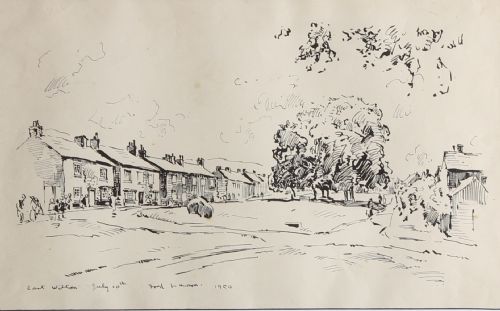
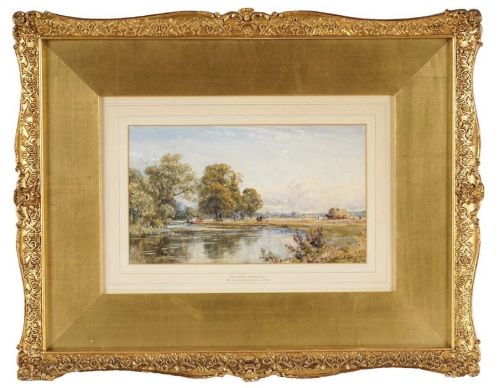
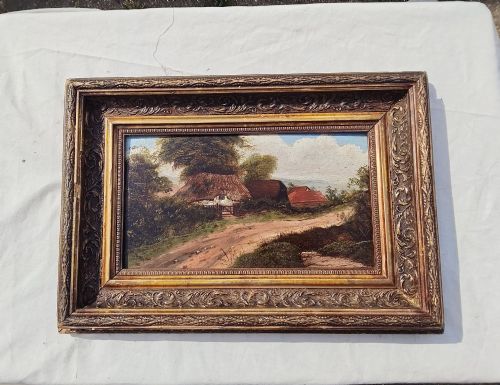
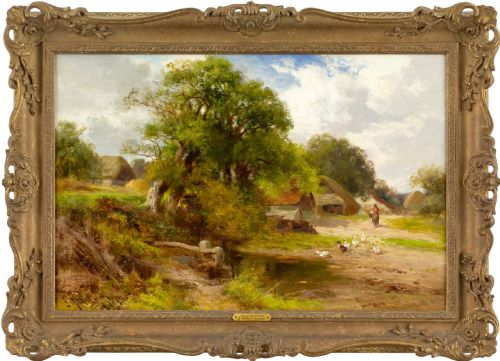
An antique english country scene captures the rural topography and daily domestic rhythms of Britain through oil paintings and watercolours. These works depict harvested fields, thatched cottages, livestock, and country lanes under changing seasonal light.
Most examples originate from the Victorian and Edwardian periods, stretching from the mid-nineteenth century into the early decades of the twentieth. Works range from detailed studies by named regional artists to evocative pieces by the English School.
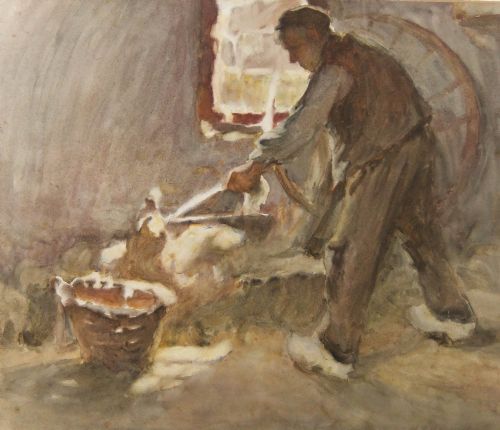
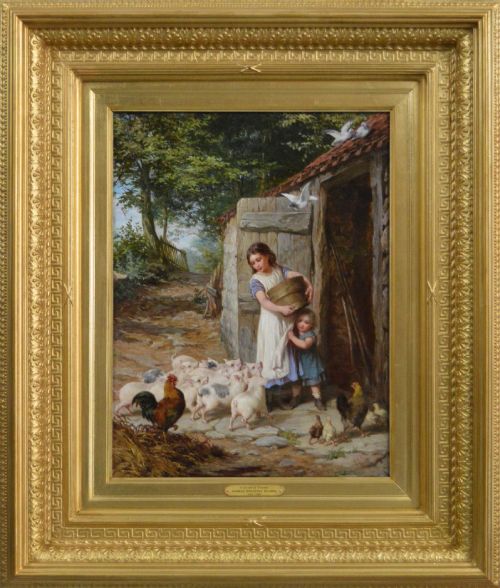
Subjects often focus on pastoral harmony, featuring farm workers, blacksmiths, shepherds, and cattle beside rivers or country ponds. The selection balances intimate watercolour sketches with substantial framed oil canvases designed for wall display.
How They Were Made
Artists applied oil paint or watercolour onto prepared surfaces including canvas, wood panel, board, card, and heavy paper. Many works retain their original giltwood frames adorned with gold leaf.
Watercolour paintings frequently employ layered washes and fine pencil underdrawings to capture the atmospheric skies and waterways of Berkshire, Sussex, and Yorkshire. Oil painters build texture through impasto on panel or canvas, rendering cottages and figures with deliberate brushwork.
Materials range from delicate watercolours on paper to robust oil paintings on canvas, board, and wooden panels.
What Varies in Quality
Quality rests on the precision of the brushwork and the artist's ability to render light and atmosphere convincingly across the landscape. Superior works demonstrate a confident handling of perspective, tone, and anatomical accuracy in human and animal figures.
The integration of the original frame alters the integrity of the piece, with period giltwood mouldings enhancing the presentation. Finer examples maintain pigment vibrancy and surface stability without extensive overpainting or paper degradation.
Percy Lancaster·William Howard Hardy·John Horace Hooper·A. Marie Parsons·John McDougal·Robert A. Nottingham·Henry Silkstone Hopwood·Robert Thorne Waite·George Augustus Holmes·Thomas Sidney Cooper·Joseph H Barnes·Frederick Walker·Herbert Royle·T C Hofland·Henry H Parker·Thomas Walker Bretland·Miles Birkett Foster·Herman S Melville·Charles Edward Wilson·Sydney Yates Johnson·Hubert Wellington·Richard Harry Carter·John Arthur Lomax·Ernest Higgins Rigg·Henry John Kinnaird
The Antique English Country Scene Glossary
- Watercolour
- A painting method where fine pigment is suspended in a water-based, translucent solution applied to paper. It relies on the white of the paper to provide luminosity.
- Impasto
- Paint applied thickly to a canvas or board, leaving visible brush or palette knife marks that create physical texture. This technique adds depth to foliage, water, and clothing.
- Giltwood
- Wood carved and coated with a thin layer of gold leaf or metallic powder. It forms the decorative border of traditional Victorian and Edwardian picture frames.
- Provenance
- The documented history of a painting's ownership and exhibition record. It establishes authenticity and connects the work to its historical context.
- Genre painting
- Artwork depicting scenes from ordinary life, such as farm work, market days, or cottage interiors. These pieces focus on human narratives within the landscape.
Antique English Country Scene: Frequently Asked Questions
What periods do these paintings cover?
The works span the nineteenth century through to the early twentieth century, encompassing the Victorian and Edwardian eras. Many date specifically from the peak of British landscape painting between eighteen-fifty and nineteen-twenty.
Earlier pieces reflect Regency and Georgian sensibilities, while later examples extend into the nineteen-thirties with simplified modernist touches.
How were these country scenes used?
These artworks were created primarily for interior decoration in domestic homes, displayed prominently in gilt frames upon parlour and drawing room walls. They served as windows to the countryside for urban residents.
Artists also produced them for public exhibition at regional galleries and art societies across Britain.
How do I care for antique watercolours?
Watercolours require protection from direct sunlight to prevent the pigments and paper from fading permanently over time. Acid-free mounting and framing materials prevent yellowing and degradation of the paper.
Keep them away from damp environments to avoid foxing spots and mould growth on the surface.