




Antique English Centre Table
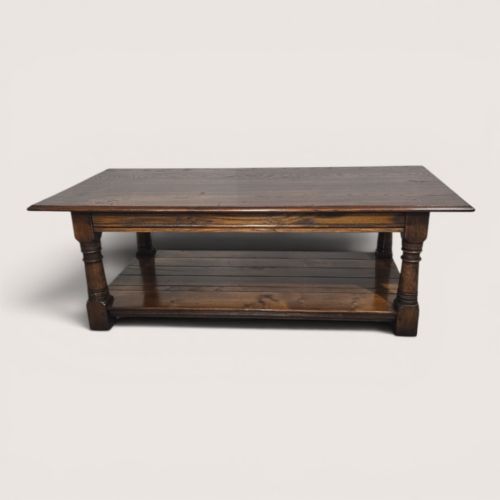
An antique English centre table anchors a room by standing free of the walls, offering a surface designed for display and gathering from the Georgian, Regency and Victorian eras.
Antique English Centre Table
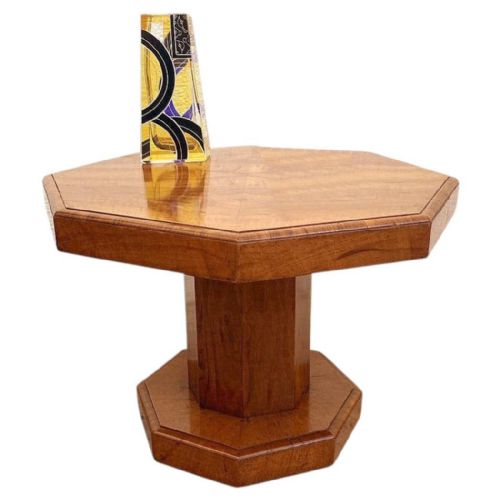
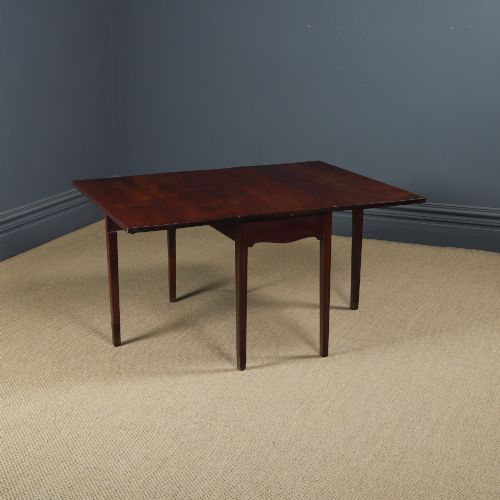
An antique English centre table is designed to be viewed from all sides, frequently positioned in the middle of a grand room or library. These freestanding pieces include tilt-top breakfast tables, drum tables, and library tables spanning the eighteenth to the late nineteenth centuries.
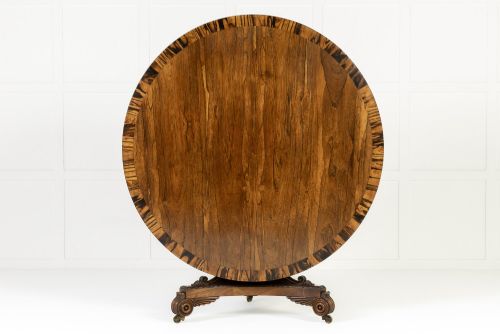
Regency and Victorian examples dominate the selection, showing round, oval, and occasional formats built for dining, writing, or displaying decorative items. Woods such as mahogany, rosewood, and burr walnut appear alongside rarer timbers like pollard oak and satinwood.
Earlier Georgian specimens provide simpler proportions in oak or mahogany, while later nineteenth-century iterations incorporate marquetry, exhibition-quality veneers, and giltwood. Buyers select these tables for their architectural presence and versatile functionality within historic or modern interiors.
Materials and Construction
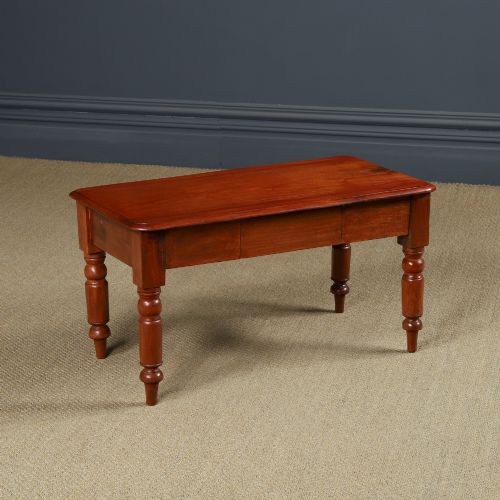
Cabinet makers utilised solid native timbers like oak and elm for structural frames, applying figured veneers of mahogany, walnut, and rosewood to primary visible surfaces. Crossbanding and stringing in contrasting woods define the borders of tabletop panels.
Pedestal bases frequently rely on a central pillar supported by tripartite or quadrupartite scroll feet, sometimes incorporating brass castors for mobility. Tilt-top mechanisms employ hinged wooden blocks and brass catches to allow the top to fold vertically when not in use.
Marquetry and parquetry techniques introduce intricate geometric or floral patterns using sycamore, satinwood, and ebony. Hand-carved details such as acanthus leaves and reeding adorn the columns and legs of Regency and William IV pieces.
Listings for antique English centre tables span the eighteenth, nineteenth, and early twentieth centuries, featuring woods such as mahogany, rosewood, burr walnut, and oak.
Quality and Craftsmanship
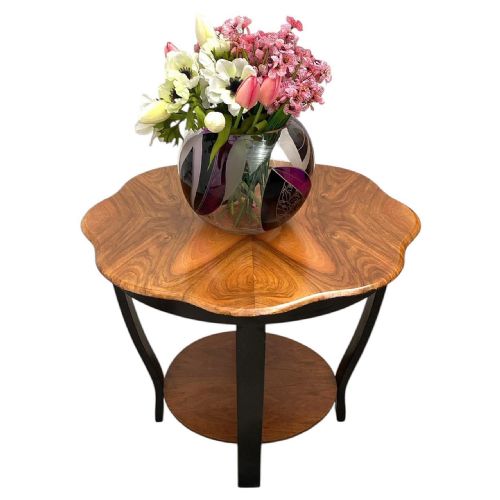
The selection of timber grain dictates much of the visual merit, with highly figured burr walnut, pollard oak, and matched mahogany veneers marking out superior examples. Symmetrical grain alignment across large tabletops indicates careful material selection by the cabinet maker.
Joinery execution separates standard workshop production from exhibition pieces, visible in the tightness of dovetails within drawers and the stability of pedestal mountings. Original brass hardware, functioning tilt mechanisms, and untouched patination further elevate the standing of a piece.
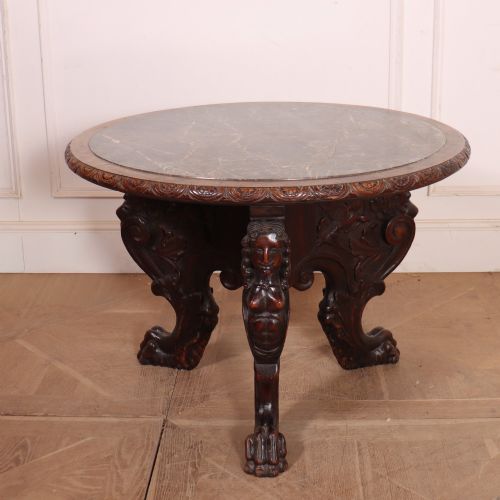
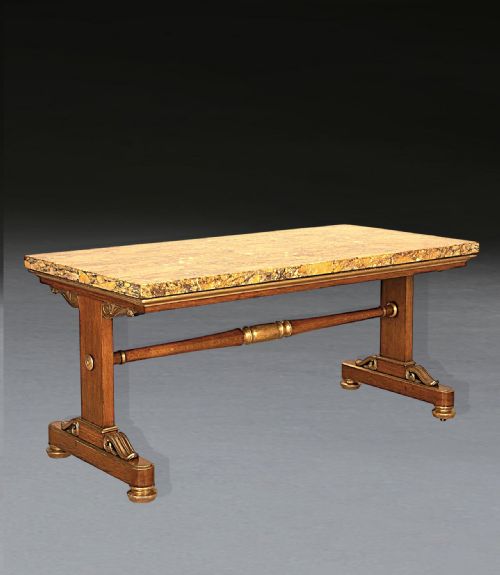
Sophisticated decorative treatments, including fine marquetry, hand-painted sycamore, or specialised stone tops like Siena marble, distinguish bespoke commissions from more utilitarian household furniture.
James Winter and Sons·Gillows of Lancaster and London
The Antique English Centre Table Glossary
- Loo table
- A large round or oval table originating in the Georgian period for playing the card game loo. These pieces frequently feature tilt mechanisms and heavy pedestal bases.
- Drum table
- A circular library table with a deep frieze containing alternating drawers and dummy drawers. They typically stand on a single pillar with tripod or quadrupartite legs.
- Marquetry
- Decorative inlay work where thin veneers of various coloured woods are assembled into pictorial or geometric patterns. Artisans apply these designs to tabletop surfaces and friezes.
- Pollard oak
- Oak timber taken from trees that have been pruned near the trunk to encourage dense, knotty growth. The resulting wood displays intense, swirling grain patterns favored in Regency cabinet making.
Antique English Centre Table: Frequently Asked Questions
How do I use a centre table in a modern room?
Position the table in the middle of a space to break up large floor areas and create a focal point for lamps, books, or decorative objects. Their freestanding nature allows movement around all sides.
Ensure there is sufficient clearance for walking and seating if the table functions as a casual dining or writing surface. Pairing them with chairs or stools enhances their utility.
What is the difference between a breakfast table and a loo table?
Breakfast tables and loo tables both feature circular or oval tops with tilting mechanisms on central pedestals. Loo tables generally date from the Regency and Victorian periods and often display larger proportions.
Both forms served multiple domestic purposes, transitioning from dining and card games to general display surfaces during the nineteenth century.
How do I identify a Regency centre table?
Regency centre tables often exhibit architectural classical influences, featuring rosewood or mahogany veneers, brass inlay, and bold pedestal supports. Look for clean geometric lines and contrasting wood borders.
Carved paw feet, reeded columns, and rich dark timbers are characteristic hallmarks of furniture produced during this period.
How do I care for antique wood surfaces?
Maintain wood surfaces by dusting with a soft, dry cloth and avoiding placement near direct heat sources or strong sunlight. Proper humidity levels prevent timber from splitting or warping.
Apply quality beeswax periodically to nourish the grain and protect the historic polish without building up excessive residue.