


Antique Enamel Vanity Mirror
An antique enamel vanity mirror brings colour and tactile weight to a dressing table, offering a glimpse of past craftsmanship every morning.
Antique Enamel Vanity Mirror
When you search for an antique enamel vanity mirror, you enter a field that spans handheld dressing pieces, folding purse compacts, and larger tabletop or dressing table mirrors. These objects combine polished glass with decorative metalwork and colourful enamel surfaces, serving both a practical function and a display purpose on the dressing table.
The pieces appearing on this page stretch from the late nineteenth century through the Art Deco era and into the mid-twentieth century. You will encounter French Rococo Revival and Napoleon III dressing mirrors alongside geometric Art Deco compacts and hand mirrors created in England, France, and Italy.
Hand mirrors and powder compacts form a large part of the selection, often appearing alongside fitted vanity sets and picture frames. The materials range from sterling silver and gilt bronze to brass, ormolu, and chrome, giving each piece a distinct physical presence.
Materials and construction
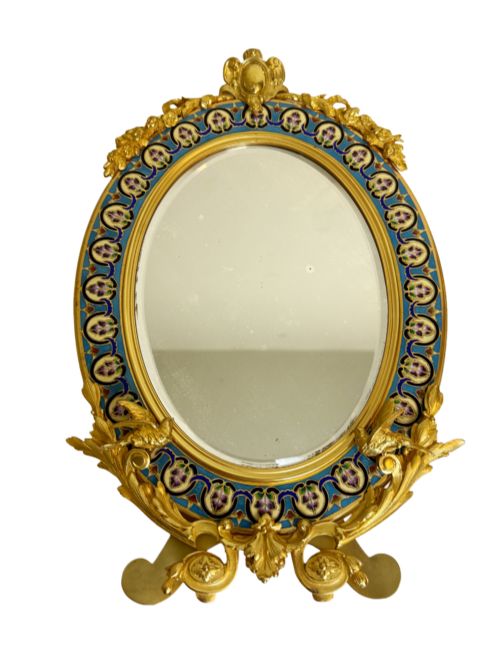
Makers utilised sterling silver, gilt bronze, ormolu, and brass to form the structural frames and compact cases, often pairing the metal with glass and mirrors. Champlevé enamel work involved sinking patterns into the metal to hold coloured glass paste before firing, creating rich decorative surfaces.
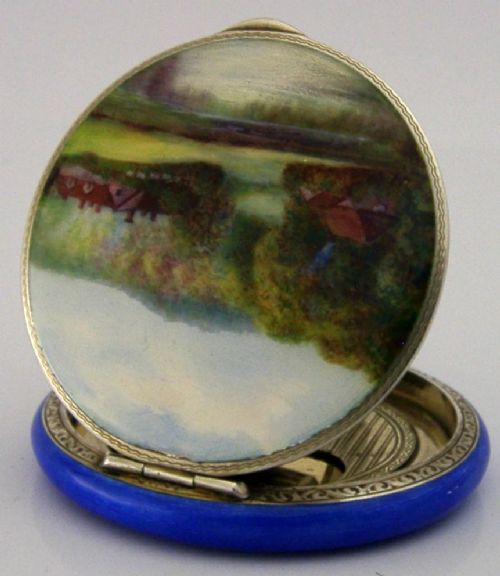
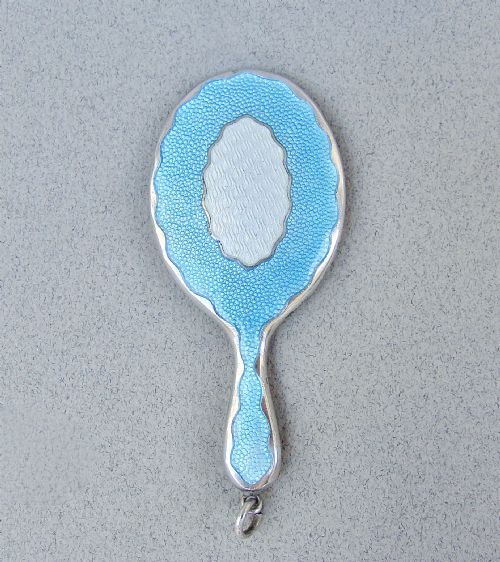
Guilloche enamel required an engine-turning lathe to engrave precise geometric patterns onto a metal base beneath translucent coloured enamel. Hand-painted enamel panels, such as those from Limoges, brought miniature pictorial art directly onto the backs of mirrors and compact lids.
Several Art Deco compacts conceal multiple faces and combination functions, ready for a quick powder dusting between jazz numbers.
Judging quality and craftsmanship
Quality rests in the precision of the metalwork and the depth of the enamel. Finely chased gilt bronze and crisp engine-turned guilloche patterns under translucent enamel show a higher level of workshop skill than plain stamped metal.
The clarity of the glass mirror plate and the tightness of hinges on compacts and folding frames indicate how carefully an object was constructed. Signed pieces by established makers or silversmiths demonstrate verified standards of production.
Henry Williamson·Henry Matthews·Richard Hudnut·Joseph Meissonnier·Giuliano Spinelli
The Antique Enamel Vanity Mirror Glossary
- Guilloche
- A decorative technique where a mechanical lathe engraves precise, repeating geometric patterns into a metal surface.
- Champlevé
- An enamelling method where troughs or cells are hollowed out of a metal plate and filled with vitreous enamel before firing.
- Ormolu
- Gilded bronze, often used in French decorative arts and table mirrors to provide a bright, gold-coloured finish.
- Compact
- A small portable case designed for powder, often featuring a mirror inside the lid and decorated with enamel on the exterior.
Antique Enamel Vanity Mirror: Frequently Asked Questions
How do I clean an antique enamel mirror?
Use a soft, dry cloth to remove dust from the enamel and metal surfaces without applying harsh polishing liquids.
Keep moisture away from the edges of the mirror glass to prevent silvering damage at the back.
What periods do these vanity mirrors come from?
The pieces span the late nineteenth century through the Art Deco period of the 1920s and 1930s.
Mid-century Italian examples also appear alongside earlier French Napoleon III dressing table items.
Are these mirrors meant for daily use?
While originally built for daily grooming, antique enamel pieces benefit from gentle handling due to their age.
Displaying them on a dressing table allows them to function as decorative objects while limiting physical wear.