

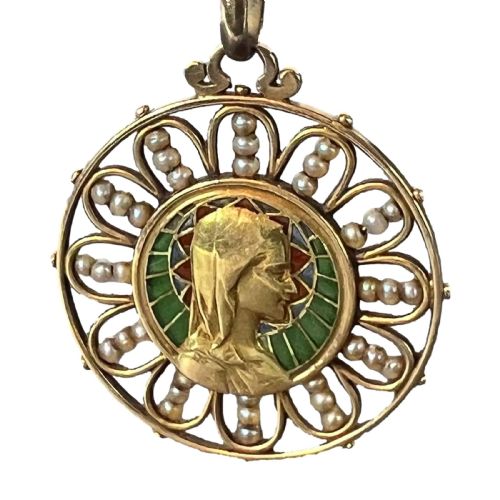


Antique Enamel Pearl Necklace
An antique enamel pearl necklace brings together vibrant vitreous colour and luminous pearls across Georgian, Victorian, and Edwardian designs.
Antique Enamel Pearl Necklace
An antique enamel pearl necklace combines detailed metalwork, lustrous pearls, and coloured vitreous enamel into a singular pendant or chain design. Pieces meeting this description span from the Georgian era through the Victorian period and into Edwardian and Art Nouveau workshops.
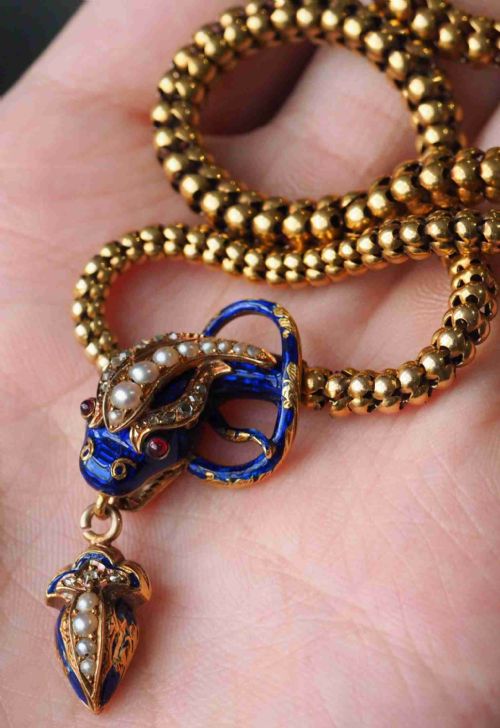
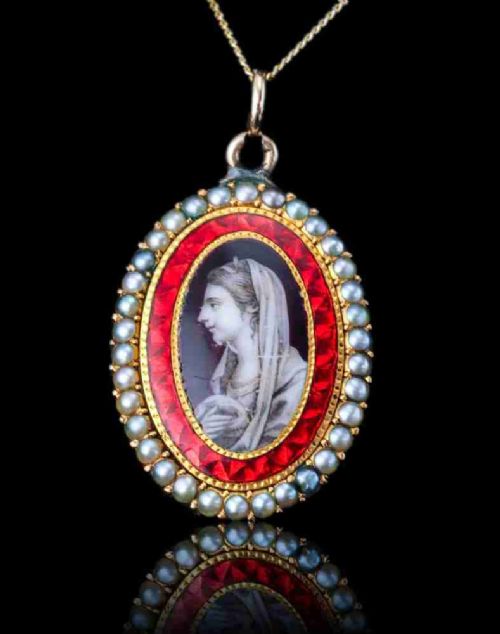
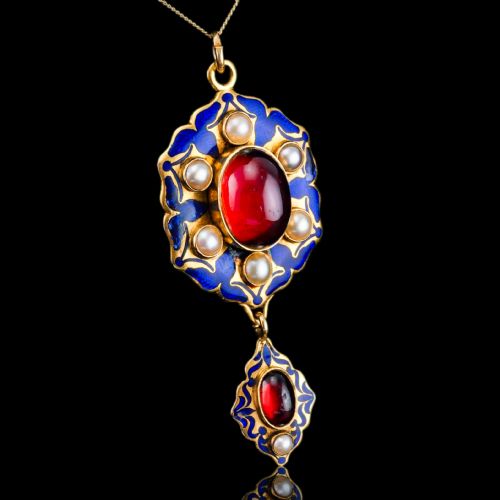
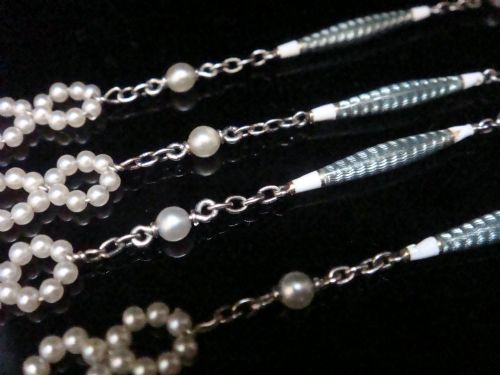
Victorian examples frequently showcase blue or red enamel set against high-carat gold alongside seed pearls or diamonds. Later Edwardian and Art Nouveau creations often lean into silver, silver gilt, and plique-a-jour enamel paired with dangling pearl drops.
Materials and construction methods
Goldsmiths and silversmiths utilised 9K, 15K, and 18K yellow gold, silver, and silver gilt as the foundational framework for these pendants and necklaces. Precious metals were cast, chased, and fabricated to hold stones securely.
Vitreous enamel, including translucent plique-a-jour and opaque blue or red variants, was fused to metal surfaces by heat. Pearls, seed pearls, blister pearls, and natural saltwater pearls were then integrated alongside gems such as diamonds, garnets, peridot, and amethysts.
Periods represented span from Georgian and Victorian times through Edwardian and Art Nouveau eras.
Distinguishing quality in period pieces
The refinement of the enamel work dictates much of the visual success of the piece, particularly where light passes through translucent plique-a-jour cells. Smooth, even colour distribution without surface cracking separates superior examples from simpler iterations.
The integration of the pearl component relative to the metal mounting reveals the maker's hand. Secure bezel or prong settings, balanced proportions between pearls and enamel fields, and crisp chasing on the gold or silver elevate the piece.
Archibald Knox·Liberty and Co·Murrle Bennett·Wilhelm Fuhner·Levinger and Bissinger·Otto Prutscher·Heinrich Levinger·Eduard Loss·Meyle and Meyer
The Antique Enamel Pearl Necklace Glossary
- Plique-a-jour
- An enamelling technique where the enamel is applied without a backing metal, resembling stained glass and allowing light to shine through the transparent or translucent colour.
- Seed pearl
- Very small natural or cultured pearls, often drilled and strung or set closely together in floral and geometric period cluster designs.
- Silver gilt
- Sterling silver or coin silver that has been coated with a thin layer of gold, providing a warm golden appearance on silver-structured jewellery.
- Holbeinesque
- A Victorian revival style inspired by sixteenth-century designs associated with Hans Holbein, characterised by elaborate enamel work, pendant drops, and gem settings.
- Mourning locket
- A commemorative piece of jewellery designed to hold hair or a miniature portrait, frequently ornamented with black or dark blue enamel and pearls.
Antique Enamel Pearl Necklace: Frequently Asked Questions
How do I care for an antique enamel pearl necklace?
Pearls and enamel are sensitive to harsh chemicals, cosmetics, and ultrasonic cleaning methods. Wipe them gently with a soft, damp cloth after wearing and store them separately to avoid scratching.
Keep gold and silver settings dry, and consult a specialist restorer if the silk cord or chain requires maintenance.
What periods do these necklaces come from?
The available selection spans from the Georgian era around eighteen hundred through Victorian and Edwardian periods up to nineteen ten. Styles shift from early sepia portraits and serpent motifs to flowing Art Nouveau flora.
Arts and Crafts pieces from the turn of the twentieth century also feature prominently alongside Austro-Hungarian multi-gem designs.
Are the pearls natural or cultured?
Period pieces predominantly incorporate natural seed pearls, freshwater pearls, or natural saltwater pearls depending on the date and region of manufacture. Cultured pearls became common later, but antique examples rely on natural formations.
Examinations under magnification help identify the organic lustre and minor surface irregularities typical of period pearls.
How can I tell an Edwardian piece from a Victorian one?
Victorian pieces often use higher-carat yellow gold with deep blue or red enamel, incorporating motifs like snakes, hearts, and mourning lockets. Edwardian jewellery frequently employs platinum or silver with lighter, airier floral designs.
Art Nouveau and Arts and Crafts pieces from around nineteen hundred favour silver, plique-a-jour enamel, and whiplash lines.