



Antique Enamel Mirror
An antique enamel mirror brings vibrant colour and meticulous metalwork to the dressing table, spanning everything from handheld vanities to large architectural wall pieces.
Antique Enamel Mirror
When searching for an antique enamel mirror, collectors encounter an eclectic array of objects that bridge personal vanity accessories and interior decoration. The selection on this page ranges from handheld powder compacts and miniature purse mirrors to substantial table mirrors, wall mirrors, and framed dressing pieces.
The chronology extends from the late nineteenth century through to the mid-twentieth century, capturing distinct shifts in design philosophy. Nineteenth-century examples frequently manifest French Rococo Revival, Napoleon III, and Arts and Crafts aesthetics, whereas the 1920s and 1930s introduce bold Art Deco geometries.
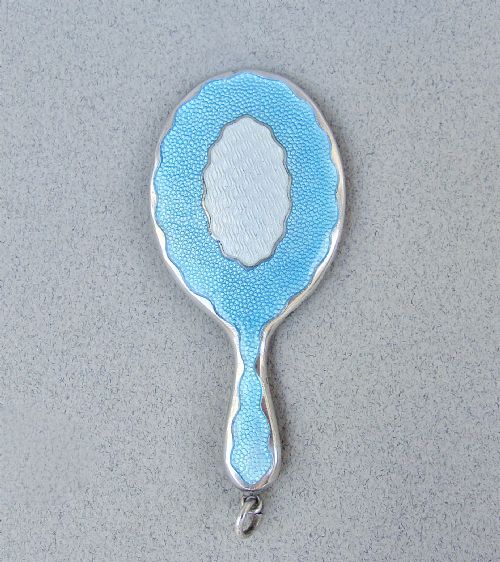
Makers and workshops from Britain, France, Italy, and Bohemia produced these items, utilising portable formats like compact cases alongside stationary vanity pieces. Buyers are most likely to meet silver and bronze handheld mirrors or guilloche enamel compacts bearing hallmarks from Birmingham and London.
Materials and Techniques
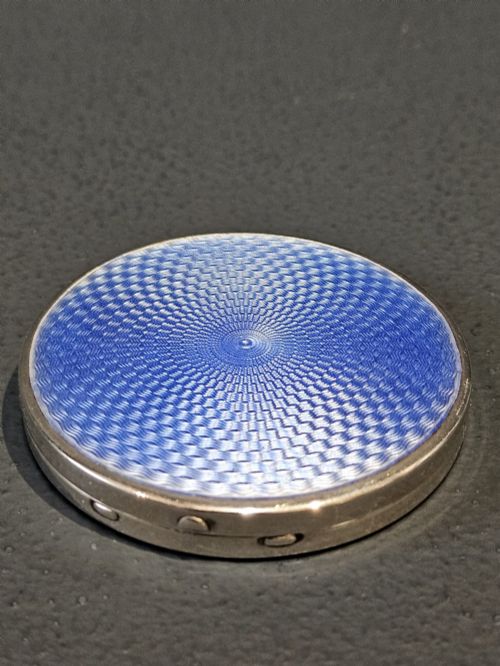
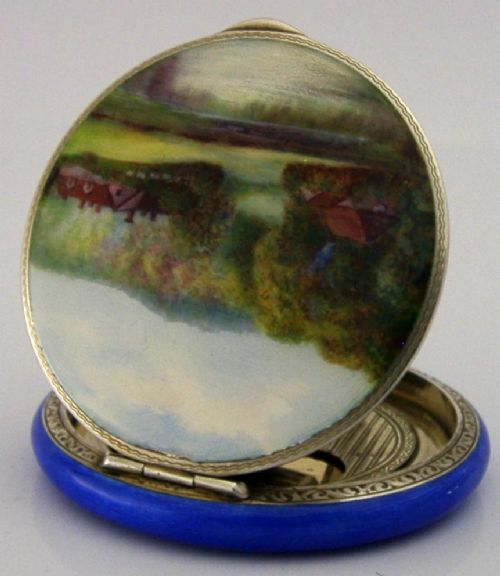
The creation of an antique enamel mirror relies on the fusion of vitreous glass pastes to metallic bases such as sterling silver, brass, gilt bronze, and ormolu. Artisans applied coloured enamels by hand, frequently employing the guilloche technique to engrave geometric patterns beneath translucent layers of blue or decorative pigments.
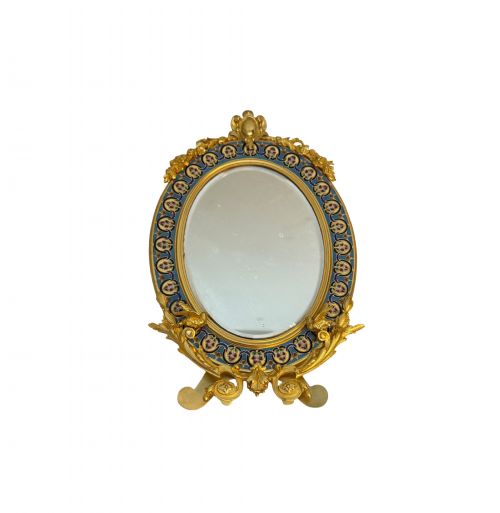
Champleve methods appear in nineteenth-century French pieces, where troughs are hollowed out of a bronze or metal foundation and filled with enamel before firing and polishing. Wood and glass complete the structural integrity of larger wall and table formats, while silver-gilt and suede linings enhance smaller compacts and pendants.
Antique Enamel Mirror Retail Price Guide 2026
Typical asking prices for enamel mirror among the pieces listed under this phrase on Sellingantiques today, from the lower quarter to the upper quarter. They describe what is for sale here now, not the wider market.
Peacocks flank an oval Arts and Crafts brass mirror, watching over the glass with decorative metallic tails.
Distinctions in Quality
The upper tier of these pieces is distinguished by the clarity of the guilloche engraving, the crispness of the metallic casting, and the preservation of the vitreous surface without chipping or restoration. Maker attribution, through clear hallmarks or signatures from established silversmiths and enamel houses, elevates the standing of an item.
Material weight and complexity of design also separate standard production from superior examples. Pieces incorporating hand-painted Limoges plaques, intricate champleve patterning, or precious metals demonstrate a higher level of artisanal commitment than simpler chrome or base metal alternatives.
Henry Williamson Birmingham·Henry Matthews·Evans·Giuliano Spinelli Florence·Meyle And Mayer·Joseph Meissonnier·Richard Hudnut
The Antique Enamel Mirror Glossary
- Guilloche
- A decorative mechanical technique where precise geometric patterns are engraved into a metal substrate before being covered with translucent enamel. This process creates a shimmering wave or sunburst effect beneath the glass surface.
- Champleve
- An enamelling method involving troughs or cells carved into a metal base to hold coloured glass paste. The piece is then fired and polished flat to reveal the metallic outlines between the enamel fields.
- Ormolu
- An application of finely ground high-carat gold-mercury amalgam to a bronze object. It imparts a rich, golden decorative surface frequently found on nineteenth-century French table mirrors.
- Sterling Silver
- A silver alloy containing substantial purity, universally marked with standardised hallmarks indicating origin and standard. It forms the structural and decorative backing for numerous twentieth-century hand mirrors and compacts.
- Arts and Crafts
- A design movement prioritising traditional craftsmanship and visible hand-working over mass production. Pieces from this tradition often feature hammered brass, copper, or organic motifs.
Antique Enamel Mirror: Frequently Asked Questions
How do I identify Art Deco mirrors?
Art Deco mirrors typically display clean geometric lines, stylised motifs, and machine-turned guilloche enamel patterns. They date predominantly from the nineteen-twenties and nineteen-thirties.
These pieces often utilise chrome or sterling silver mounts paired with vibrant blue or multi-coloured enamel coatings, reflecting the modern industrial aesthetic of the period.
What is champleve enamel?
Champleve is an ancient technique where hollows are carved directly into a metal base, such as gilt bronze, and filled with coloured vitreous enamel. The piece is subsequently fired and polished.
This method produces durable, richly coloured surface patterns that remain flush with the surrounding metal framework on nineteenth-century table mirrors.
How were powder compacts used?
Powder compacts served as portable cosmetic cases for twentieth-century women, housing pressed powder, a mirror, and occasionally a small compartment for lip rouge. They were designed to fit neatly inside a handbag or purse.
Many examples feature intricate enamel lids and integrated mesh or suede linings, functioning simultaneously as personal vanity tools and fashionable accessories.
Where were these mirrors made?
Production centres for these items spanned across Europe, with distinct regional styles emerging from Britain, France, Italy, and Bohemia. Birmingham and London silversmiths dominated British compact and mirror manufacturing.
French makers focused heavily on gilt bronze and ormolu table mirrors, while Czech workshops produced distinctive Art Deco decanter and vanity sets.