

Antique Empire Light
Antique empire light designs bring neoclassical grandeur into a room through cast bronze, cut crystal and restrained classical geometry.
Antique Empire Light
An antique empire light encompasses chandeliers, wall sconces, candelabra and lamps that draw upon the rigorous classical vocabulary of the early nineteenth century and subsequent revivals. The versions most commonly encountered on this page date from the nineteenth and early twentieth centuries, spanning the Regency period through to Edwardian interpretations of French Empire style.
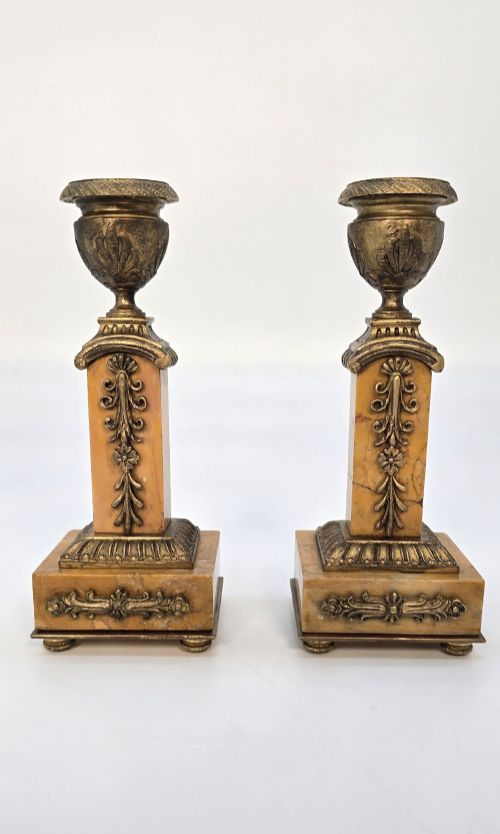
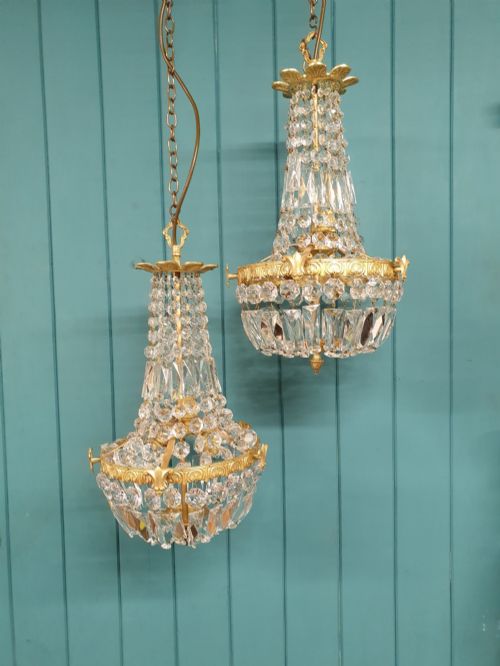
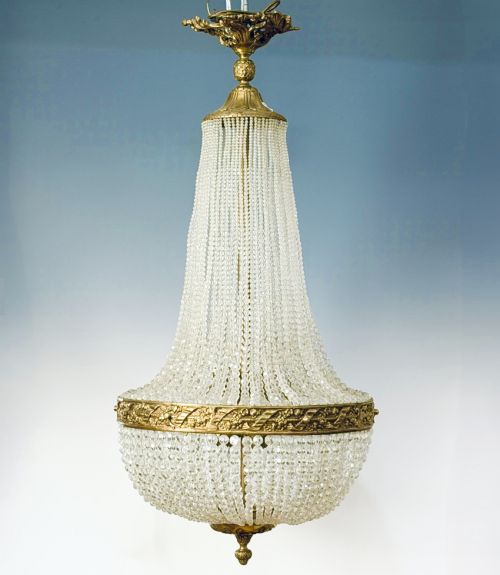
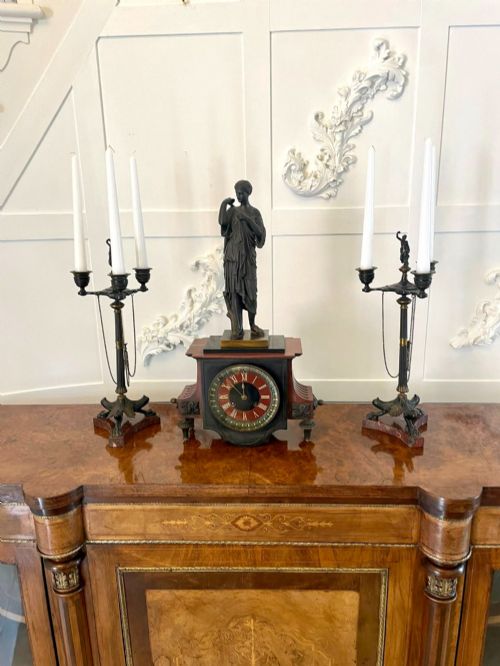
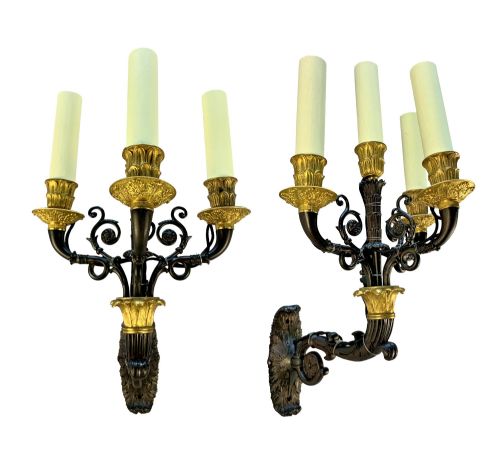
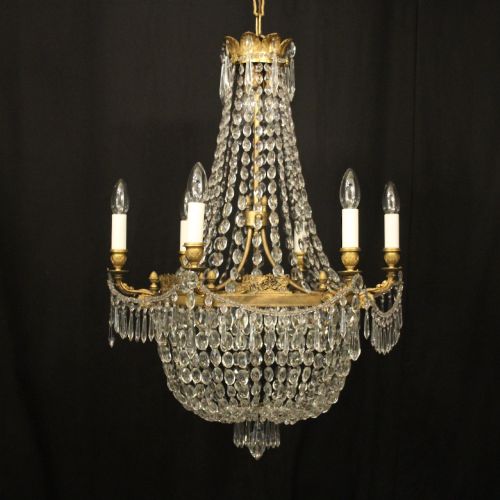
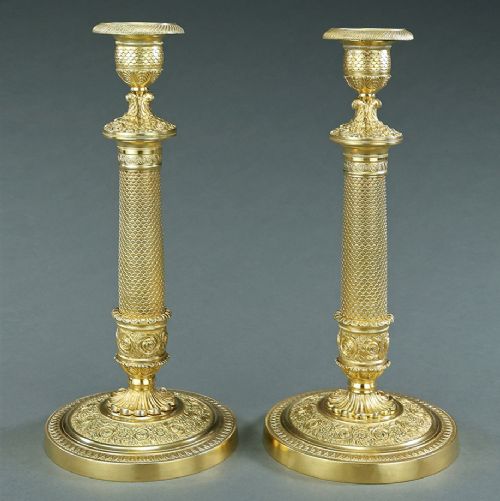
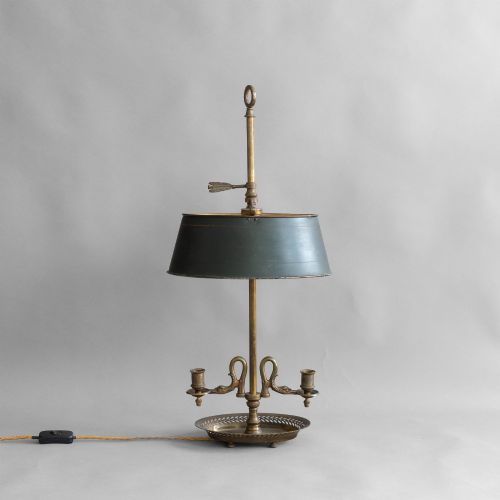
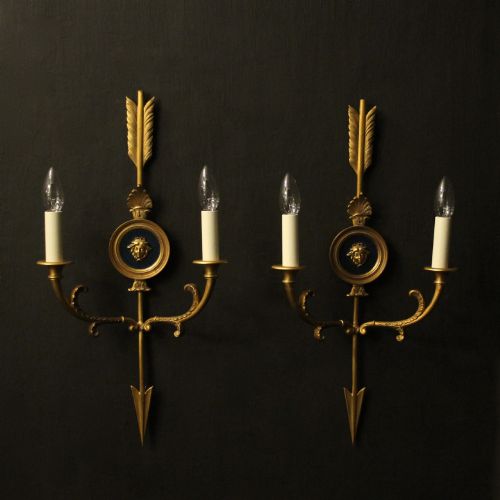
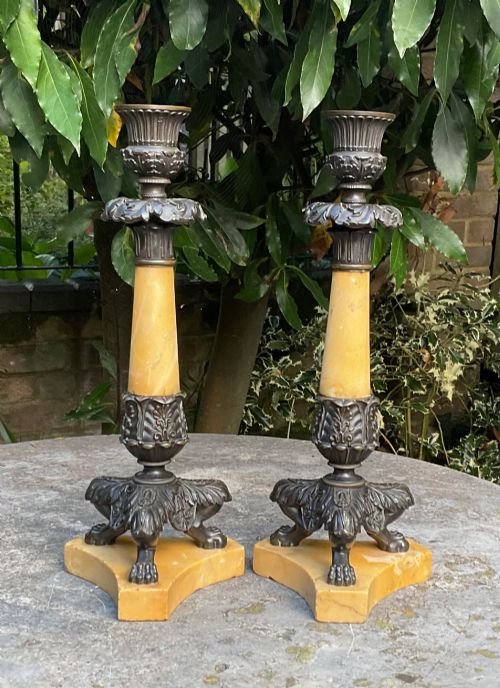
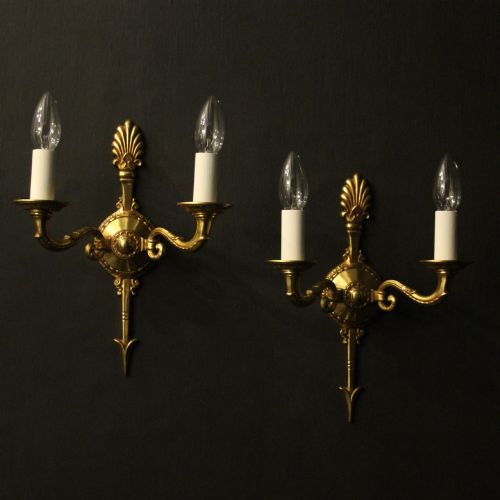
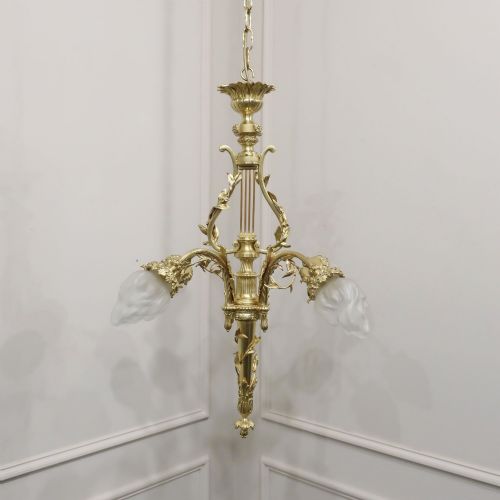
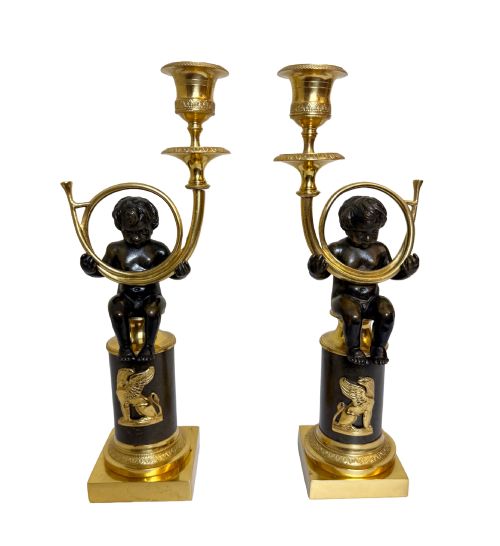
Lighting fixtures in this group range from multi-armed crystal tent and waterfall chandeliers to paired bronze wall lights and ormolu candelabra. Makers and manufacturers often employed classical motifs such as acanthus leaves, rams' heads and lyres to structure brass, gilt bronze and patinated metal components.
How they were made
Metals such as brass, gilt bronze, ormolu and patinated bronze form the structural backbone of these pieces, frequently shaped through casting and fine chiselling. Ormolu mounts and gilded surfaces provide the bright, reflective highlights characteristic of French Empire and Regency aesthetics.
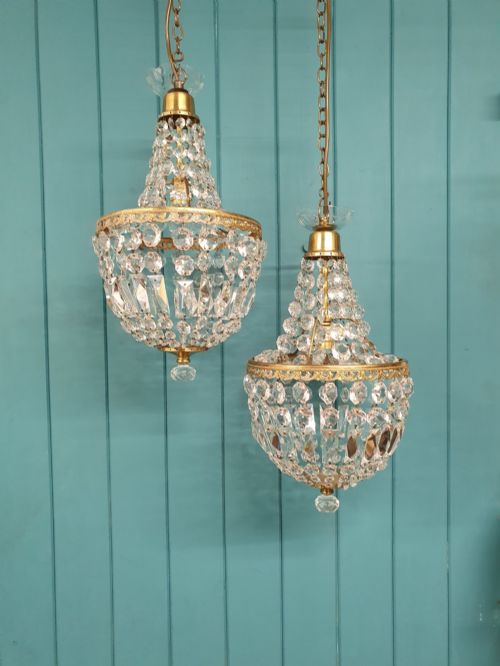
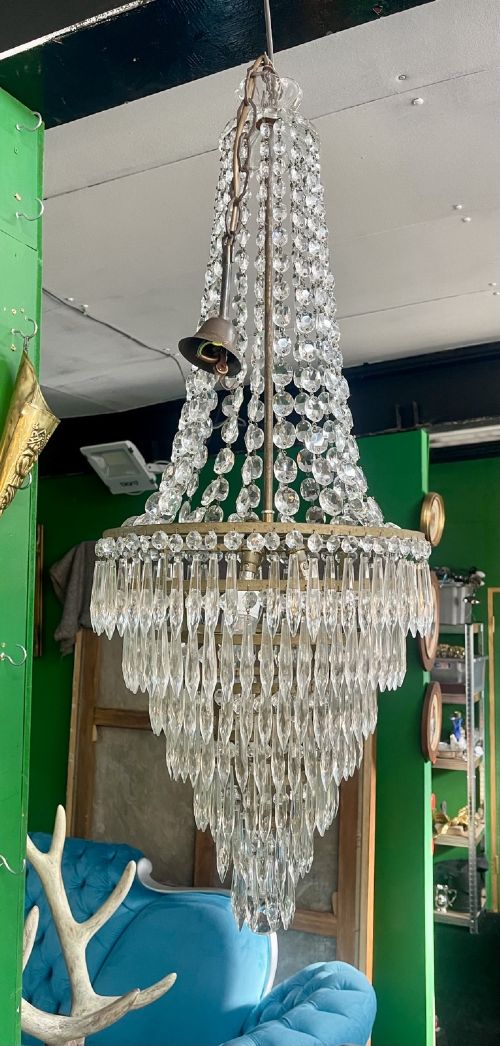
Cut glass and crystal components are assembled into tent and waterfall configurations, catching and refracting light from multiple candle or lamp arms. Secondary materials like marble, alabaster and tole peinte add weight and contrasting colour to bases, columns and shades.
A rams' head mount stares down from an 19th-century table lamp, watching over centuries of quiet conversation.
What varies in quality
The degree of crispness in the metal casting and the subsequent hand-chasing of details separate standard production from exceptional work. Finer examples display sharply defined foliage, cleanly articulated figures and securely seated crystal drops without loose fittings.
The weight and purity of the materials also dictate the tier of a piece, distinguishing heavy gilded bronze and high-grade cut crystal from lighter brass and standard pressed glass.
Pierre Philippe Thomire
The Antique Empire Light Glossary
- Ormolu
- Gilded bronze produced by applying a mercury-gilding amalgam to a cast bronze object. This technique yields a deep, durable golden finish found on fine nineteenth-century mounts and candelabra.
- Tent and waterfall
- A chandelier configuration featuring an upper conical section of strung crystal beads above a cascading arrangement of drops. It directs illumination across a wide interior space.
- Tole peinte
- Painted sheet metal used for decorative shades, lanterns and lamp bodies. It provides a smooth, matte surface often accented with gilding or traditional colour schemes.
- Candelabra
- A branched lighting fixture designed to hold multiple candles. Antique variants in this style frequently combine marble bases with ormolu arms.
- Regency
- A British design period spanning the early nineteenth century that shares strong aesthetic parallels with French Empire style. It favours clean classical lines, bronze patination and gilt highlights.
Antique Empire Light: Frequently Asked Questions
How do I clean a crystal tent chandelier?
Crystal drops and chains require gentle hand-cleaning with a mild soapy solution and a soft cloth while supported from beneath. Removing each strand individually prevents tension on the delicate wire frames.
After washing, dry every piece thoroughly with a lint-free cloth to restore maximum brilliance to the cut glass.
Are these lights converted for electricity?
Many surviving chandeliers and wall lights have received modern electrical wiring to accommodate standard bulbs safely. Conversions generally preserve the original candle tubes and drop configurations where possible.
Inspecting the internal wiring allows a buyer to verify that old brass or bronze fittings meet contemporary safety standards before installation.
What is the difference between Empire and Regency lighting?
French Empire design developed under Napoleonic rule, emphasising heavy gilt bronze, military motifs and grand neoclassical symmetry. Regency lighting emerged concurrently in Britain, sharing classical inspirations but often incorporating lighter brass details and patinated bronze.
Both styles utilise similar architectural proportions, making them visually compatible within period interiors.
How do I determine the correct chandelier size?
Selecting a chandelier depends on the room's floor area and ceiling height to ensure proper visual balance. Smaller tent chandeliers suit intimate spaces or lower ceilings, whereas multi-tier fixtures require generous vertical clearance.
Wall sconces and candelabra offer supplementary illumination when floor-standing or ceiling-hung options dominate the room.