



Antique Embossed Tray
An antique embossed tray brings heavy metalwork and chased decoration into daily service, prized for tactile surfaces that catch the light.
Antique Embossed Tray
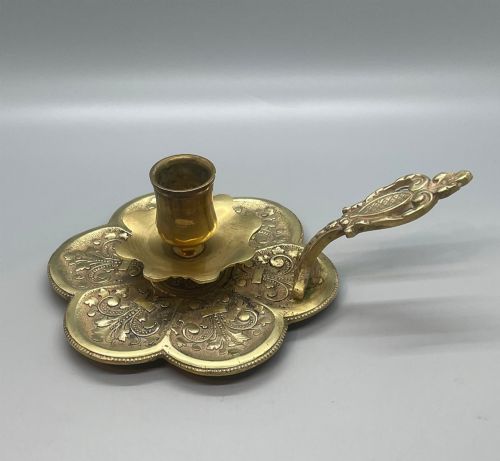
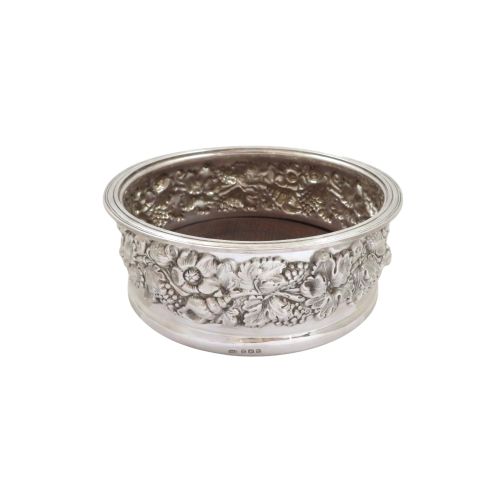
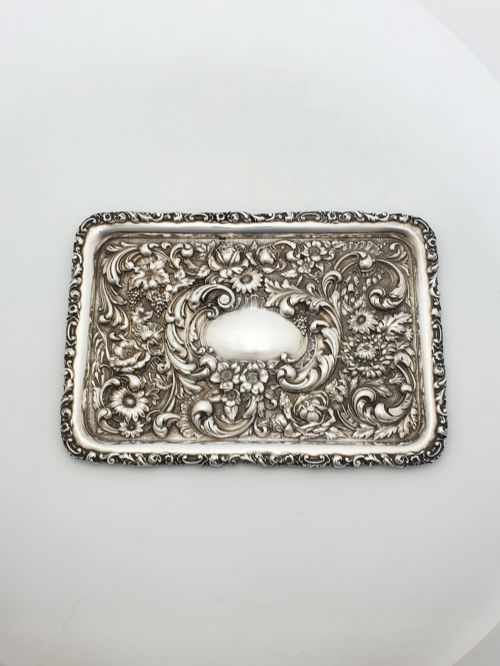
An antique embossed tray encompasses circular servers, deep chargers, and low trinket dishes decorated with raised relief work, ranging from small vanity pieces to large occasional tables. You meet these primarily in brass, copper, and sterling silver, spanning periods from the eighteenth century through to the mid-twentieth century.
The decorative vocabulary draws heavily from Victorian, Edwardian, Arts and Crafts, and Art Nouveau traditions, incorporating floral repoussé, animal motifs, and figural scenes. Simpler utility vessels sit alongside elaborate wall plates and mirrored dressing table trays designed for display.
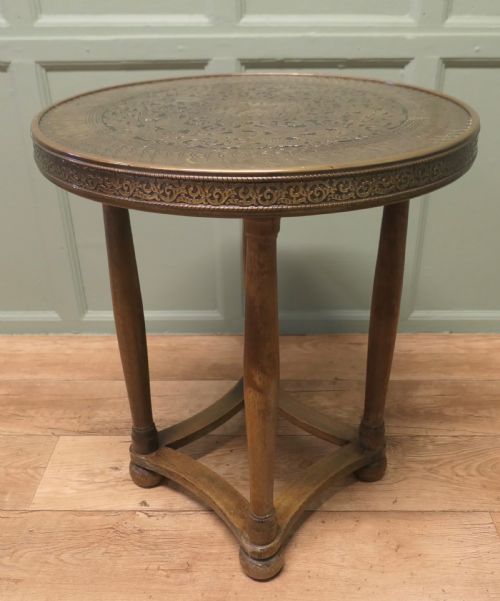
Smaller dishes often serve as jewellery trays or catchalls, while larger brass tops fitted to wooden bases function as occasional tables. The heavier bronze and silver-plated platters double as wall chargers and substantial centrepieces.
Materials and construction
Makers shaped these pieces from sheet metals including brass, copper, and sterling silver, occasionally mounting them onto oak frames or pairing them with bronze. Repoussé and chasing techniques predominated, pushing the metal from the reverse and refining details from the front to create tactile depth.
Hammered finishes left visible tool marks across Arts and Crafts examples, whereas silver-plated and solid silver items relied on smooth rolling and precise hand-chasing. Gilding was applied to select silver-gilt chargers to enrich the surface texture of figural battle scenes and decorative borders.
Antique Embossed Tray Retail Price Guide 2026
Typical asking prices for embossed tray among the pieces listed under this phrase on Sellingantiques today, from the lower quarter to the upper quarter. They describe what is for sale here now, not the wider market.
Assessing quality and execution
Quality rests on the crispness of the relief work and the thickness of the original metal sheet, where deep, hand-chased contours outlast shallow stampings. Heavier gauges prevent warping and give trays a substantial feel in the hand.
The clarity of makers' marks and silversmith hallmarks on silver pieces distinguishes standard production from notable workshops. Artistry in the design - such as fluid floral motifs or finely detailed figural scenes - separates ordinary stamped items from superior hand-worked examples.
William Comyns·James Hennell
The Antique Embossed Tray Glossary
- Repoussé
- Metalworking technique where the design is hammered into relief from the reverse side. This method creates rounded, three-dimensional motifs visible on the front.
- Chasing
- Working metal from the front side using punches and hammers to sink the background and refine surface details. It is typically used alongside repoussé work.
- Charger
- A large decorative plate or dish used traditionally for display or serving. In metalwork, these often feature extensive figural or floral embossing.
- Hallmark
- Official stamp applied to precious metals indicating the standard of purity, the assay office, and the date letter. Sterling silver pieces frequently carry these marks.
- Silver-gilt
- Silver that has been coated with a thin layer of gold on its surface. This finish adds warmth and protects the underlying silver from tarnishing.
Antique Embossed Tray: Frequently Asked Questions
How do I clean an antique brass tray?
Dust the surface gently with a soft, dry cloth to remove loose particles without disturbing the patina.
Avoid harsh chemical dips that strip away age; instead, use a mild, traditional metal polish sparingly only when necessary.
Can I use these trays for serving food?
Most antique metal trays serve primarily decorative or display purposes rather than heavy culinary use.
Silver-plated and sterling silver items can hold dry foods, but antique brass and copper pieces are best kept for display.
How do I distinguish silver plate from solid silver?
Inspect the piece closely for official hallmarks indicating sterling standard, such as a lion passant on British silver.
Absence of these marks alongside signs of base metal showing through worn areas usually indicates silver plate.
What is the difference between repoussé and engraving?
Repoussé pushes the metal outward from the reverse to create raised bumps and three-dimensional contours.
Engraving cuts lines directly into the metal surface with a sharp tool, removing material rather than displacing it.