



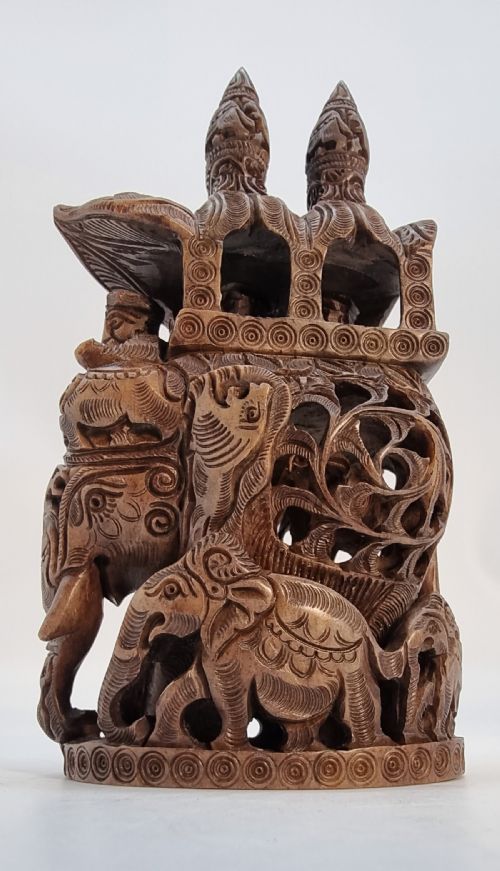

Antique Elephant Carving
An antique elephant carving brings the weight of nineteenth-century craftsmanship and exotic materials straight into a room through tables, bookends, and sculptural studies.
Antique Elephant Carving
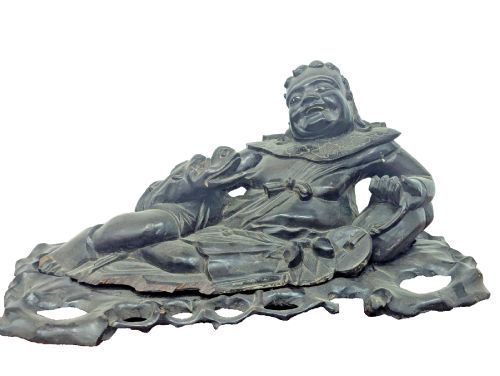
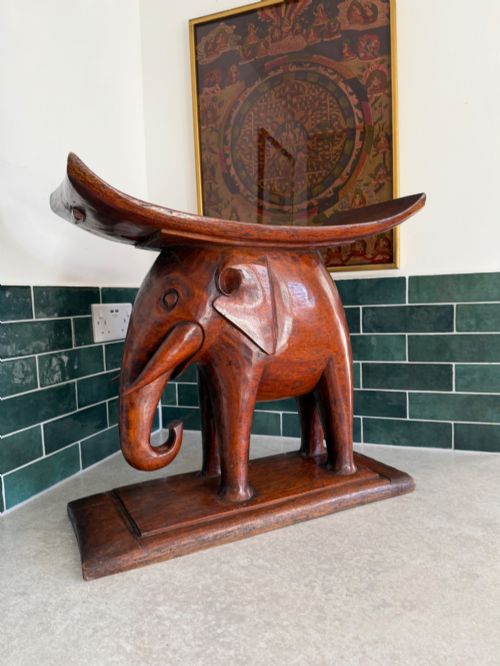
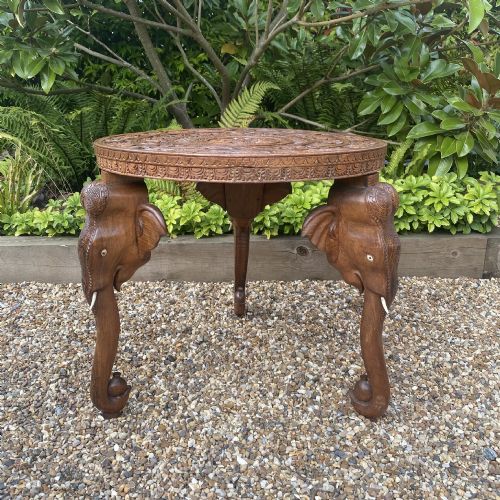
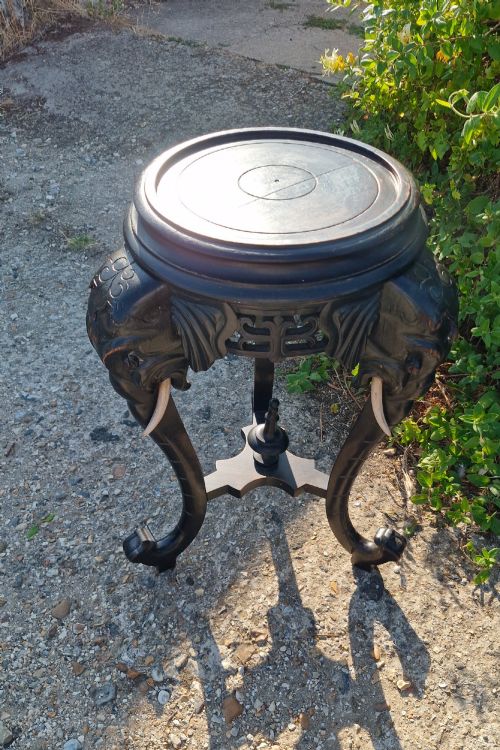
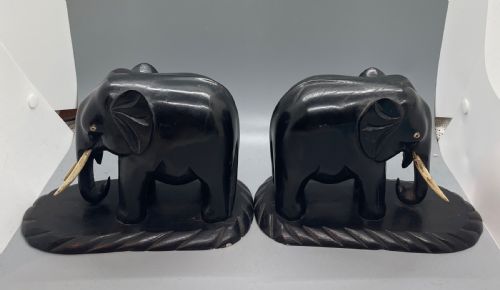
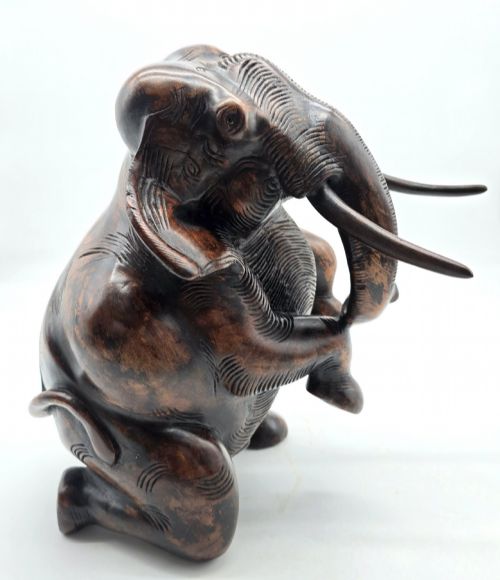
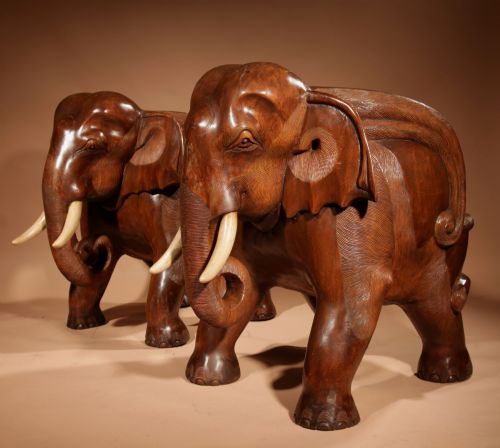
When you search for an antique elephant carving, you encounter a varied group of furnishings and decorative objects hailing primarily from the Victorian and Edwardian eras, stretching from eighteen-eighty to nineteen-thirty. These works encompass free-standing sculptural studies of ceremonial beasts alongside functional furniture such as side tables, occasional tables, and library bookends.
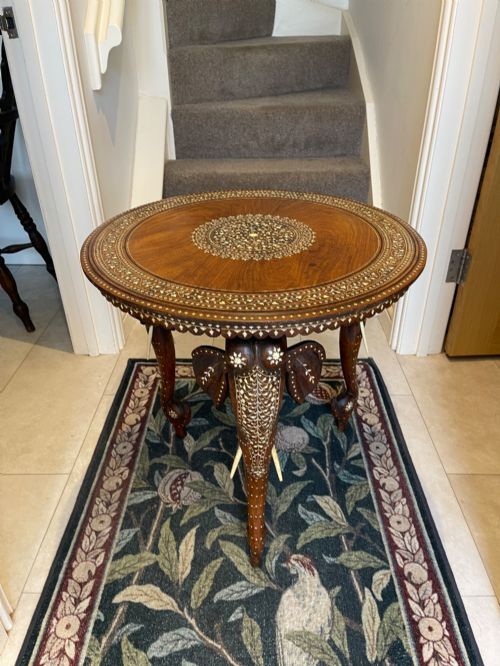
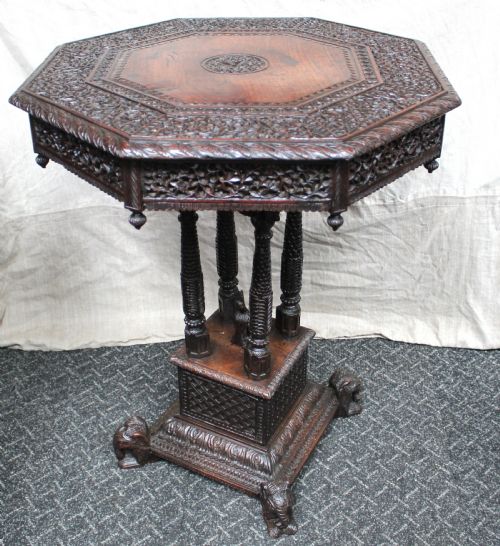
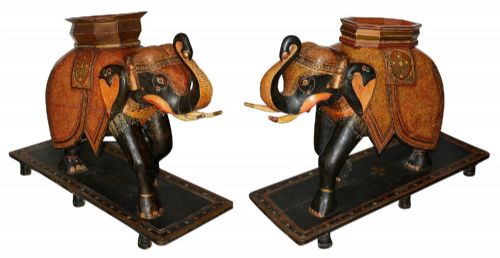
You are most likely to meet Indian and Anglo-Indian tables supported by carved figures, alongside pairs of ebony or teak bookends originating from British, French, or colonial workshops. The selection ranges from small soapstone studies to large lacquered wooden figures and bronze lamps.
Geographic origins span across British India, Qing Dynasty China, the Japanese Meiji period, and European studios influenced by Art Deco or Black Forest traditions. Each piece reflects the material culture and carving traditions of its specific region and period.
Materials and construction
Carvers utilised dense timbers such as rosewood, teak, ebony, and hardwood, which allowed for intricate relief work and durable structural forms. These woods were often turned, inlaid with bone or metal, or combined with lacquer to achieve varied surface finishes.
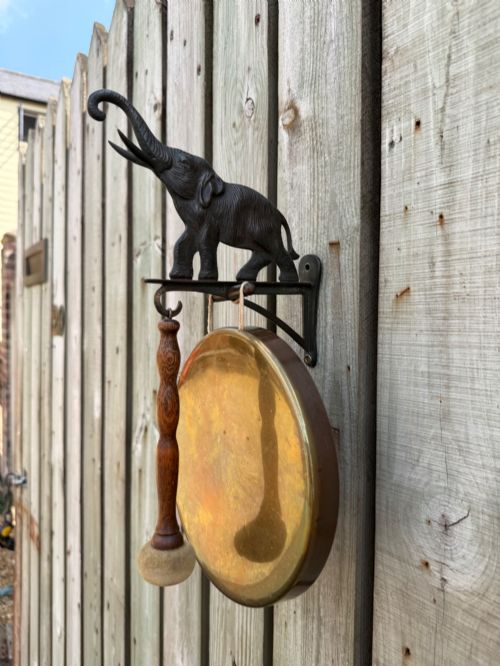
Metals such as bronze and copper appear in sculptural figures, censers, and lamp bases, cast using traditional techniques and occasionally accented with jade or painted details. Woodcarvers shaped the timber using hand chisels and gouges to render the texture of skin, ceremonial trappings, and tusks.
Antique Elephant Carving Retail Price Guide 2026
Typical asking prices for elephant carving among the pieces listed under this phrase on Sellingantiques today, from the lower quarter to the upper quarter. They describe what is for sale here now, not the wider market.
Materials represented across the inventory include teak, ebony, rosewood, bronze, bone, and soapstone.
Assessing quality
The distinction between tiers rests upon the anatomical precision of the carving and the depth of relief work on tables and bookends. Finer examples display lifelike muscle structure, carefully delineated ceremonial drapery, and well-proportioned forms rather than stiff, generic contours.
Material selection and joinery integrity dictate the upper echelon of these works, seen in dense solid rosewood or heavy cast bronze rather than lighter secondary woods or surface veneers. Pieces retaining original patination, custom stands, or intact bone inlay command greater appreciation among collectors.
The Antique Elephant Carving Glossary
- Anglo-Indian
- Describes furniture and decorative objects made in India during the British Raj, combining British forms with local carving styles. These pieces often feature dense hardwoods and intricate floral or animal motifs.
- Meiji Period
- The era in Japanese history spanning from eighteen-sixty-eight to nineteen-twelve, known for exceptional metalwork and bronze casting. Works from this time often exhibit refined naturalism and patination.
- Raj Period
- The period of direct British rule in the Indian subcontinent from eighteen-fifty-eight to nineteen-fourty-seven. Carvings from this era frequently depict ceremonial elephants and local wildlife in teak or ebony.
- Qing Dynasty
- The final imperial dynasty of China, ruling from sixteen-fourty-four to nineteen-one. Items from this era encompass hardwood figures and archaic bronze vessels with intricate detailing.
- Hardwood
- Dense timber derived from broad-leaved trees, including teak, rosewood, and ebony. These woods provide the structural strength and fine grain necessary for detailed sculptural carving.
Antique Elephant Carving: Frequently Asked Questions
How were antique elephant tables used?
These tables served as occasional furniture in nineteenth-century drawing rooms and libraries, functioning as display surfaces for lamps or small ornaments.
Their sturdy hardwood construction allowed them to support heavy objects despite the decorative carved figures forming the base.
What woods are commonly found?
Carvers relied heavily on dense tropical hardwoods such as teak, rosewood, and ebony because they held fine detail without splitting.
These timbers often feature dark natural patinas that deepen over decades of exposure to light and handling.
How do I date an elephant carving?
Dating relies on stylistic clues, such as the geometric bone inlay typical of nineteenth-century Hoshiarpur work or the stylised lines of nineteen-thirty Art Deco pieces.
Construction methods, tool marks on the timber, and the specific geographic attribution provide further chronological context.
Where were most of these carvings made?
A significant portion originates from the Bombay Presidency and other regions of British India during the Raj, created for both local use and export.
Others stem from European workshops in the Black Forest or France, alongside Qing Dynasty Chinese studios and Japanese Meiji period foundries.