
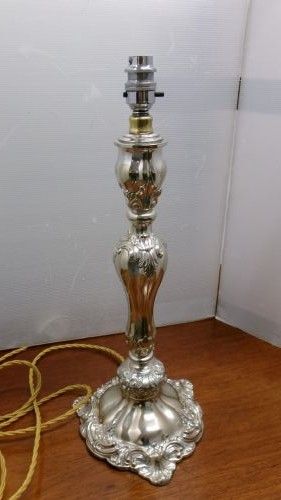


Antique Electroplate Candlesticks
Antique electroplate candlesticks bring nineteenth-century metalwork into the room, offering plated brass and copper shaped by Victorian and Edwardian revival styles.
Antique Electroplate Candlesticks
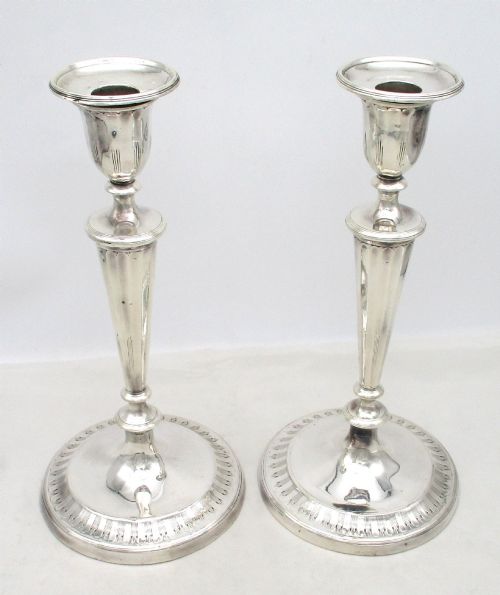
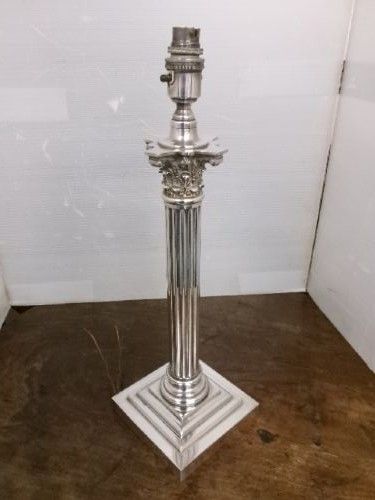
Antique electroplate candlesticks are lighting items produced across the Victorian and Edwardian periods, utilising base metals coated in a layer of silver through electrolysis. Buyers searching for antique electroplate candlesticks encounter varied forms, ranging from simple desk sticks to Corinthian columns and multi-light candelabras.
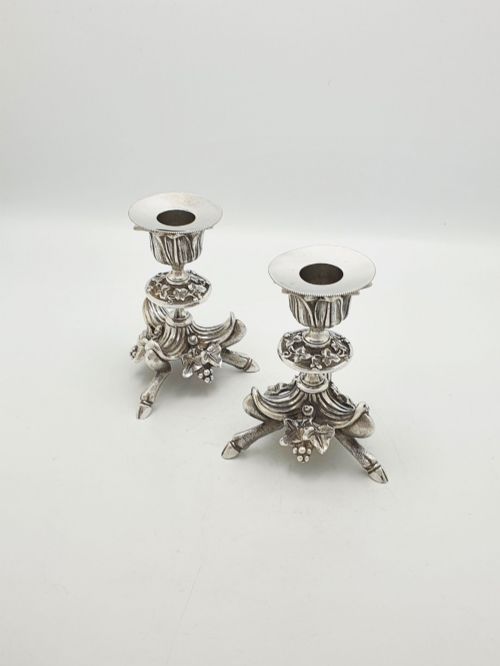
The selection on this page spans from mid-nineteenth century examples up to nineteen-ten, taking in Georgian-inspired designs alongside neoclassical, rococo revival, and naturalistic motifs. Pairs predominate, alongside centrepieces and table lamps incorporating walnut or palm tree decorative elements.
How they were made
Manufacture relies on a base metal core, typically nickel silver, brass, or copper, which receives an electrochemically deposited coating of silver plate. Makers shaped this foundation through casting and spinning before plating the surface.
Makers finished pieces with chased or engraved details, highlighting columns, fluting, and figural elements before final polishing.
Listings feature items spanning the Victorian and Edwardian eras, utilising base metals including brass, copper, and EPNS.
What varies in quality
Quality depends on the thickness of the original silver deposit and the durability of the base metal underneath, which determines how well the plating survives decades of cleaning. Weight and balance also separate substantial desk and dining pieces from lighter items.
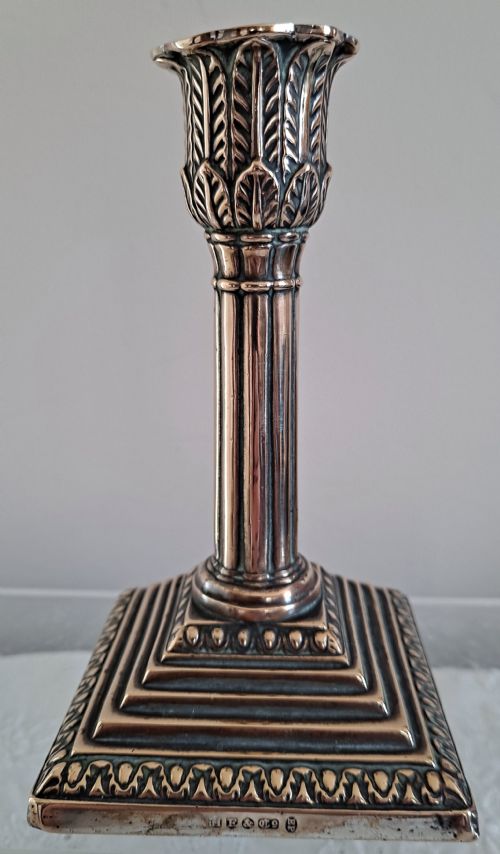
Design execution distinguishes standard production from finer work, seen in the crispness of neoclassical column capitals, rococo scrolls, and figural castings.
Smith & Sissons & Co·Harrison Brothers & Howson·John Pound & Co·Palmer & Co·Elkington
The Antique Electroplate Candlesticks Glossary
- Electroplate
- A metal object coated with a thin layer of silver using an electrical current in a silver cyanide bath. This process replaced older Sheffield plating methods.
- EPNS
- Electroplated Nickel Silver, a durable alloy base of copper, nickel, and zinc commonly used beneath the silver coating. It provides a strong foundation for nineteenth-century wares.
- Corinthian column
- A classical architectural order featuring ornate capitals decorated with acanthus leaves, frequently utilised in Edwardian and Victorian candlestick stems.
- Candelabra
- A branched candlestick holding multiple candles or configured as a central light fitting with arms. Several examples incorporate removable branches to function as single sticks.
Antique Electroplate Candlesticks: Frequently Asked Questions
How do I clean antique electroplate candlesticks?
Clean silver plate gently with a soft cloth and a specialised silver cream formulated to protect thin metal layers. Avoid harsh abrasive dips that strip the remaining silver coating from the base metal.
Regular dusting keeps tarnish at bay without requiring heavy polishing that wears down raised details on classical columns and figural stems.
Were these candlesticks converted to electricity?
Many nineteenth-century lighting items listed as table lamps started life as oil or candle fittings and received later conversions for electric bulbs. Others left workshops designed specifically for illumination.
Check the base and wiring channels to understand whether a piece retains its original candle sconces or has been adapted for modern use.
What is the difference between EPNS and silver plate?
Silver plate is a general term for any base metal covered in silver, whereas EPNS specifies that the underlying metal is a nickel-copper-zinc alloy. EPNS offers a resilient white metal base that shows less contrast when the outer silver layer wears thin.
Victorian manufacturers adopted EPNS widely because it provided a robust structure for complex cast candlesticks and candelabras.
How do I date a pair of candlesticks?
Dating relies on stylistic revival periods, such as rococo or neoclassical, combined with hallmarks and maker marks stamped on the base or drip pan. Examining the weight, construction joints, and plating style helps narrow the decade of production.
Nineteenth-century registries and maker archives provide direct reference points for pieces produced by firms operating in Sheffield and London.