


Antique Electric Wall Appliques
Antique electric wall appliques bring period illumination and decorative metalwork into a room, offering warm light and sculptural presence.
Antique Electric Wall Appliques
When you search for antique electric wall appliques, you are looking at wall-mounted light fixtures designed to illuminate interiors through electrical wiring while displaying traditional decorative forms. These pieces function both as sources of light and as permanent wall ornaments, bringing historical design directly into domestic spaces.
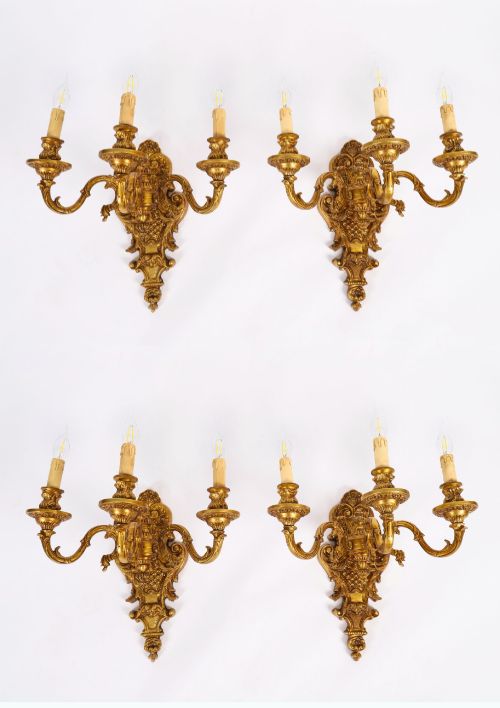
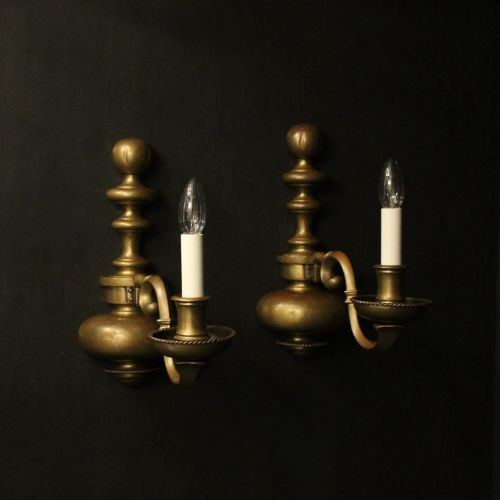
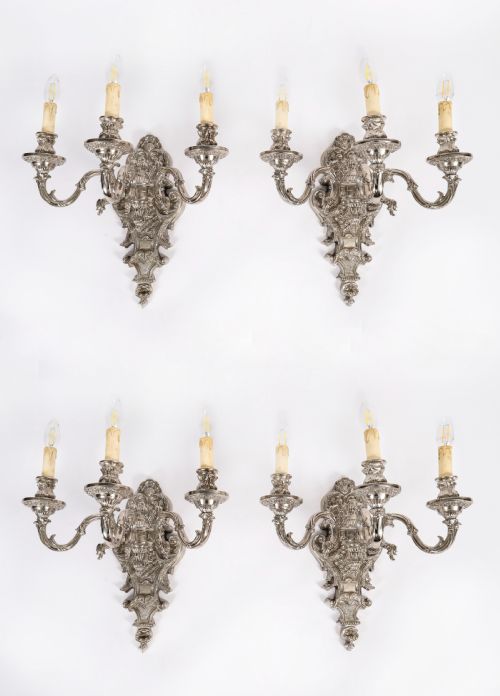
The versions most commonly met on this page span the late nineteenth century through the 1930s, encompassing Edwardian pieces and early twentieth-century designs. They appear frequently in pairs or larger sets, taking the form of single, double, triple, or four-arm wall lights and sconces.
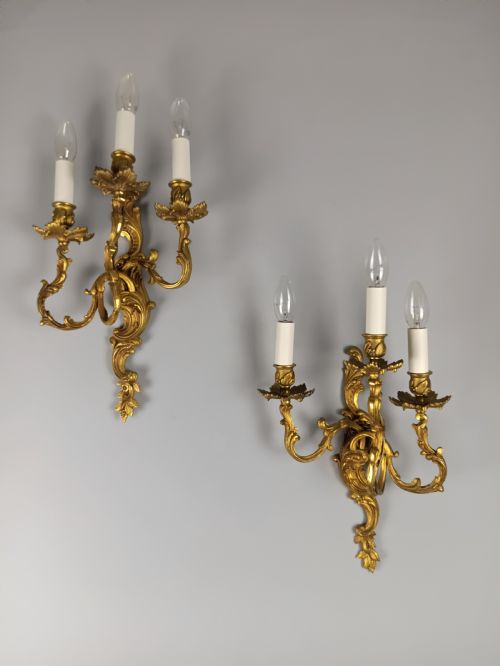
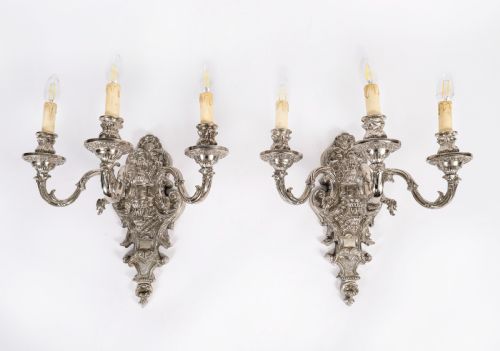
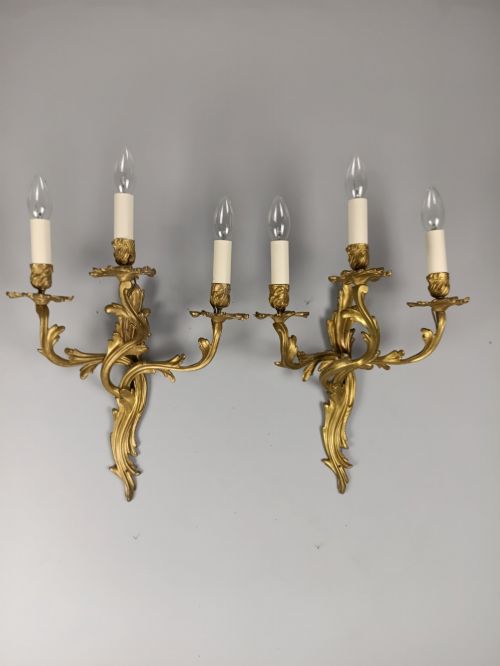
Stylistically, the selection leans heavily towards French Rococo, Neoclassical, and Italian traditions, alongside English traditional formats. Originating largely from continental and British workshops, these fixtures reflect the aesthetic preferences of their respective periods through ornate casting and gilded finishes.
How they were made
The construction of these wall appliques relies primarily upon cast metals and carved wood, with brass, bronze, ormolu, and gilt bronze forming the structural core of many pieces. Artisans shaped these metals through traditional casting methods before applying surface treatments such as silver plating, gilding, or polychrome decoration.
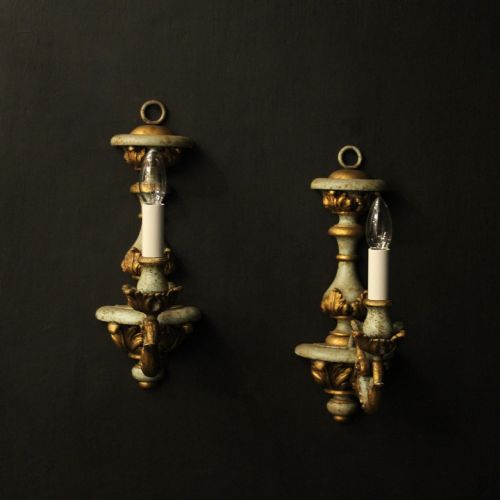
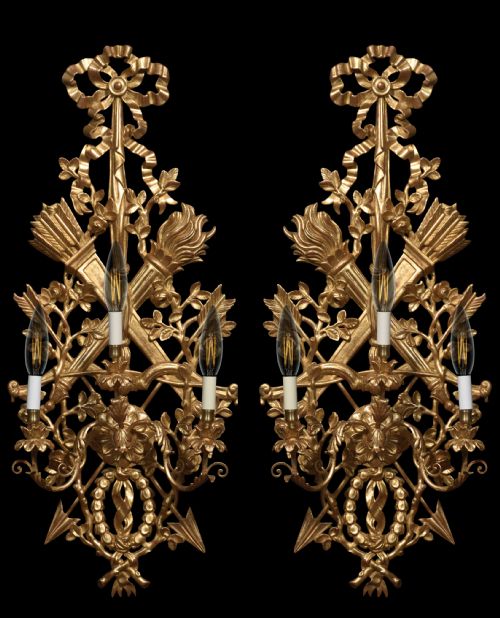
Wooden examples utilise carved and decorated frames or giltwood construction, particularly seen in Florentine and Italian pieces. The decorative details, from Rococo scrollwork to Neoclassical symmetry, were hand-finished to create the textured surfaces characteristic of period metalwork and carved timber.
The object forms comprise wall lights and wall sconces, styled in French Rococo, Neoclassical, and Edwardian designs.
What varies in quality
Quality in these wall lights is determined by the crispness of the casting and the depth of the chased detail in the metalwork. Finer pieces exhibit sharp relief, clean lines, and carefully articulated ornamentation that demonstrates skilled hand-tooling after the initial casting process.
The integrity of the surface finish - whether fire gilding, ormolu, silver plating, or giltwood - distinguishes superior examples from simpler ones. Better workshops maintained meticulous standards in their surface applications, ensuring the gilding or plating aged evenly and retained its visual richness over decades.
The Antique Electric Wall Appliques Glossary
- Ormolu
- A technique of applying finely ground high-carat gold to a bronze object, creating a rich golden surface finish. This method was widely used in French decorative arts to impart a luxurious appearance.
- Gilt Bronze
- Bronze metal that has been coated with a thin layer of gold leaf or gold paint. It provides a durable and decorative metallic sheen.
- Wall Sconce
- A decorative light fixture fixed to a wall, designed to hold multiple or single bulbs or candles. These fixtures project outward to cast illumination across the room.
- Neoclassical
- A style spanning the eighteenth and nineteenth centuries that draws inspiration from the classical art and culture of ancient Greece and Rome. It is characterised by symmetry, restraint, and classical motifs.
- Rococo
- An ornate style originating in France, defined by elaborate curves, scrollwork, and asymmetrical plant-based motifs. It creates a sense of dynamic movement in decorative objects.
Antique Electric Wall Appliques: Frequently Asked Questions
How do I wire antique wall appliques?
Most antique wall appliques require professional electrical installation to ensure they meet current safety standards while preserving the original metal or wooden structure. A qualified electrician can safely integrate modern internal wiring through the existing arms and backplates without damaging the antique components.
Buyers should consult with a specialist if the fixture requires rewiring or conversion from older fittings to standard modern bulb holders. Preserving the outer aesthetic while updating the internal electrical components is standard practice for safe domestic use.
How do I date an antique wall light?
Dating relies upon examining the manufacturing techniques, metal alloys, fixing screws, and stylistic markers characteristic of specific periods like the Edwardian era or the nineteenth century. Cast bronze and brass methods evolved over time, showing distinct tooling marks and assembly styles according to the decade of production.
Comparing the decorative vocabulary, such as Neoclassical symmetry versus Rococo asymmetry, helps narrow down the era. Structural clues on the reverse mounting plates often reveal whether a piece dates to the 1880s or the 1930s.
What is the difference between an applique and a sconce?
In historical terminology, wall appliques and wall sconces both refer to light fixtures mounted directly onto vertical wall surfaces. The terms are frequently used interchangeably by makers and dealers to describe ornamental brackets designed to hold illumination.
Regional preferences often dictate the terminology, with applique more commonly applied to continental European brass or gilt bronze fixtures. Both terms describe functional decorative hardware intended to project light outward into a room.