

Antique Edwardian Luggage
Antique edwardian luggage brings tactile history into a room, offering sturdy oak stands, leather hat boxes and canvas trunks built for transit.
Antique Edwardian Luggage
The objects range from domestic country house furnishings to military campaign cases and utilitarian hotel racks. These pieces serve as functional bedroom accessories, hallway stands, or decorative storage chests within modern interiors.
How they were made
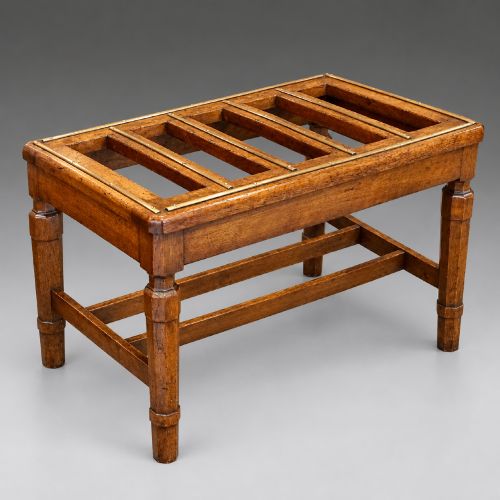
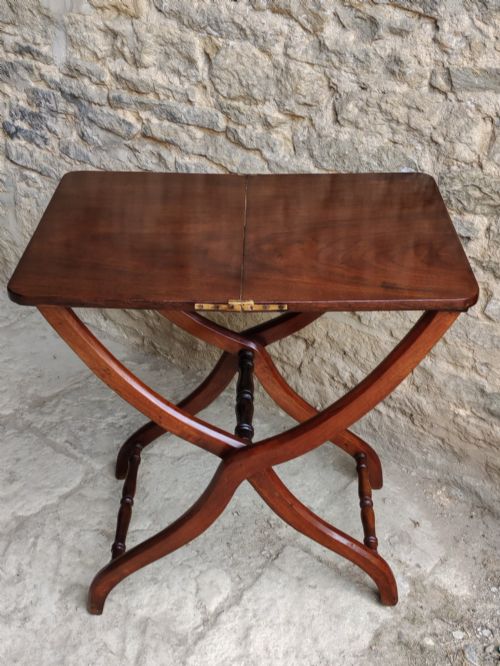
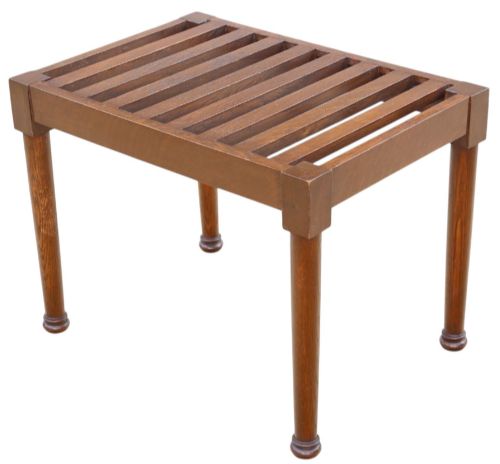
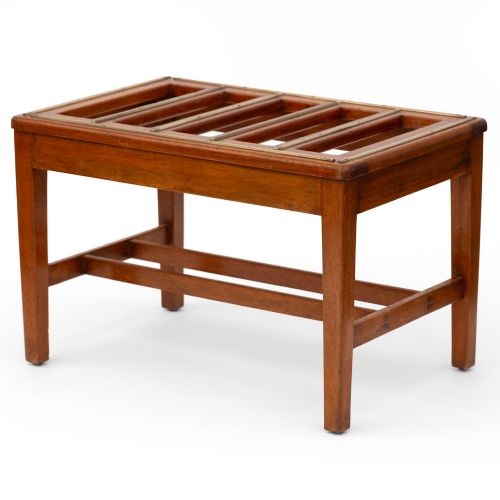
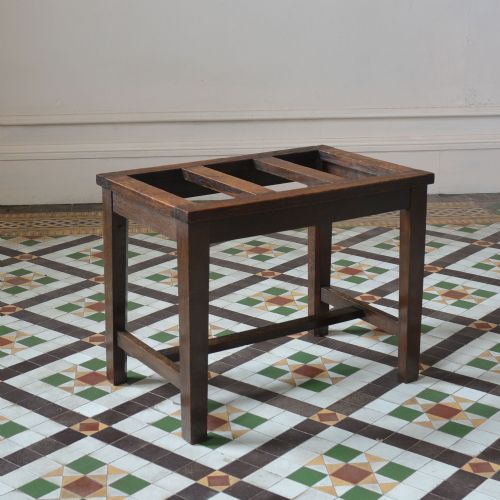
Makers utilised durable hardwoods such as oak, mahogany, ash and walnut for rigid frames and folding stands, often incorporating raised rear upstands or slatted tops. Metal components relied on cast brass brackets, iron hardware and zinc linings to reinforce corners and protect contents from moisture during voyages.
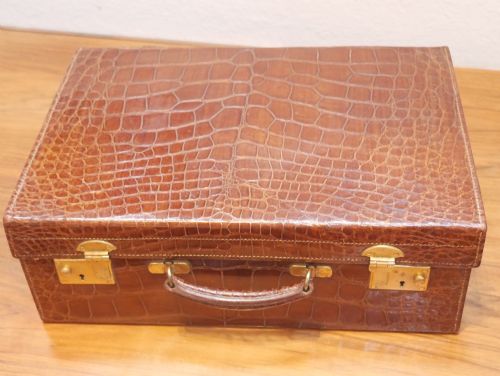
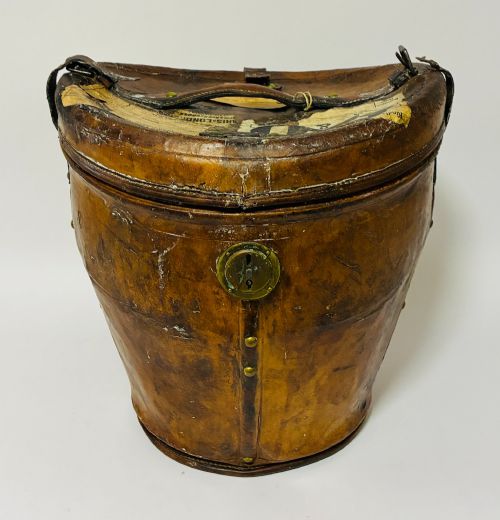
Flexible elements combined thick cowhide leather, textured crocodile skin, canvas and vellum stitched securely over internal wooden carcases. Travel pieces frequently featured fitted internal compartments, original locks with keys, and applied paper travel labels documenting journeys.
Antique Edwardian Luggage Retail Price Guide 2026
Typical asking prices for edwardian luggage among the pieces listed under this phrase on Sellingantiques today, from the lower quarter to the upper quarter. They describe what is for sale here now, not the wider market.
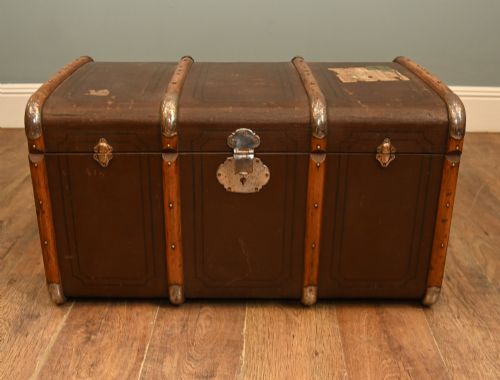
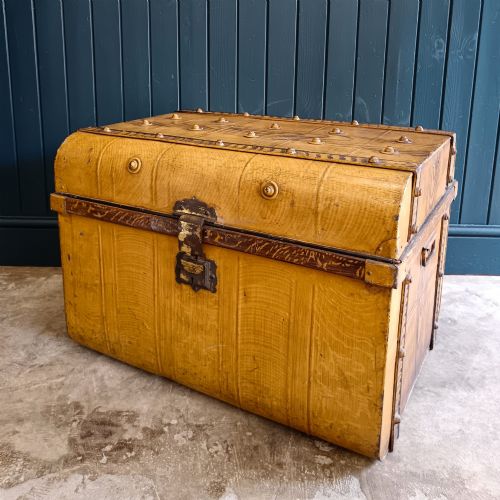
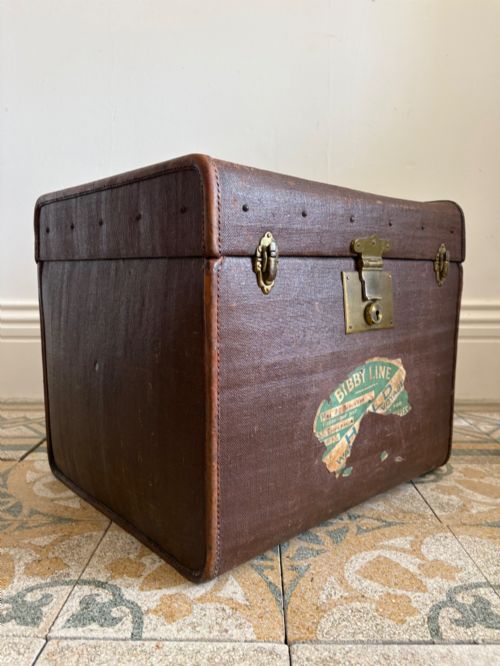
Several trunks retain original shipping labels recording international voyages from a century ago.
What varies in quality
The grade of an item depends on the integrity of its primary materials and the original quality of its hardware. Solid oak and mahogany stands with tight joints and well-cast brass mounts sit at a higher level than simpler painted or utility pieces.
Provenance and maker attribution elevate certain items, particularly those bearing the marks of established West End retailers or military outfitters. Intact original fittings, working locks, and preserved travel labels further distinguish exceptional examples from standard utilitarian storage.
Army and Navy·Finnigan's Manchester·Allen of London·John Pound·Aux Etats Unis·Shoolbred·Lincoln Bennett
The Antique Edwardian Luggage Glossary
- Luggage Stand
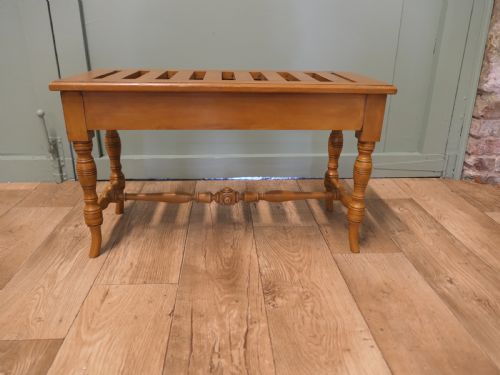
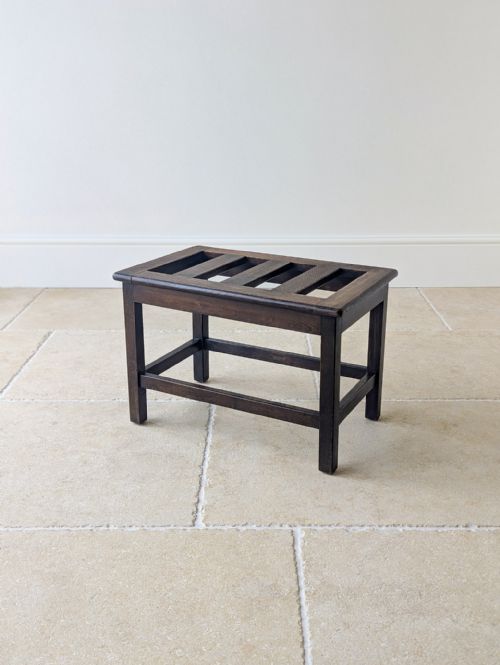
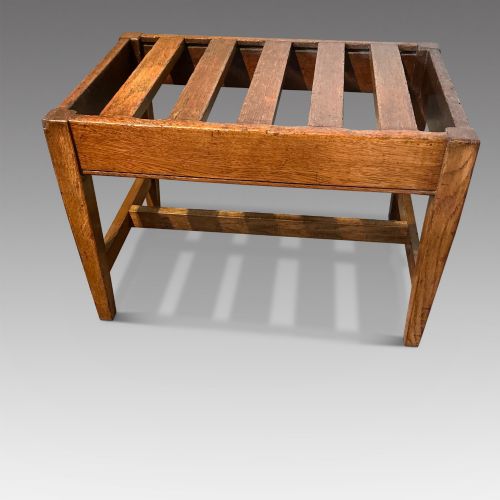
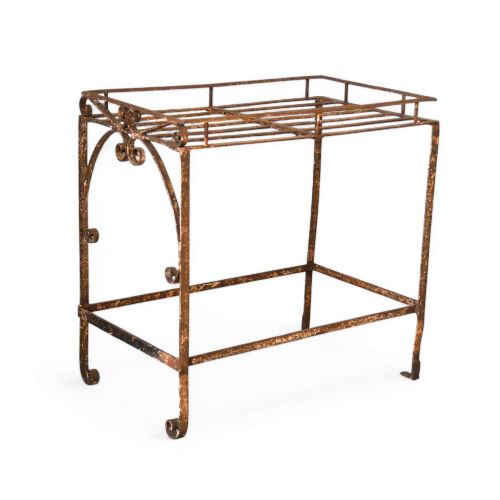
- A low folding or rigid rack designed to hold a suitcase or trunk off the floor in a bedroom or guest room. These typically feature slatted wooden tops and sometimes include a raised rear guard.
- Steamer Trunk
- A low-profile travel chest designed to fit beneath a steamship cabin berth. They often possess canvas or leather coverings over wood with reinforced metal corners.
- Gladstone Bag
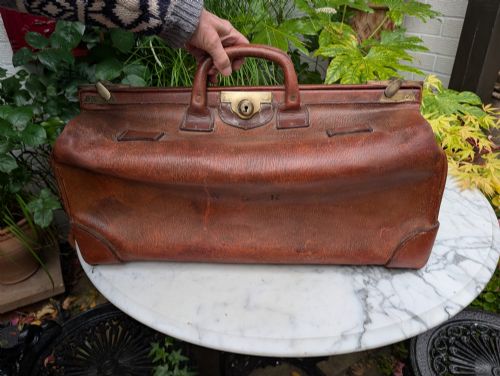
- A portable leather travel bag named after the British statesman, featuring a rigid frame that opens wide into two equal compartments. These bags utilise sturdy brass hinges and a central clasp.
- Campaign Case
- A portable travel chest or packing case built for military officers or colonial travellers. They are constructed for durability with recessed hardware and protective corner brackets.
- Hat Box
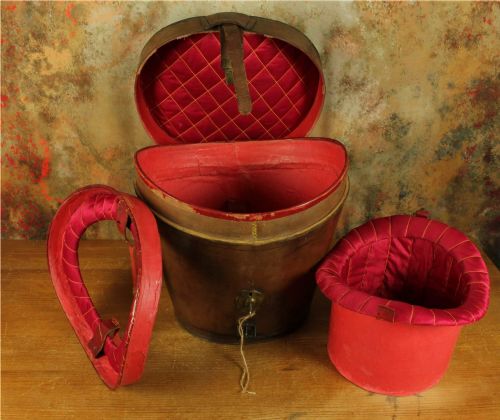
- A rigid container specifically shaped to store top hats or headwear safely during transit. They are frequently fashioned from thick moulded leather with fitted internal cradles.
Antique Edwardian Luggage: Frequently Asked Questions
What is an edwardian luggage stand used for today?
These folding or static stands serve well in guest bedrooms for holding overnight bags, or in hallways as distinctive shoe and accessory furniture.
Their compact footprints and slatted wooden designs also suit use as low bedside tables or display surfaces.
How do I care for antique leather trunks?
Keep leather pieces away from direct sunlight and artificial heat sources to prevent the hide from drying out and cracking.
Applying a specialist neutral leather wax occasionally helps preserve the suppleness of nineteenth and early twentieth century hides.
Were steamer trunks used on actual ships?
Travel trunks and low steamer chests were specifically manufactured for ocean liner journeys during the late nineteenth and early twentieth centuries.
Their shallow heights allowed them to slide easily under the narrow berths found in ship cabins.
How can I tell an edwardian piece from a victorian one?
Edwardian items tend to display lighter woods like limed oak or simpler, refined mahogany lines following the heavier, more ornate styles of the late nineteenth century.
Victorian pieces often favour darker, more substantial timbers and deeper proportions intended for formal domestic or military use.