





Antique Earthenware Cow
These antique earthenware cow pieces bring domestic charm to a room, offering functional vessels and decorative figures from past centuries.
Antique Earthenware Cow
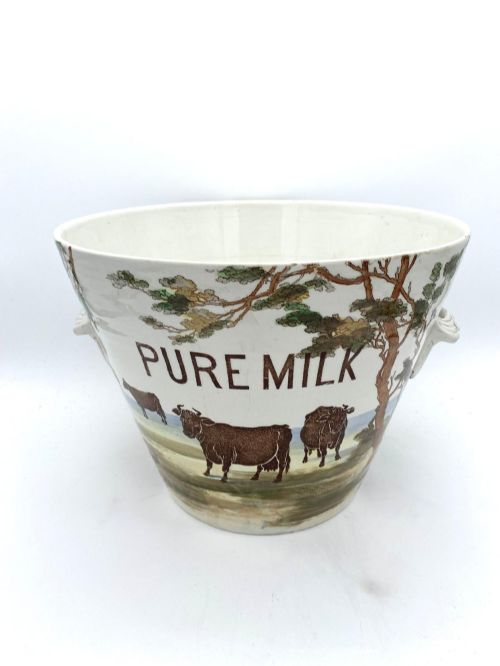
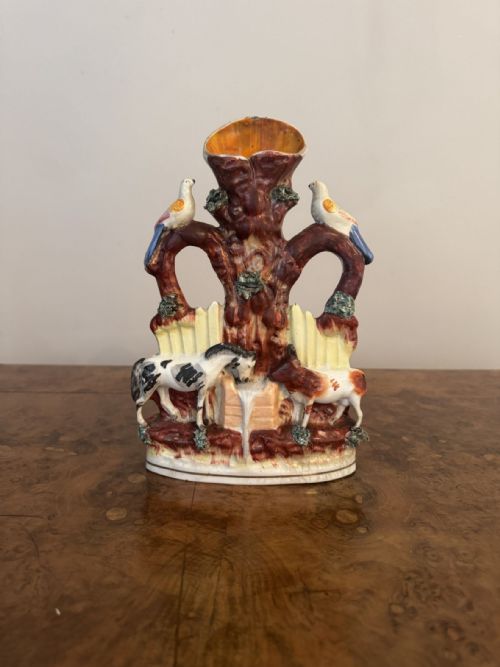
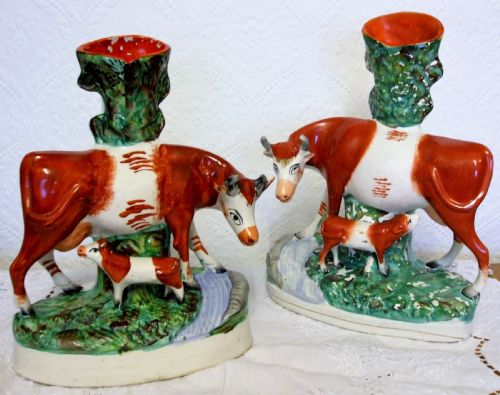
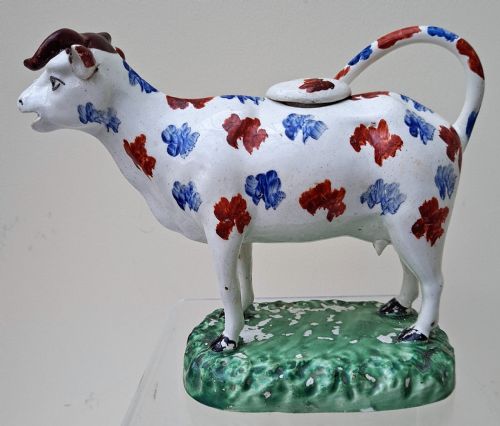
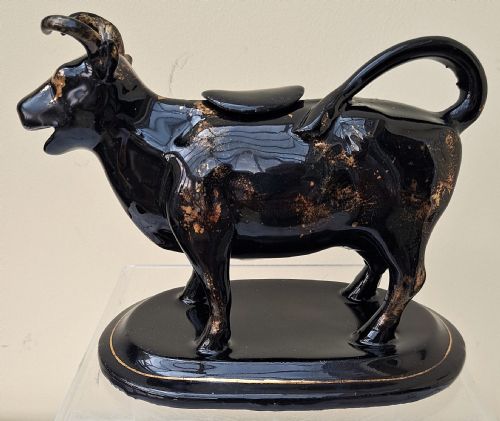
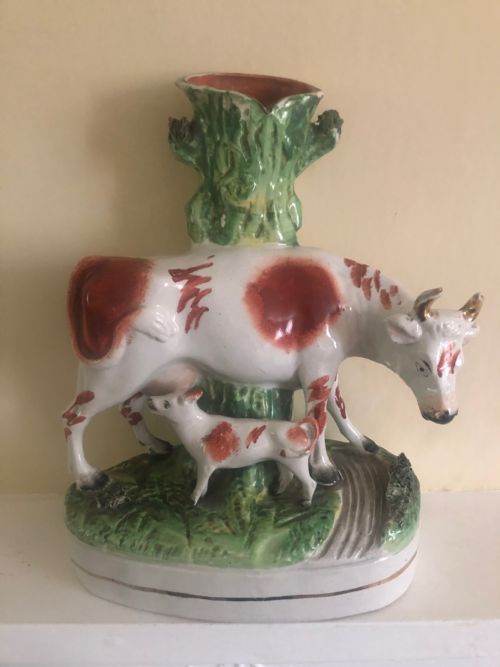
When you search for an antique earthenware cow, you encounter a delightful variety of utilitarian vessels and decorative figures. The selection includes cow creamers, milk jugs, dairy pails, spill vases, and flatback figures.
Most examples date from the nineteenth century, including specific years like 1860, 1870, and 1880, alongside Georgian pieces and Dutch Delftware. You will frequently find pairs of cow and calf figures as well as individual dairy containers.
Origin points span English, Welsh, and Dutch traditions, bringing distinct regional styles to the table. These objects bridge the gap between practical farmhouse utility and ornamental parlor display.
How they were made
Potters shaped these animals using earthenware and ceramic bodies, often applying tin-glaze or rich enamel finishes. Some pieces utilise Jackfield pottery techniques, resulting in glossy black surfaces.
Decoration involves hand-painted blue and white pigments, colourful enamels, and occasional gilt highlights. Figures and creamers were moulded in sections before being fired and glazed in local kilns.
Antique Earthenware Cow Retail Price Guide 2026
Typical asking prices for earthenware cow among the pieces listed under this phrase on Sellingantiques today, from the lower quarter to the upper quarter. They describe what is for sale here now, not the wider market.
The listings feature earthenware, ceramic, and tin-glazed materials spanning Georgian, Victorian, and Dutch Delftware styles.
What varies in quality
Glaze application and enamel preservation also dictate desirability. Clean, vibrant colour without excessive rubbing separates standard production wares from more distinguished examples.
The Antique Earthenware Cow Glossary
- Earthenware
- Porous pottery fired at lower temperatures, requiring a glaze to become waterproof. It forms the primary body for these figures and creamers.
- Cow Creamer
- A hollow ceramic cow with an opening on the back for milk and a pouring mouth through the muzzle. These served functional roles on tea tables.
- Spill Vase
- A hollow cylindrical holder designed to keep wooden spills near a fireplace for lighting candles and fires. Often modelled as a tree trunk beside a cow.
- Flatback
- A ceramic figure with a finished front and a partially unpainted, flat rear designed to stand against a wall. Common in nineteenth-century mantelpiece decoration.
- Jackfield
- A type of British pottery characterised by a lustrous black glaze over a red clay body. These pieces often feature gilt highlights.
Antique Earthenware Cow: Frequently Asked Questions
What is an antique earthenware cow?
These are ceramic figures, cream jugs, and spill vases shaped like cows, mostly originating from the nineteenth century in England, Wales, and the Netherlands.
They combine practical uses, such as holding cream or matches, with ornamental designs suited for display.
How were cow creamers used?
Cow creamers served as pouring vessels for milk or cream during tea service, filling from an aperture on the cow's back.
Guests would pour the liquid directly from the animal's mouth into their cups, adding a touch of rustic theatre to the table.
Are these pieces functional today?
While many retain their structural integrity, collectors generally display them as decorative art rather than using them for dairy.
Historic glazes and porous earthenware require careful handling, making shelf display safer than daily kitchen use.
How do I identify a Georgian piece?
Georgian pottery cows often display characteristic folk art modelling and distinct regional traits from English and Welsh makers.
Comparison with later Victorian Staffordshire examples reveals differences in glaze texture, painting style, and overall form.