




Antique Earthenware Basin
These antique earthenware basin pieces combine utility and ornament, offering tactile domestic history through glazed ceramic forms.
Antique Earthenware Basin
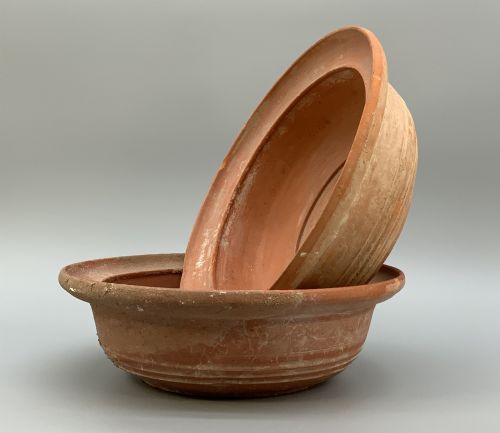
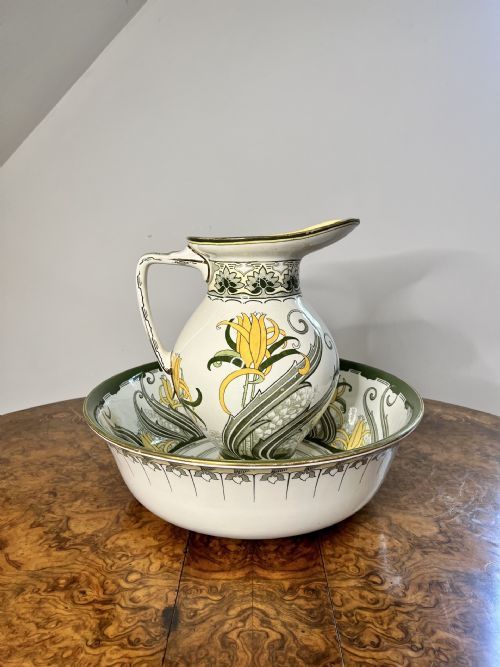
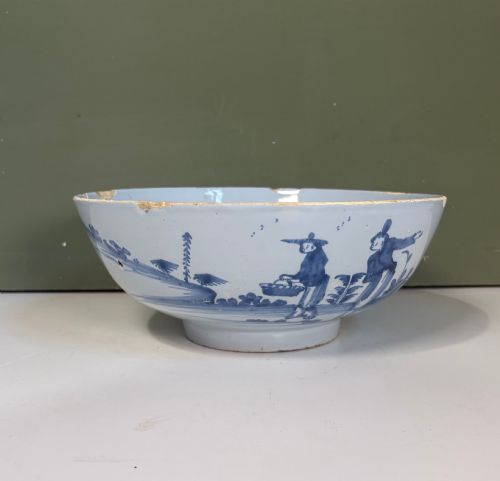
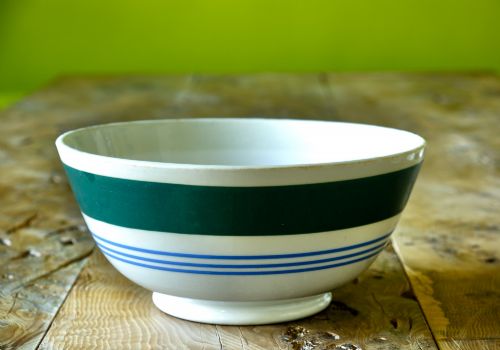
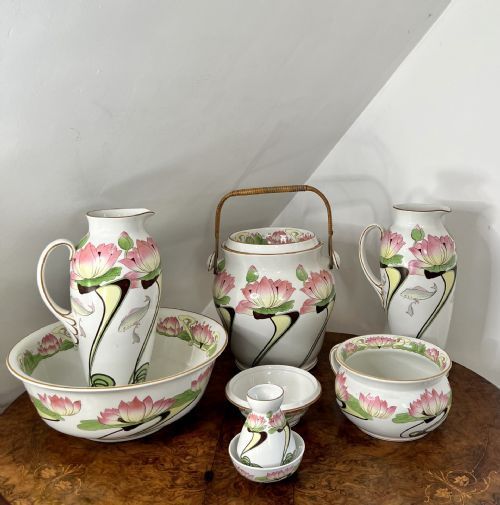
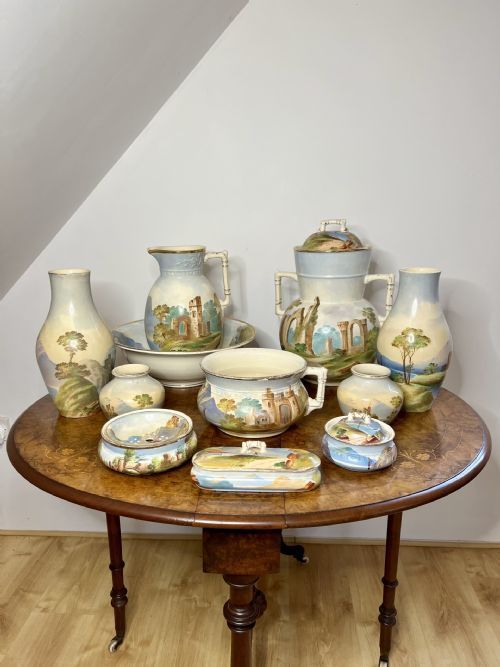
An antique earthenware basin encompasses a diverse group of vessels designed for washing, bathing, dairy work, and food preparation. The pieces range from large footbaths and dairy bowls to wash set basins and kitchenalia.
Most examples originate from the 18th century, the Georgian era, the Victorian period, and the Edwardian era, alongside earlier terracotta and oriental items. You will frequently encounter domestic wash sets, footbaths, and utilitarian dairy bowls on this page.
Makers and potteries from Scotland, England, and further afield utilised local clays and regional techniques to produce vessels tailored to specific household tasks. These objects survive as functional items that transitioned from utilitarian workspace to display.
Distinctions in Quality
Quality rests in the crispness of the transfer print, the richness of the glaze, and the balance of the thrown or moulded form. Superior items display controlled firing without excessive warping or surface pitting.
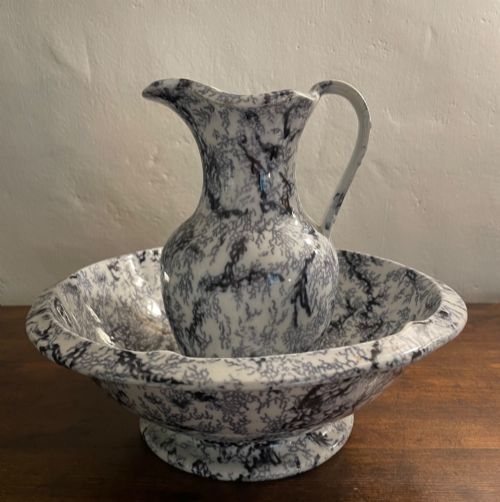
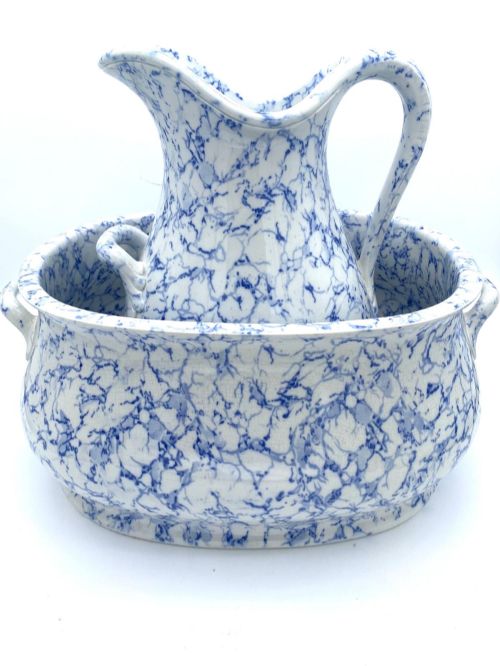
Artistic execution separates standard utility wares from exhibition pieces, especially in hand-painted Japanese Satsuma bowls or detailed Staffordshire transferware. The retention of original matching components, such as accompanying jugs, elevates an item's integrity.
Royal Navy officers once dined or served from specialised mess bowls, bringing fine ceramics into the rough environment of ships at sea.
Wemyss·Staffs·Seaton Pottery·Minton·Doulon Burslem·T G Green Pottery·Mann & Co·Ridgway·Heathcote·Ryuzan·Nikko·Kinkozan Kyoto·Royal Navy·Spode·Mark Jones & Sons·Copeland·Verwood·Shozan
The Antique Earthenware Basin Glossary
- Earthenware
- A porous pottery type fired at relatively low temperatures. It requires a glaze to become impermeable to liquids.
- Footbath
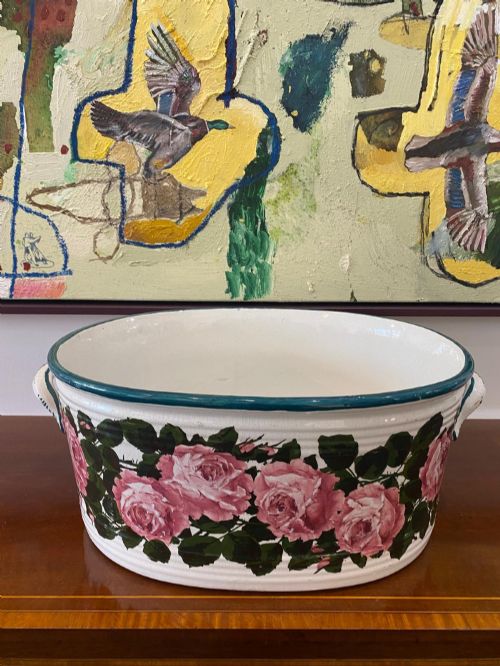
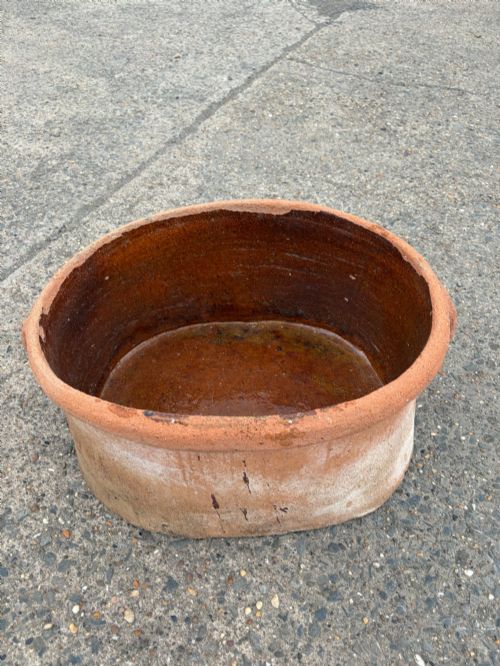
- A large, oval ceramic vessel with handles, designed for bathing the feet in domestic bedrooms before modern plumbing.
- Slipware
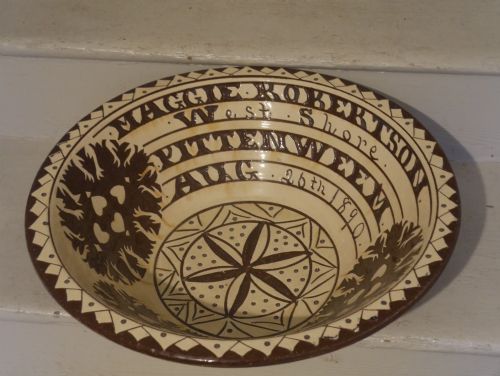
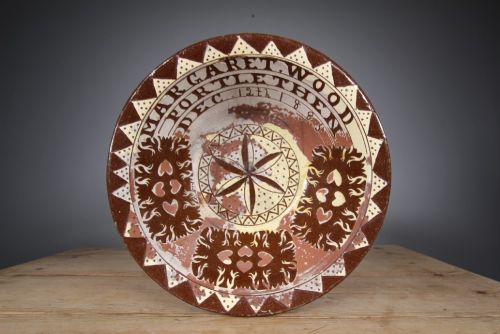
- Pottery decorated with liquid clay applied to the unbaked body before firing. This slip creates contrasting patterns or raised textures.
- Flow Blue
- A style of transfer printing where cobalt blue bled slightly into the white glaze during firing. This created a soft, hazy aesthetic popular in the nineteenth century.
- Creamware
- A refined, pale yellow-cream earthenware developed in Yorkshire during the eighteenth century. It offered a lighter, more delicate alternative to heavier salt-glazed stonewares.
Antique Earthenware Basin: Frequently Asked Questions
What is a footbath used for?
A footbath served as a large personal washing vessel kept in bedrooms before the widespread installation of indoor plumbing.
Today, collectors repurpose these deep, handled bowls as planters, wine coolers, or decorative centrepieces.
How do I identify dairy bowls?
Dairy bowls are heavy utilitarian vessels featuring wide rims and unglazed or slip-glazed terracotta or earthenware bodies. They were utilised in nineteenth-century dairies for settling milk and skimming cream.
Their robust construction and generous diameters distinguish them from smaller table ceramics.
What is flow blue pottery?
Flow blue describes a nineteenth-century printing technique where manufacturers introduced lime or ammonia gas into the kiln during firing. This caused the cobalt blue transfer design to blur intentionally into the surrounding white glaze.
The resulting hazy, atmospheric finish defines many Victorian wash sets and basins.
How should I clean my antique basin?
Clean these ceramic pieces gently using warm water and mild dish soap with a soft cloth. Avoid harsh scrubbing pads or abrasive chemicals that can damage historical glazes and enamel.
Take care around hairline cracks or areas with gold leaf decoration.