



Antique Eagle Sconces
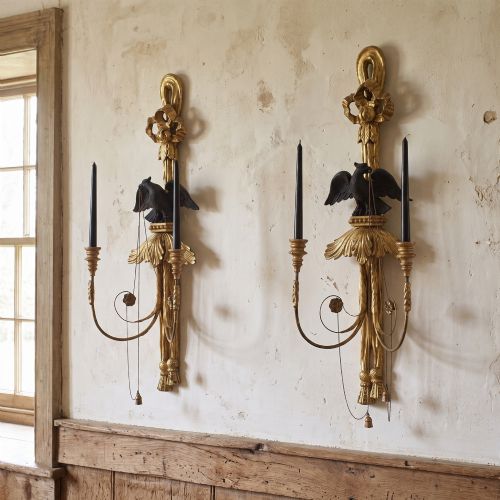
These antique eagle sconces bring fierce neoclassical presence to a room, carved in giltwood and cast in brass.
Antique Eagle Sconces
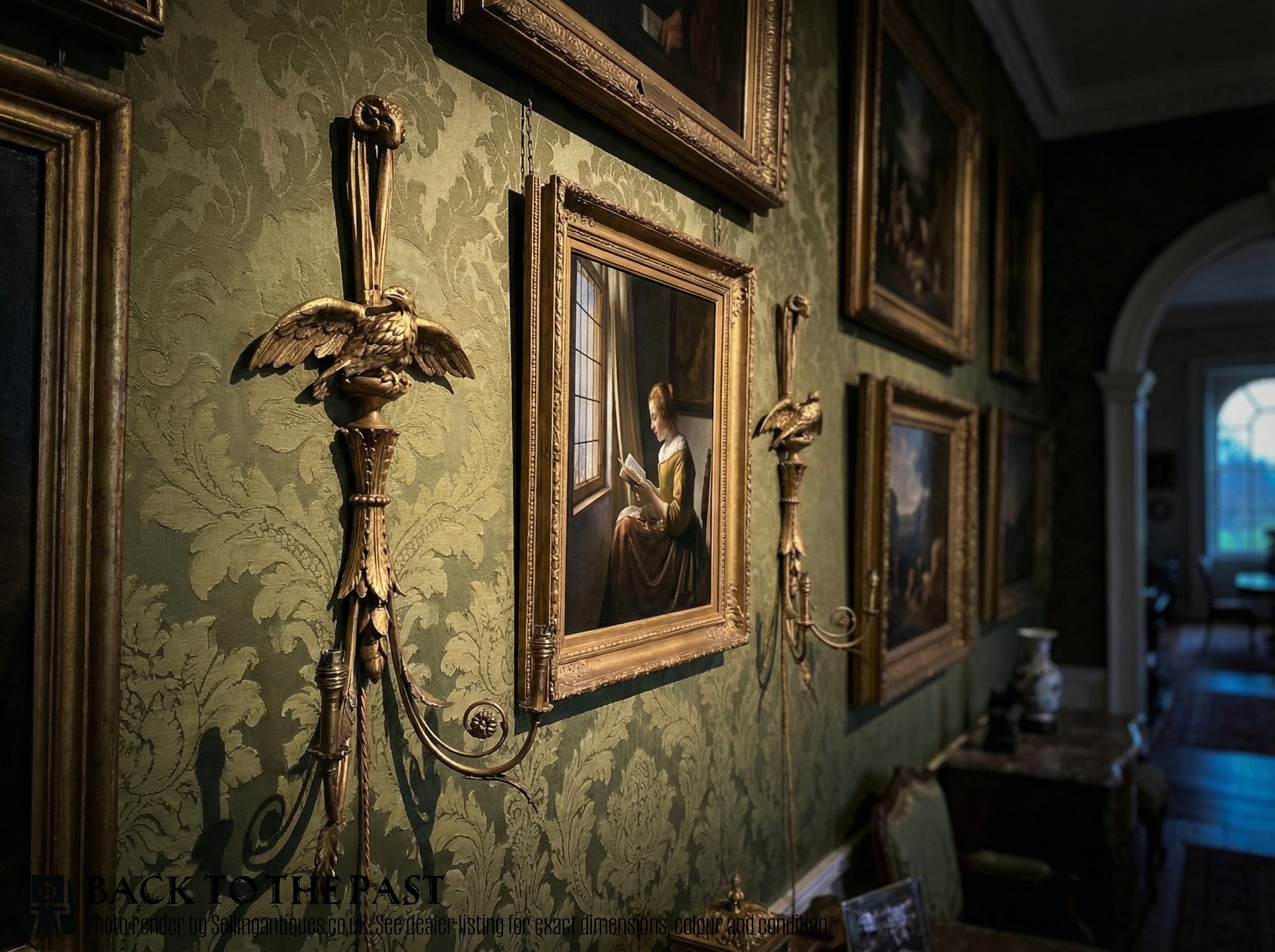
When you search for antique eagle sconces, you encounter striking wall lights and brackets dominated by carved or moulded birds of prey. The pieces on this page span the Georgian, Regency, and Victorian periods, alongside later twentieth-century interpretations.
You meet pairs of carved giltwood wall sconces alongside single brackets and mirror-backed forms. The designs draw heavily on Regency and George III styles, often incorporating convex plates or girandole arms.
American folk art also appears through oak wall eagle sconces and shelves. These objects combine illumination or display with a powerful avian motif that anchors a wall.
How they were made
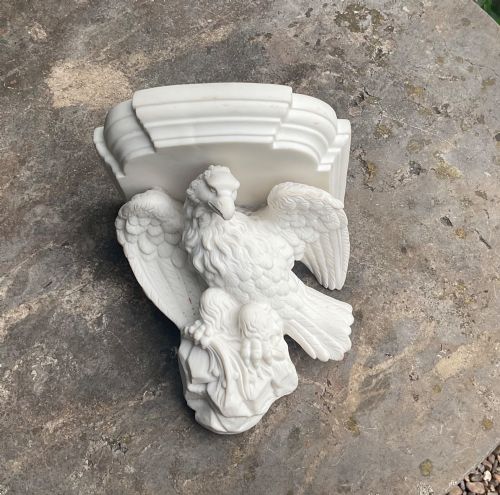
Makers shaped these pieces from giltwood, gesso, brass, and ebonised wood, sometimes turning to parian porcelain or crystal for specific effects. Giltwood surfaces required skilled application of gold leaf over prepared gesso grounds on carved timber.
Glass found use in mirror backs and convex plates that amplified the flickering candlelight of early wall sconces. Metal components, including brass arms and fittings, provided sturdy structural support for the weight of the timber and glass.
Antique Eagle Sconces Retail Price Guide 2026
Typical asking prices for eagle sconces among the pieces listed under this phrase on Sellingantiques today, from the lower quarter to the upper quarter. They describe what is for sale here now, not the wider market.
Listings feature items spanning the Georgian, Regency, and Victorian periods, constructed from giltwood, brass, glass, and oak.
What varies in quality
The crispness of the carving defines the upper tier of these pieces, particularly in the rendering of the eagle's plumage and talons. Softer moulding in gesso or later casting fails to match the sharp detail achieved by skilled carvers.
The integrity of the original gilding and the preservation of antique mirror plates distinguish superior examples from heavily restored or later compiled items.
The Antique Eagle Sconces Glossary
- Giltwood
- Wood covered with a thin layer of gold leaf. This finish defines the most formal Regency and Georgian examples on the page.
- Girandole
- A branched wall sconce featuring a mirror back. The reflective glass multiplies the light from the candles.
- Convex mirror
- A round mirror with a curved surface that reflects a wide-angle view of the room. It often appears surmounted by a carved eagle.
- Gesso
- A plaster-like mixture applied to wood as a base for gilding. It allows for intricate moulded details around the eagle motifs.
- Parian porcelain
- A fine white ceramic resembling marble, used for sculptural wall brackets. This material captures smooth neoclassical contours.
Antique Eagle Sconces: Frequently Asked Questions
How do I hang a heavy giltwood sconce?
These pieces require secure fixing directly into wall studs or solid masonry using heavy-duty mirror plates and appropriate screws. The considerable weight of timber, gesso, and glass demands professional installation to ensure stability.
Avoid relying solely on plasterboard or drywall plugs, as the downward pull of the bracket can cause failure over time. Inspect the hanging points on the reverse of the frame before mounting.
What periods do these sconces come from?
The selection includes genuine Georgian and Regency pieces alongside nineteenth-century works and early twentieth-century revivals. Styles range from strict neoclassical designs to American folk art interpretations.
Examining the construction methods, wood types, and gilding wear helps determine whether a piece originates from the primary period or a later revival.
Where should I place an eagle sconce?
These pieces suit formal reception rooms, hallways, or above mantelpieces where their sculptural form acts as a focal point. Sconces with mirror backs perform well in darker corners by bouncing ambient light around the space.
Pair them symmetrically flanking a fireplace or larger artwork to maintain classical balance.