




Antique Dueling Pistol
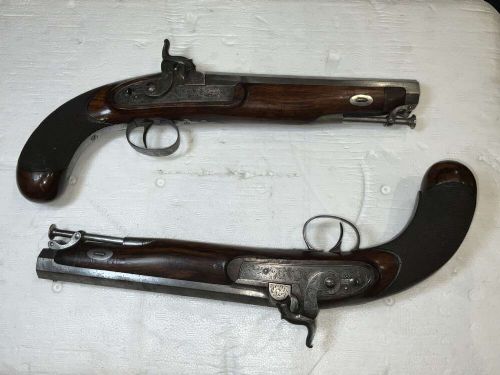
These antique dueling pistol examples bring eighteenth and nineteenth-century craftsmanship into your hands, offering precision engineering housed in figured walnut and silver.
Antique Dueling Pistol
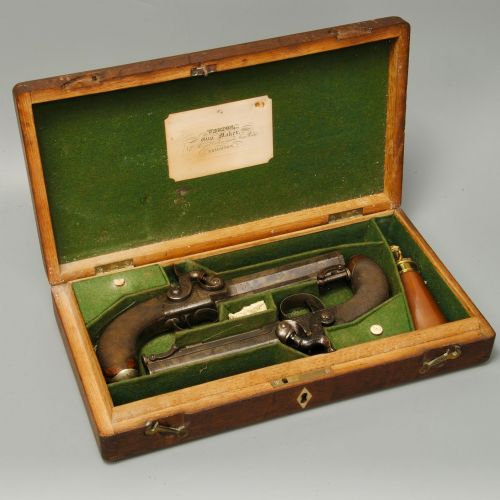
An antique dueling pistol represents the pinnacle of personal firearm design from the eighteenth and nineteenth centuries, spanning Georgian and Regency periods. You encounter flintlock and percussion ignition systems, often housed in fitted wooden cases complete with original accessories like baize and velvet linings.
The pieces listed on this page encompass single arms and matched pairs designed for officers and civilian targets alike. Makers from London, Newark, and Cork shaped these arms during eras when individual commissions commanded supreme mechanical skill.
Forms vary from smooth-bore flintlocks to target pistols and over-and-under variations. The evidence points to walnut and mahogany stocks paired with steel and iron barrels, reflecting the functional demands of the era.
How they were made
Makers utilised forged steel and iron for barrels and lock mechanisms, ensuring the metal withstood the pressures of gunpowder ignition. Stocks were hand-carved from dense timbers like walnut and mahogany, shaped to fit the hand precisely.
Mounts and furniture often incorporated cast silver or brass, adding structural reinforcement and decorative contrast to the dark wood grains. Interior case fittings utilised baize and velvet to cushion the precision components during transport.
Antique Dueling Pistol Retail Price Guide 2026
Typical asking prices for dueling pistol among the pieces listed under this phrase on Sellingantiques today, from the lower quarter to the upper quarter. They describe what is for sale here now, not the wider market.
Some nineteenth-century target pistols arrived with saw-handled grips, proving that historical marksmen appreciated an ergonomic edge just as much as modern shooters.
What varies in quality
Quality rests upon the crispness of the maker's signature engraved on the lockplate and the fluidity of the internal mechanism. Master gunmakers achieved tighter tolerances in the trigger pull and smoother integration between metal and wood.
The presence of original matching cases with intact baize or velvet interiors distinguishes superior examples. Finely figured walnut stocks and intricate silver mounts elevate individual arms beyond standard military-issue pieces.
Harrison of London·Mortimer·Joseph Egg London·Timothy Hughes·H.W. Mortimer & Son·Barber of Newark·Dutton·A.W Spires
The Antique Dueling Pistol Glossary
- Flintlock
- An ignition mechanism utilising a piece of flint struck against a steel frizzen to create sparks that ignite the gunpowder. This system dominated firearms technology throughout the eighteenth century.
- Percussion
- A later ignition system employing a percussion cap struck by the hammer to detonate the powder charge. This replaced the flintlock mechanism during the nineteenth century.
- Bore
- The interior diameter of the firearm barrel. Listings often specify measurements such as eighteen bore to denote the caliber.
- Saw-handled
- A distinctive pistol grip shape featuring a flat bottom resembling the cut of a handsaw. This profile improved purchase for target shooting.
- Escutcheon
- A small plate of silver or brass inset into the pistol stock, frequently engraved with the original owner's initials or crest.
Antique Dueling Pistol: Frequently Asked Questions
What is an antique dueling pistol?
An antique dueling pistol is a single-shot muzzle-loading firearm produced during the eighteenth or nineteenth centuries for personal defence or formal duels. These pieces showcase advanced mechanical ingenuity and fine woodworking of the Georgian and Regency periods.
Makers constructed them with smooth-bore steel barrels and fitted wooden stocks, frequently offering them in pairs within custom-lined wooden cases. Today, collectors value them for their historical association and master gunsmithing.
How do flintlock and percussion pistols differ?
Flintlock pistols rely on a piece of flint striking a steel frizzen to generate sparks that ignite the priming powder in the pan. This mechanism represents the standard technology of the eighteenth century.
Percussion pistols utilise a hammer that strikes a small explosive cap placed on a nipple, transferring flame directly to the powder charge. This later nineteenth-century innovation offered greater reliability in damp weather.
Were these pistols used exclusively for duels?
Many arms designated as dueling pistols served equally well as officer's sidearms for personal protection during travel. Their precise construction also made them suitable for target practice.
Matched pairs were standard for formal dueling, ensuring both participants had identical weaponry. Single pistols often saw service as military sidearms or pocket defence.
How should I display a cased pistol set?
Cased pistol sets are best displayed flat within their original fitted wooden boxes to protect the internal baize or velvet linings. Keeping them away from direct sunlight and excessive humidity preserves the delicate walnut and mahogany woods.
Ensure the display environment maintains a stable temperature to prevent the historic steel and wood components from expanding or contracting.