




Antique Drop Lustres
Antique drop lustres are decorative glass and crystal ornaments designed to catch the light on a mantelpiece or table.
Antique Drop Lustres
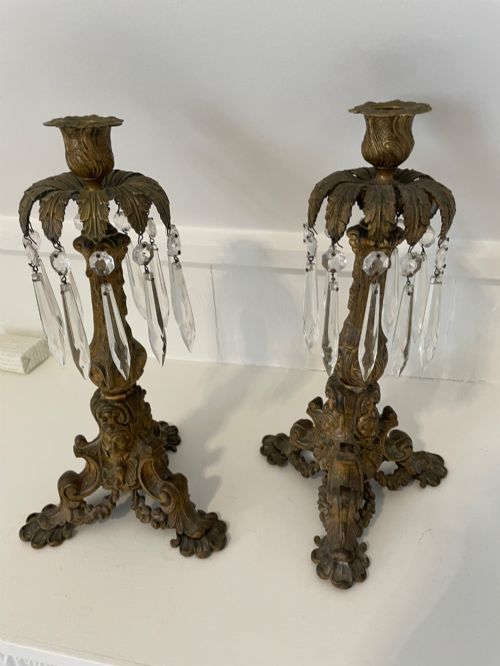
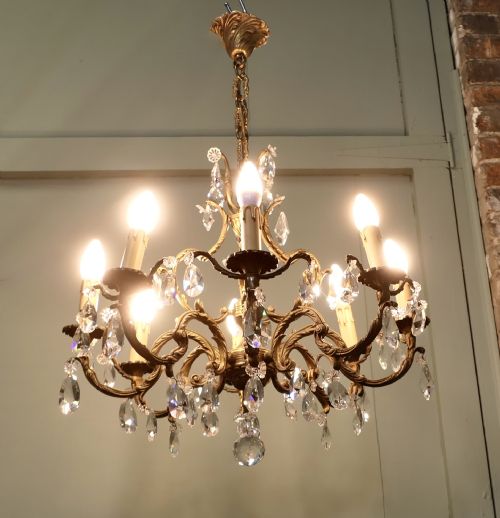
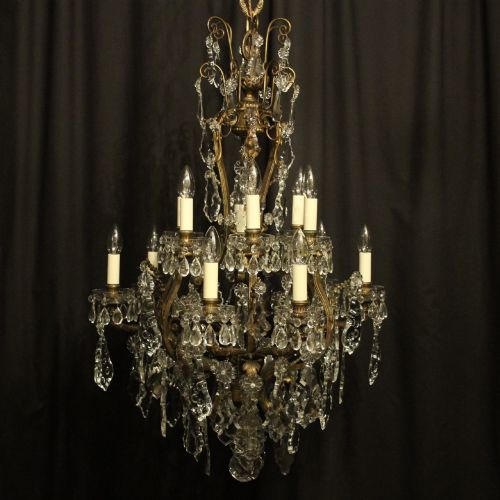
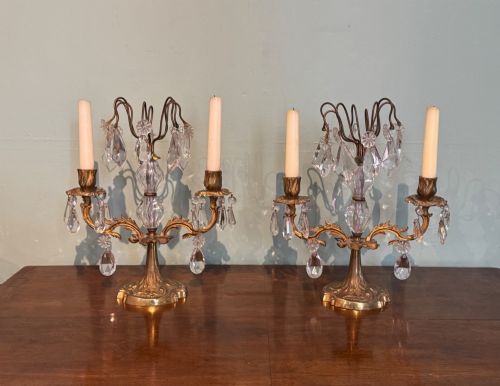
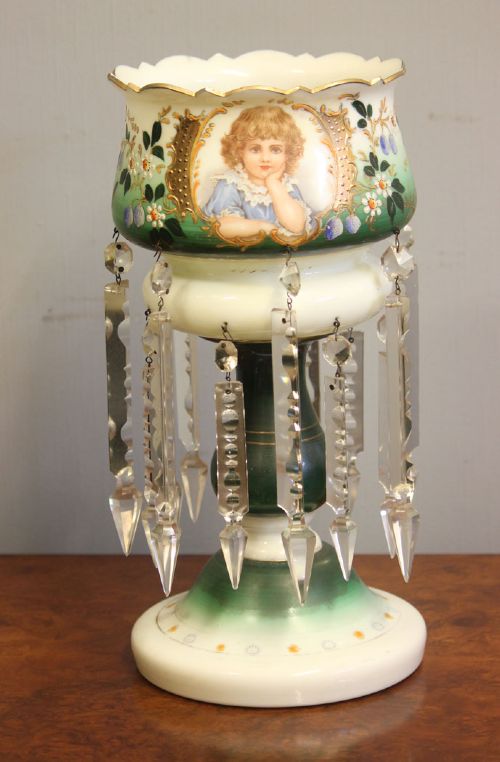
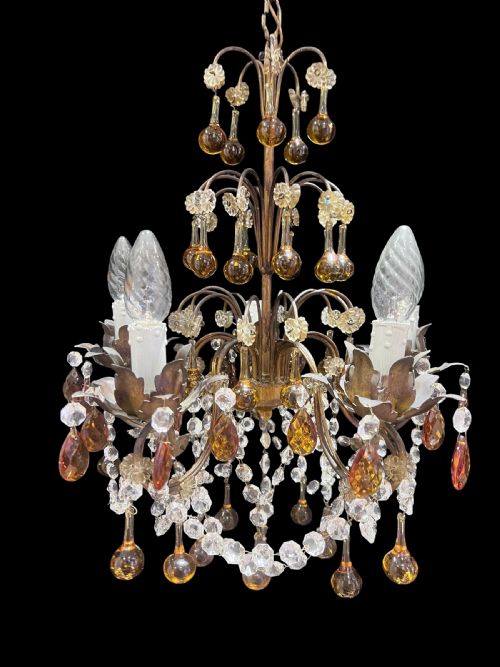
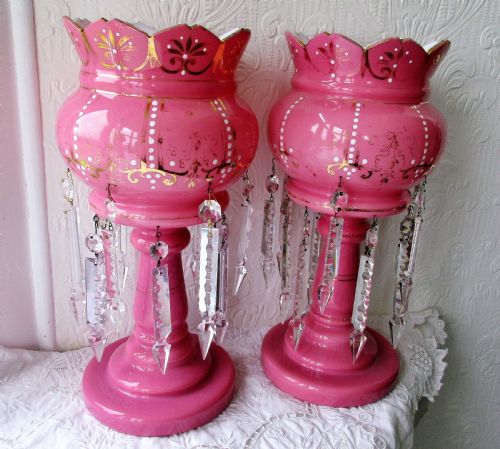
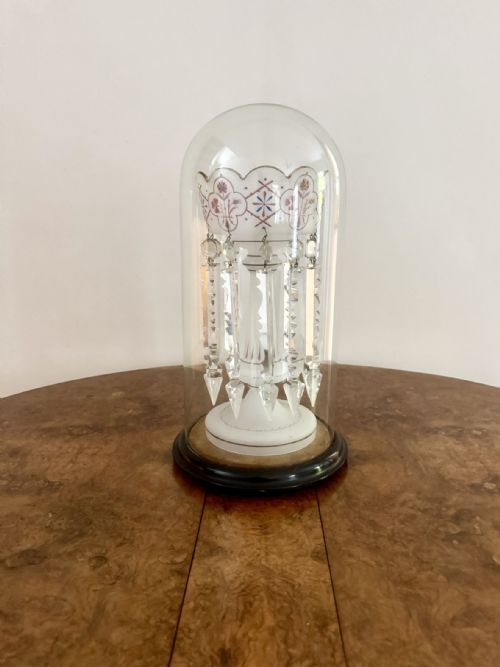
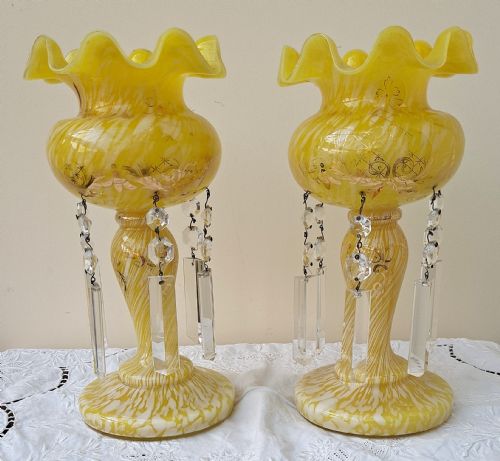
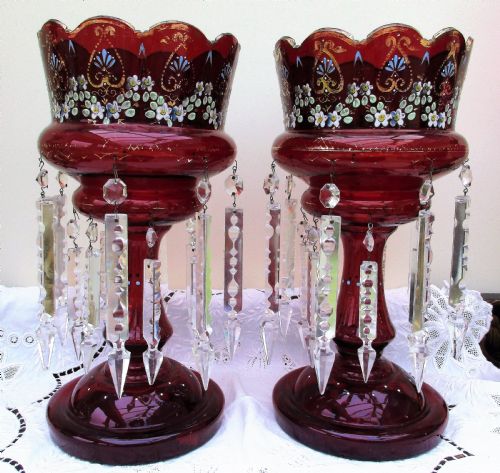
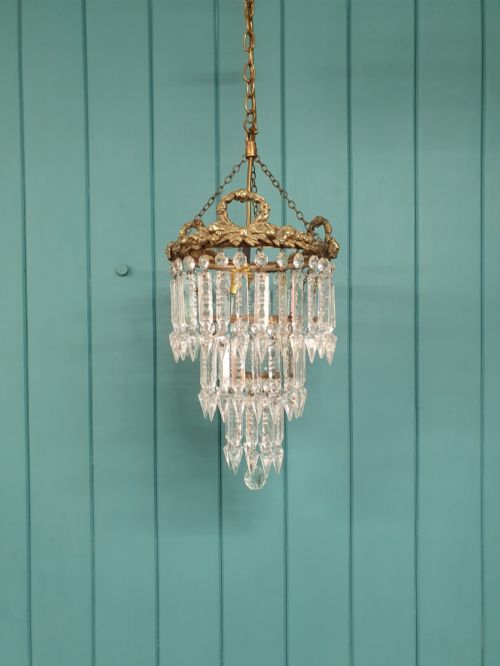
Antique drop lustres appear primarily as pairs of mantle lustres or table lustres designed to sit on a surface, alongside chandeliers hung with crystal drops. The pieces on this page span the Regency, Victorian, and early twentieth-century periods, originating from English, French, and Italian workshops.
Mantle lustres and table lustres usually take the form of a vase or candlestick stem fitted with a top bowl from which long glass or crystal drops are suspended. These glass pendants, known as drops or spears, are hooked around the rim to chime and refract light when air moves through the room.
Green glass, ruby glass, pink glass, yellow glass, and cranberry glass dominate the coloured examples from the Victorian era, while other pieces rely on clear cut glass and crystal paired with brass, bronze, or gilt metal bases.
How they were made
Glassmakers blew and shaped coloured or clear glass into vases, candlesticks, and stems, often utilising flash glass techniques where a thin layer of coloured glass covers a clear base before being cut back. Cut glass and crystal components received deep geometric facets by hand to maximise their ability to refract candlelight and daylight.
Foundries cast brass, bronze, and ormolu into ornate bases, arms, and storm shade holders, applying fire-gilding or gold leaf where specified by the style. Workers then drilled the glass rims and metal collars to attach wire loops that secure each individual crystal drop.
Antique Drop Lustres Retail Price Guide 2026
Typical asking prices for drop lustres among the pieces listed under this phrase on Sellingantiques today, from the lower quarter to the upper quarter. They describe what is for sale here now, not the wider market.
Listings feature items from the Regency, Victorian, and Edwardian periods, utilising materials such as ruby glass, cranberry glass, cut crystal, and gilt brass.
What varies in quality
The precision and depth of the hand-cut facets on both the body and the hanging drops define the visual brilliance of a lustre, separating sharp, crisp cutting from soft, moulded edges. Weight and thickness in the glass body indicate a sturdier vessel, while matching sets maintain consistent colour density across both items in a pair.
The refinement of the metal mounting, whether cast bronze, ormolu, or brass, determines the structural dignity of the piece. Superior examples feature securely fitted crystal drops that match in length and cut rather than mismatched replacements gathered over time.
The Antique Drop Lustres Glossary
- Lustre
- A decorative table or mantel ornament featuring a central vase or candlestick hung with detachable glass pendants. These ornaments became popular during the Regency and Victorian periods to brighten candlelit rooms.
- Flash glass
- A vessel made from a core of clear glass dipped into a molten bath of coloured glass before being blown and cut. Cutting through the outer colour reveals the clear glass underneath.
- Ormolu
- Finely chased and gilded bronze used for mounts and decorative fittings on furniture and lighting. The technique involves applying a mercury and gold amalgam to bronze.
- Cranberry glass
- A rich red-pink transparent glass created by adding gold chloride to the molten batch during the glassmaking process. It appears frequently in Victorian mantel ornaments.
- Drop
- A small faceted pendant of cut glass or crystal hung from the rim of a lustre or chandelier. These drops swing and catch the light.
Antique Drop Lustres: Frequently Asked Questions
What is an antique drop lustre?
An antique drop lustre is a decorative glass or crystal vase fitted with a rim of hanging crystal pendants designed for a mantelpiece or table.
Originating largely in the Regency and Victorian eras, these ornaments reflect light from candles or oil lamps to brighten a room.
How were mantle lustres used?
Mantle lustres stood on the mantelpiece above a fireplace, often arranged as a matched pair flanking a clock or other ornaments.
They served primarily as decorative objects rather than practical lighting, though some designs incorporated central candle sockets.
How do I identify Victorian glass lustres?
Victorian glass lustres typically feature intense body colours such as ruby, green, cranberry, pink, or yellow, combined with hand-cut crystal pendants.
They frequently employ flash glass techniques and heavy pedestal bases typical of nineteenth-century manufacturing methods.
How do I clean antique lustres?
Antique lustres require gentle cleaning by hand using warm water and mild soap, removing each glass drop individually if necessary.
Harsh chemicals and abrasive cloths should be avoided to protect the aged glass surfaces and any gilded or brass metal mounts.