


Antique Dressing Chest Mirror
An antique dressing chest mirror brings utility and period character to a bedroom, combining surface space with adjustable glass.
Antique Dressing Chest Mirror
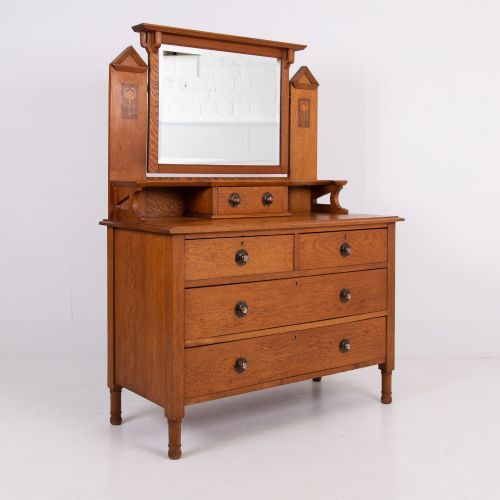
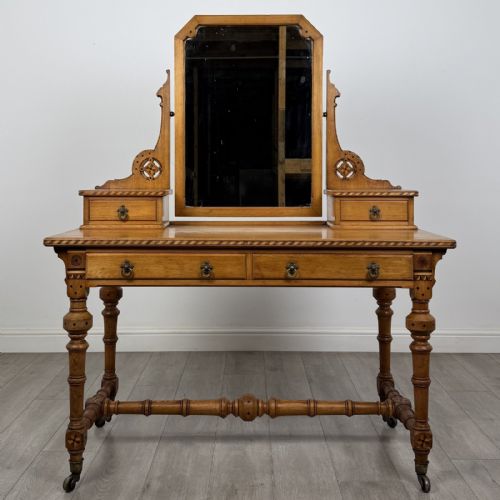
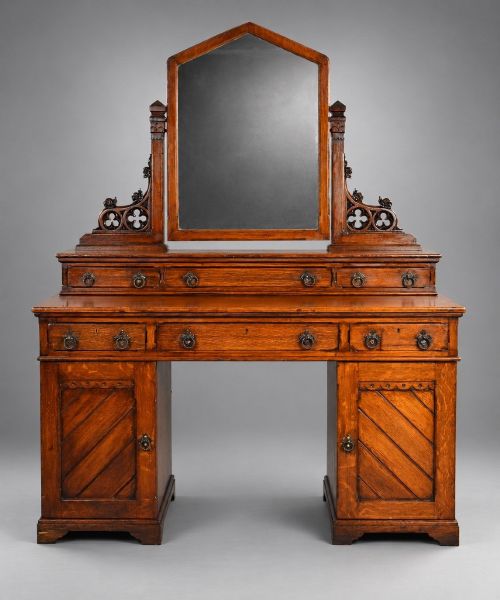
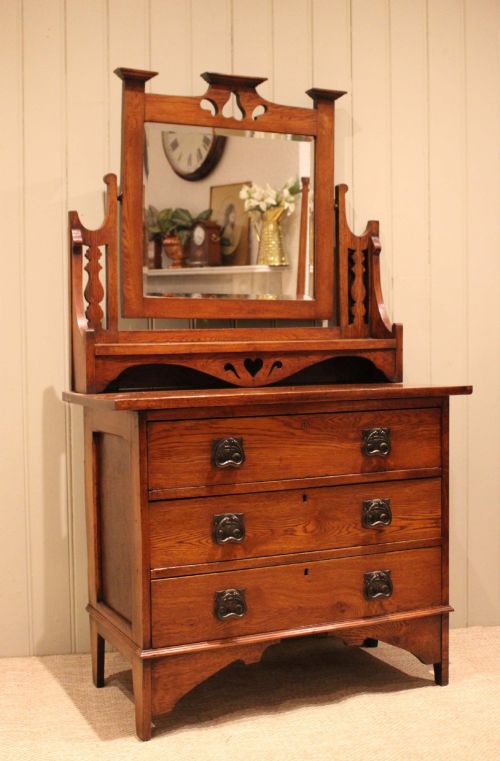
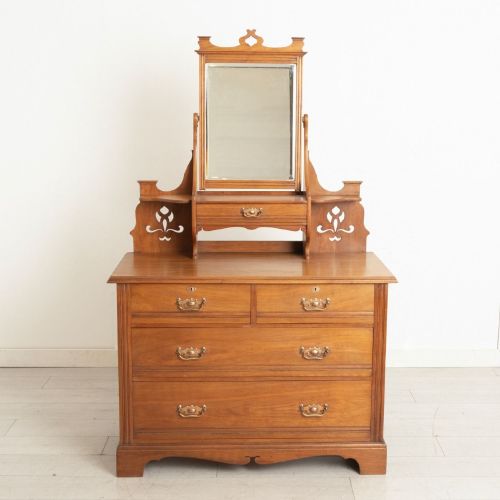
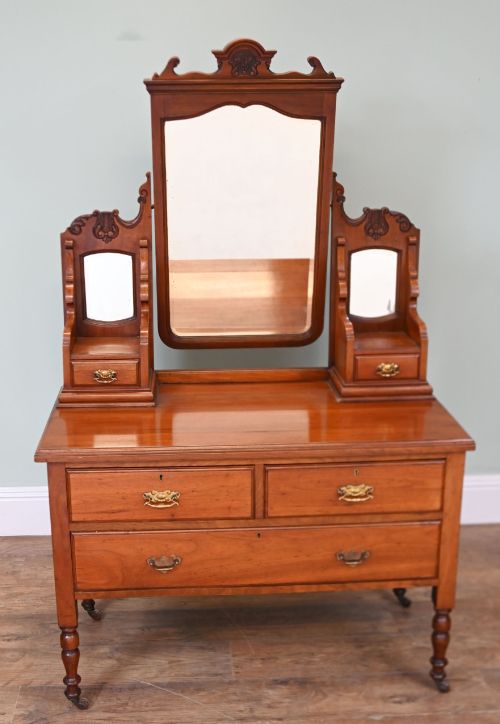
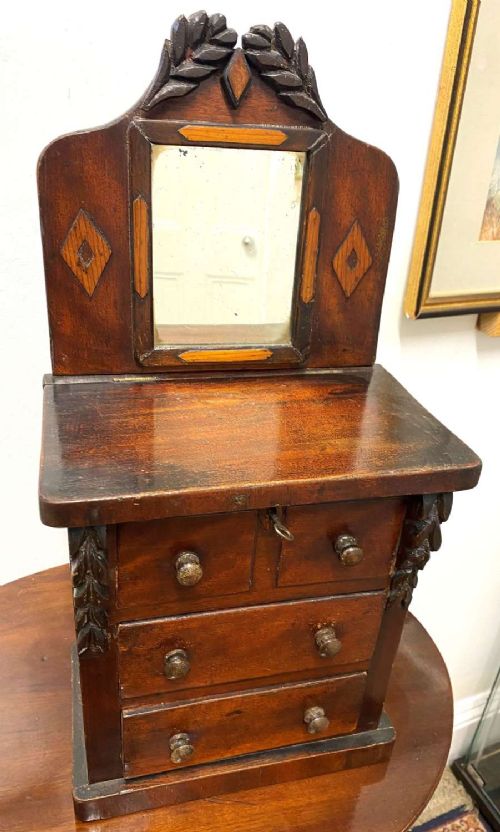
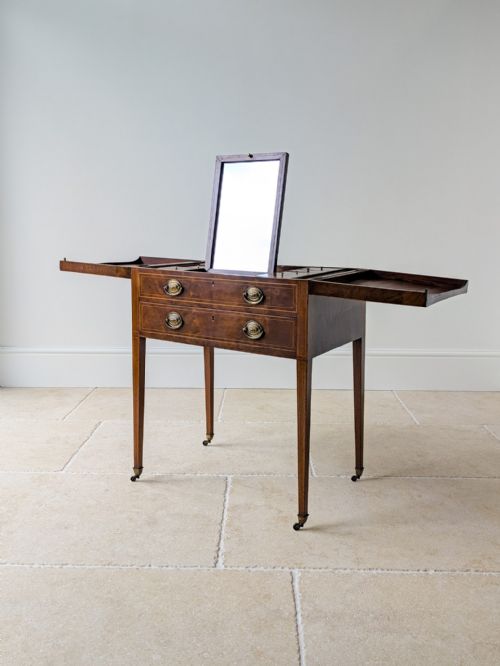
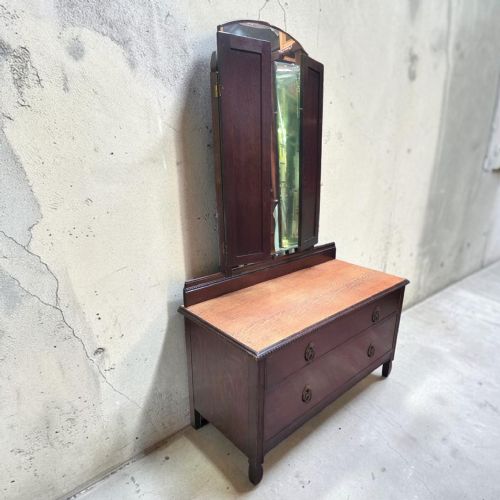
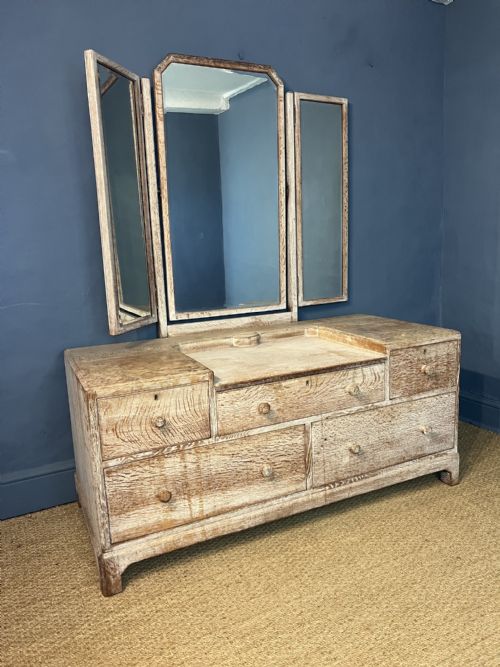
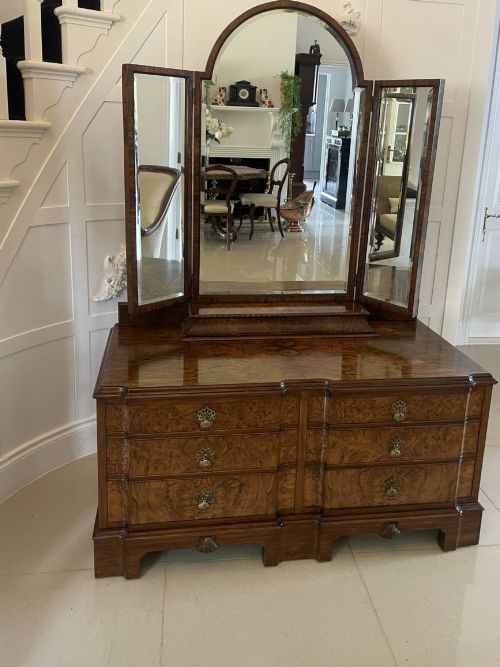
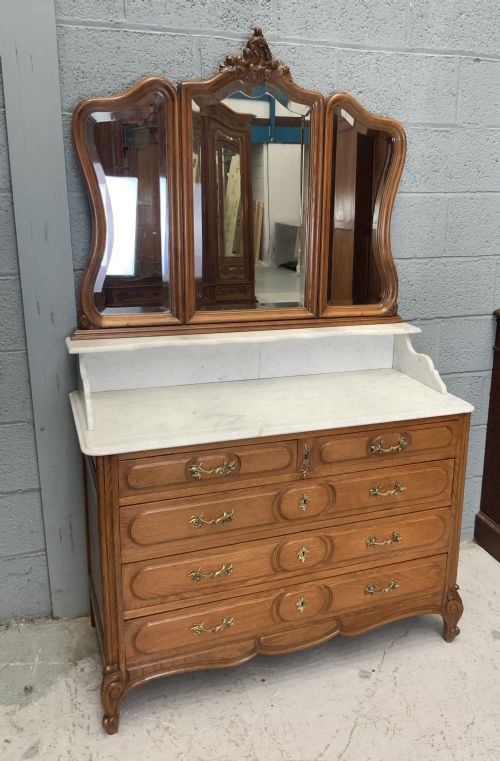
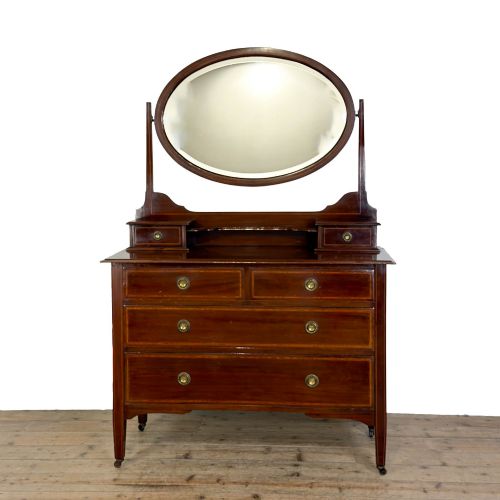
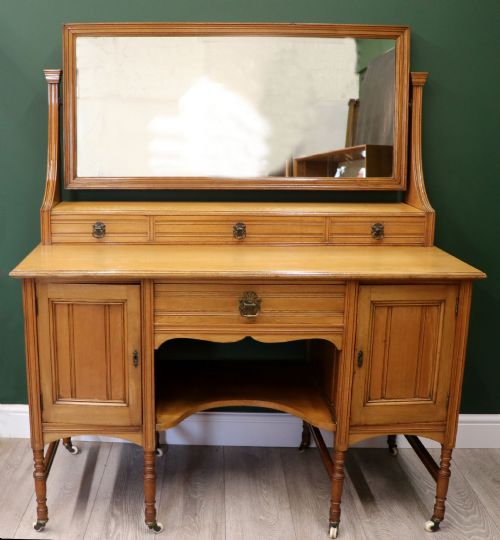
An antique dressing chest mirror typically combines a set of drawers with an attached or pivoting looking glass. The pieces here span the Victorian, Edwardian, and Art Deco periods, ranging from compact oak examples to substantial burr walnut designs.
Buyers encounter freestanding table mirrors alongside larger dressing chests where the mirror sits on a base of drawers. Mahogany, oak, and walnut predominate, while styles stretch from plain functional forms to elaborate revival designs.
Materials and construction
Cabinetmakers utilised solid timbers such as oak, mahogany, and walnut, frequently applying veneers of burr walnut or maple to main surfaces. Drawer construction typically involved hand-cut dovetail joints, reflecting the standard of period carpentry.
Mirrors were set into timber frames, often mounted on adjustable pivots or upright supports fixed to the top of the chest. Brass hardware, from swinging handles to support brackets, completes the assembly.
Antique Dressing Chest Mirror Retail Price Guide 2026
Typical asking prices for dressing chest mirror among the pieces listed under this phrase on Sellingantiques today, from the lower quarter to the upper quarter. They describe what is for sale here now, not the wider market.
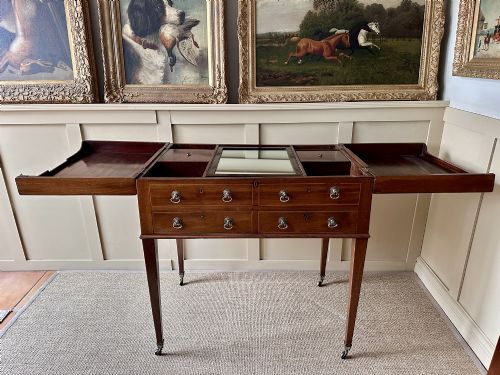
Several pieces include secret compartments hidden behind small drawers, designed for stowing jewellery away from prying eyes.
Measures of quality
Quality rests primarily in the selection of timber figures and the precision of the joinery. Pieces featuring figured burr walnut, marquetry inlay, or limed oak show greater ambition from the maker.
The integrity of the mirror glass and the original hardware also dictate the standing of a piece. Retaining the original bevelled glass and matching brass fittings elevates a dressing chest considerably.
Heals·George Walton·Shapland and Petter·Maurice Adams·Edwards and Roberts
The Antique Dressing Chest Mirror Glossary
- Dovetail
- A joint used in drawer construction formed by interlocking wedge-shaped fingers. This method provides high tensile strength without relying on metal fixings.
- Burr walnut
- Timber taken from a growth on the walnut tree showing intricate swirling grain patterns. Cabinetmakers sliced this wood into thin veneers for decorative surfaces.
- Cheval mirror
- A full-length mirror hung on a vertical frame allowing it to swing at an angle. Table versions sit upon a base or chest.
- Marquetry
- Decorative patterns formed by fitting contrasting veneers into a wood background. This technique appears on high-status Victorian pieces.
- Pedestal
- A support structure beneath a dressing table containing banks of small drawers. It creates a kneehole space in the centre.
Antique Dressing Chest Mirror: Frequently Asked Questions
How do I date an antique dressing chest mirror?
Dating relies on observing the timber species, handle styles, and construction methods. Victorian pieces often use heavy mahogany or burr walnut, whereas Edwardian versions favour lighter mahogany and satinwood inlay.
Mirror plates also offer clues, as older glass can show slight oxidation or distortion. The mounting brackets for the mirror changed through the decades from heavy brass screws to simpler wooden uprights.
Can I replace a damaged mirror plate?
Replacing a damaged mirror plate is possible, though finding glass that matches the thickness and bevel of the original requires care. Many collectors prefer to retain original glass even with minor foxing because it preserves the historic surface.
If replacement is necessary, traditional silvered glass without modern bright coatings helps maintain the visual harmony of the piece.
Are dressing chests suitable for modern bedrooms?
These pieces function well in contemporary spaces by offering deep drawers for storage and a useful surface top. Their compact footprint allows them to serve as dressing tables or hallway chests.
Different wood tones from oak to dark walnut adapt easily to various interior schemes, providing practical utility alongside period detail.