

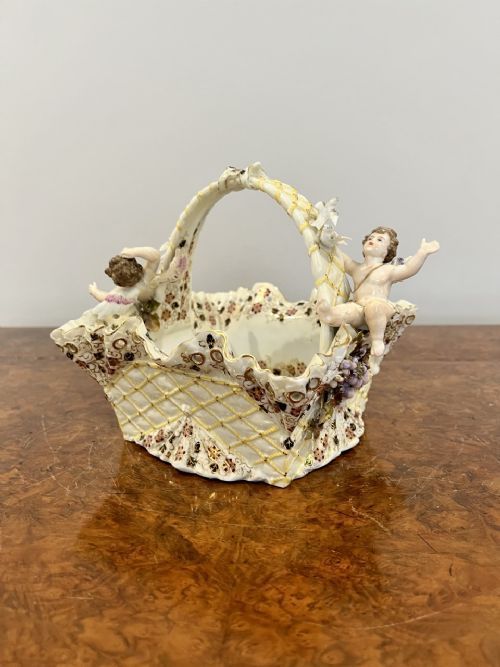


Antique Dresden Bowl
These pieces known as an antique dresden bowl bring sculptural porcelain, painted florals and figural cherubs directly to the table.
Antique Dresden Bowl
When you search for an antique dresden bowl, you enter a world of late nineteenth and early twentieth-century German porcelain production. The pieces span from the 1880s through the Edwardian era, capturing the ornate tastes of Victorian Rococo Revival design. You will encounter large centrepieces, decorative baskets, lidded pots and comports rather than simple tableware.
The objects frequently take sculptural forms, featuring applied roses, painted bouquets and cherubs or putti figures perched on shells or baskets. Many examples originate from German factories and workshops in Saxony, reflecting regional traditions of elaborate modelling and floral decoration. These decorative bowls served to anchor formal dining room tables or display surfaces in prosperous period homes.
The selection on this page demonstrates the variety of forms available, from sugar boxes to massive musical putti centrepieces. While some items bear specific factory names like Schierholz or Paul Müller Selb, others align with the broader Meissen style of continental porcelain. Each piece combines functional vessel shapes with intricate, three-dimensional decorative elements.
How they were made
Potters shaped these objects from fine ceramic porcelain, forming complex vessels, baskets and figural groups through specialised moulding and casting techniques. Artisans then applied delicate details by hand, attaching individual ceramic rose petals, leaves and putti figures to the main body before firing. Gold leaf, gilt and gilding provided rich metallic accents along rims, handles and sculptural supports.
Painters decorated the porcelain surfaces with enamel and paint, rendering Saxon bouquets and floral sprays in vibrant polychrome palettes. Once the painted and gilded details were complete, the pieces underwent a final kiln firing to fuse the decoration permanently to the ceramic glaze. This combination of sculptural modelling, hand painting and gilding required distinct stages of skilled craftsmanship.
Antique Dresden Bowl Retail Price Guide 2026
Typical asking prices for dresden bowl among the pieces listed under this phrase on Sellingantiques today, from the lower quarter to the upper quarter. They describe what is for sale here now, not the wider market.
Musical putti happily strum tiny porcelain lutes while sitting amidst three-dimensional ceramic rose gardens.
What varies in quality
The distinction between standard production and exceptional work lies primarily in the intricacy and ambition of the modelling. Top-tier pieces feature deeply undercut figural groups, such as cherubs playing instruments or elaborate clusters of applied roses that appear light and botanical rather than heavy and blocky. The fineness of the hand painting on the floral bouquets and enamel highlights also elevates certain examples above simpler wares.
Scale and presence separate the grand centrepieces from smaller trinket boxes and dishes. A large German porcelain centrepiece with multiple putti figures and intricate basketry demands greater technical mastery from the kiln workers than a modest comport. The preservation of fragile applied elements like delicate porcelain petals and musical instruments often reflects the original quality of the firing and the subsequent care given to the object.
Paul Müller Selb·R. Wehsner·Schierholz·C.G. Schierholz and Sohn
The Antique Dresden Bowl Glossary
- Putti
- Winged infant figures, often resembling cherubs, frequently modelled in porcelain and applied to the bases and sides of centrepieces. These figures derive from classical art and featured prominently in Rococo Revival design.
- Comport
- A decorative pedestal dish or bowl elevated on a stem, used historically for serving fruit or sweets on the dining table. In porcelain production, these vessels often incorporate ornate handles and figural supports.
- Gilding
- The application of gold leaf or powdered gold to the surface of porcelain objects. This technique highlights rims, decorative borders and structural details.
- Potpourri
- A mixture of dried petals and spices kept in a lidded bowl to perfume a room. Porcelain versions feature pierced lids designed to release the fragrance.
- Rococo Revival
- A nineteenth-century design style characterised by exuberant scrollwork, asymmetry, and naturalistic floral motifs. This aesthetic heavily influenced late Victorian continental porcelain.
Antique Dresden Bowl: Frequently Asked Questions
What is an antique dresden bowl used for?
These large porcelain vessels served primarily as decorative centrepieces for dining tables or drawing rooms during the late nineteenth and early Edwardian periods. Wealthy households utilised them to display fresh fruit, flowers or potpourri during formal dinners and gatherings.
Today, collectors place them on sideboards, tables or mantelpieces as standalone decorative art objects. They continue to function as striking focal points in a room, celebrating the ornate craftsmanship of historical European porcelain.
Where were these porcelain bowls made?
The vast majority of these decorative bowls and centrepieces originated in Germany, particularly within the historic porcelain manufacturing region of Saxony. Factories and workshops such as those in Plaue and Selb produced much of this elaborate continental porcelain.
While often associated with the city of Dresden due to decorating studios and historic trading houses located there, the physical manufacture often took place across various specialised German ceramic works during the late nineteenth century.
How should I display a porcelain centrepiece?
Display your centrepiece on a sturdy, stable surface away from high-traffic walkways where it might be accidentally knocked. Because these pieces often feature delicate applied elements like porcelain flower petals and protruding cherub figures, they require a secure placement that limits physical contact.
Keep the object out of direct, harsh sunlight to protect the vibrant enamel paints and gold leaf highlights over time. Dust the intricate areas gently with a soft, dry brush to maintain the surface without risking damage to fragile projections.