







Antique Dowry Trunk
An antique dowry trunk is a sturdy vessel built to hold a bride's worldly goods, prized for its honest craft and regional character.
Antique Dowry Trunk
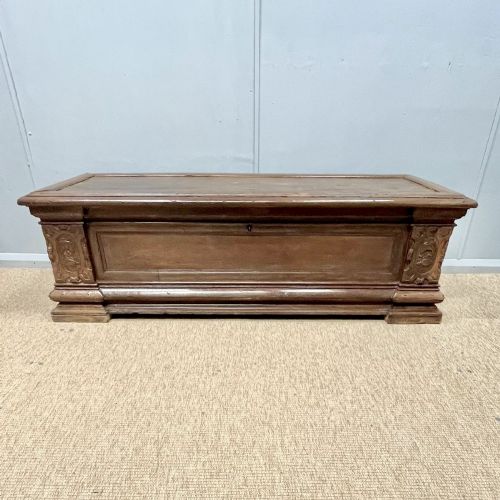
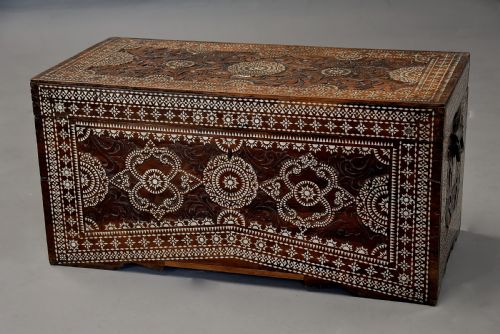
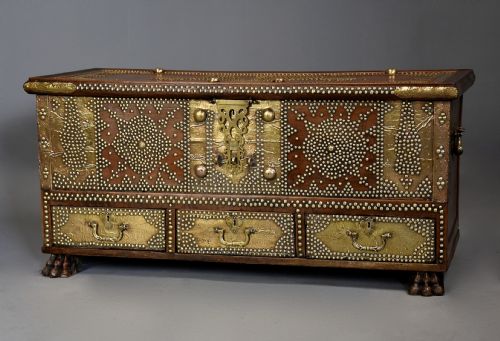
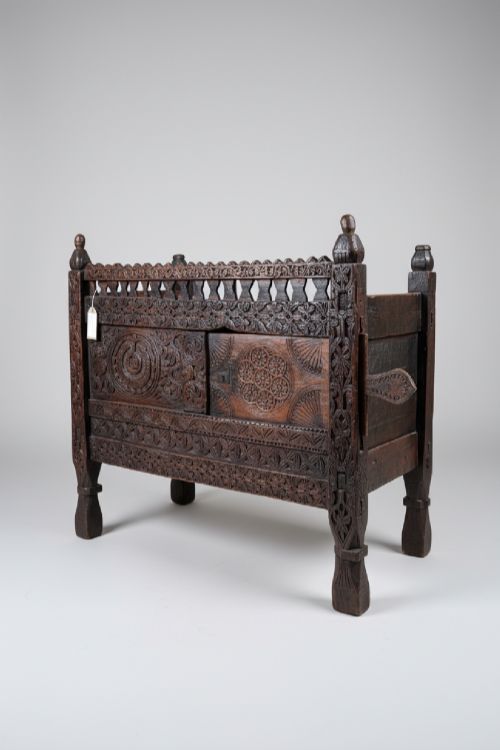
An antique dowry trunk serves as a storage chest commissioned or gathered for a marriage, carrying textiles, linens, and household valuables into a new home. These pieces cross various global traditions, appearing as Indian marriage chests, European painted boxes, and heavy English coffers.
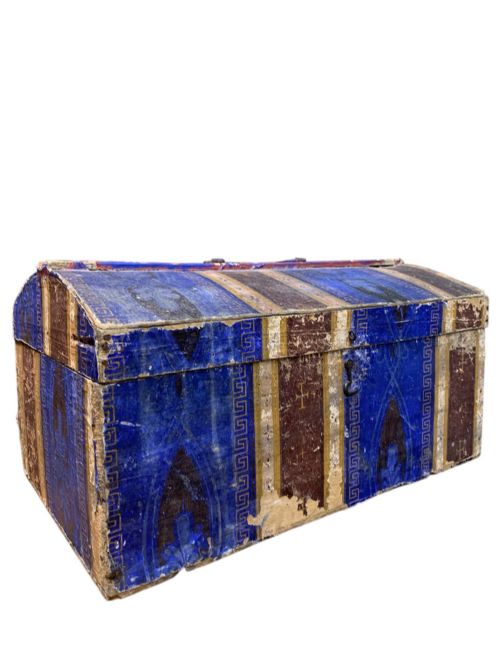
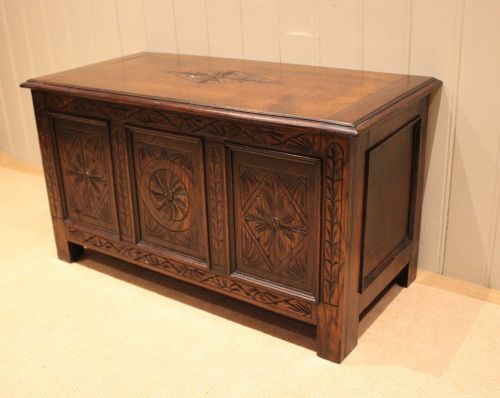
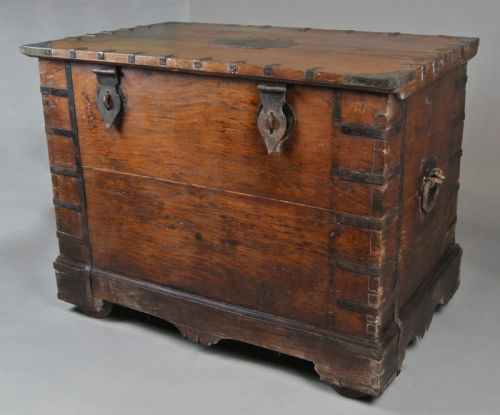
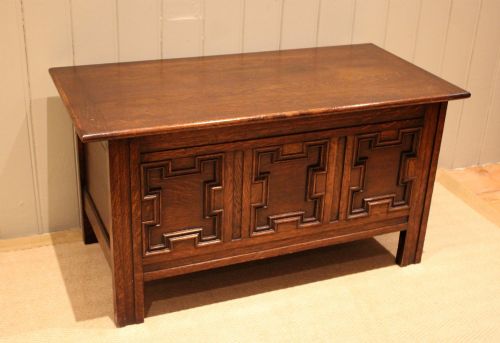
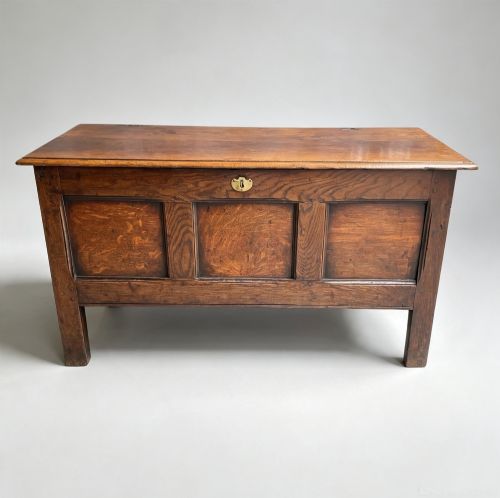
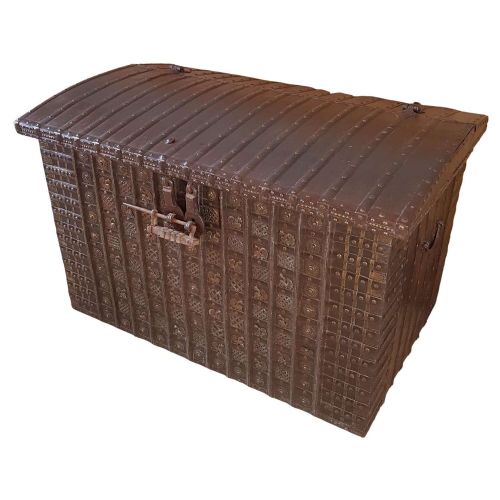
The selections available here span several centuries, with nineteenth-century examples appearing frequently alongside eighteenth-century and seventeenth-century items. Regional variations dictate the form, ranging from iron-banded Indian hardwoods to brightly painted Scandinavian pine and dark carved English oak.
Makers built these trunks to endure, using deep proportions and heavy lids that often doubled as seating within the home. Buyers encounter everything from monumental teak coffers to compact folk art boxes, each shaped by local materials and domestic customs.
Materials and construction
Makers relied on robust timbers such as oak, teak, pine, and hardwood to construct the primary body of each chest. Joinery often involved pegged mortise and tenon joints or heavy dovetailed corners designed to withstand the stress of heavy contents and long journeys.
Iron and brass hardware provided both structural reinforcement and security, appearing as strap hinges, heavy corner plates, and intricate locking mechanisms. Surfaces were frequently left as exposed timber with hand-carved panels, or finished with applied pigments and original paint displaying folk art motifs.
Antique Dowry Trunk Retail Price Guide 2026
Typical asking prices for dowry trunk among the pieces listed under this phrase on Sellingantiques today, from the lower quarter to the upper quarter. They describe what is for sale here now, not the wider market.
Inventory spans multiple centuries, incorporating seventeenth-century joinery, eighteenth-century folk art, and nineteenth-century iron-bound construction.
The spectrum of quality
Quality rests in the integrity of the original construction and the survival of untouched surface finishes. Pieces retaining their early paintwork, patinated hardware, and original timber surfaces stand apart from those altered or stripped over time.
The refinement of the carving or the complexity of the iron banding distinguishes standard utility boxes from exceptional regional examples. Structural harmony, original locks, and authentic regional characteristics define the upper tier of these chests.
The Antique Dowry Trunk Glossary
- Coffer
- A heavy wooden chest traditionally used for storing valuables and household goods. These pieces often feature deep lids and robust timber construction.
- Mule chest
- A traditional storage chest featuring one or more drawers built into the base beneath the primary compartment. This form bridges the utility of a trunk with the organisation of a chest of drawers.
- Damchiya
- A traditional low-lidded Indian dowry chest often ornamented with brass or iron reinforcement. These units typically serve as decorative cabinets within domestic spaces.
- Cassone
- A large Italian marriage chest designed to hold bridal linens. These historical items frequently display elaborate painted decoration or carved panels.
- Folk art
- Artistic work created within a traditional culture by self-taught artisans. In these chests, it describes hand-painted surfaces and vernacular decorative motifs.
Antique Dowry Trunk: Frequently Asked Questions
What was an antique dowry trunk used for?
These chests were commissioned to hold a bride's linens, garments, and valuable possessions as she prepared for marriage. Families packed them with household goods to transport to the new home.
Once in the house, the trunk served double duty as a storage receptacle and sturdy furniture, often functioning as a bench or table.
How do I date an old coffer?
Dating relies on examining the construction methods, tool marks, and timber species used by the maker. Hand-split boards, pegged joints, and original forged ironwork point towards earlier centuries.
Stylistic clues such as carved linenfold panels or regional painted motifs help narrow down the period and geographical origin.
Are painted finishes original on these chests?
Many European and Scandinavian trunks retain their initial decorative paint schemes applied by local artisans. Pigments were bound to the wood to celebrate the marriage union with floral or geometric patterns.
Close inspection reveals natural wear and age beneath the pigment, distinguishing authentic historical paint from later decoration.
How do I incorporate a heavy chest into a modern room?
These trunks offer versatile storage for blankets, pillows, and bulky items while anchoring a room with historic texture. Their flat lids make them suitable for use as a coffee table or window seat.
Placing one at the foot of a bed or in a hallway provides practical function without crowding the floor space.