




Antique Double Secretaire
These antique double secretaire pieces combine practical writing surfaces with stately vertical storage, offering a sophisticated solution for traditional interiors.
Antique Double Secretaire
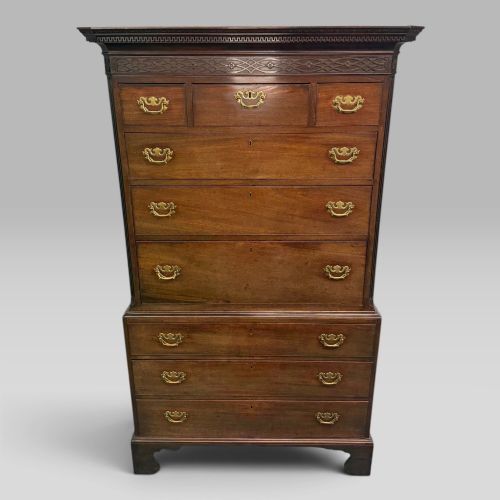
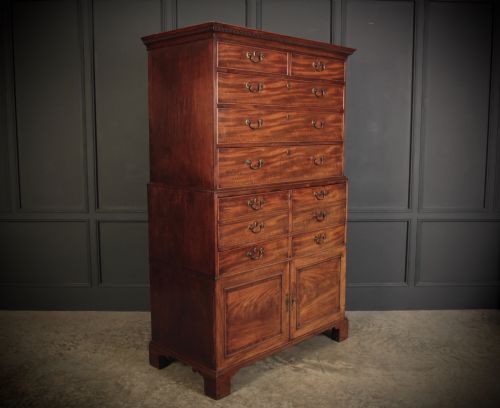
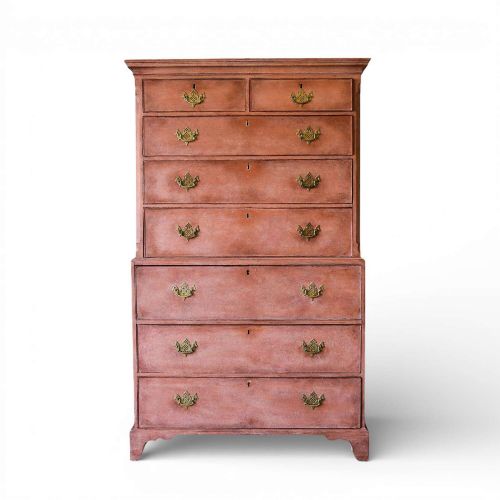
When you search for an antique double secretaire, you are looking at large case furniture that integrates a fitted writing drawer or fall-front compartment into a tiered storage design. The versions you are most likely to meet on this page include Georgian mahogany and walnut tallboys, chests on chest, and bureau bookcases originating from the eighteenth and nineteenth centuries.
These tall forms stack storage vertically, frequently combining a lower chest of drawers with an upper chest or bookcase section. The inclusion of a secretaire drawer provides a concealed writing desk complete with small internal pigeonholes and drawers, maintaining a neat exterior appearance while offering functional workspace.
How They Were Made
Cabinet makers utilised dense hardwoods such as mahogany and walnut, often constructing carcases from secondary woods like oak while applying fine veneers to primary surfaces. Brass hardware, including drop handles and escutcheons, secures the drawers and doors, whilst leather is occasionally integrated into the writing surfaces.
Joinery techniques relied on dovetailed drawer construction and framed panels to ensure stability in tall case pieces. Certain examples feature applied paint finishes over the wood, combining structural carpentry with decorative surface treatment.
Antique Double Secretaire Retail Price Guide 2026
Typical asking prices for double secretaire among the pieces listed under this phrase on Sellingantiques today, from the lower quarter to the upper quarter. They describe what is for sale here now, not the wider market.
Some eighteenth-century walnut secretaire drawers conceal tiny secret compartments behind pigeonholes, built for hiding truly private correspondence.
What Varies in Quality
The distinction between tiers of craftsmanship lies in the selection of timber figures and the precision of the internal cabinetwork within the secretaire drawer. Superior examples display carefully matched grain patterns across multiple drawer fronts and sophisticated internal secret compartments.
Proportion and architectural detailing also dictate the standing of a piece, with well-balanced cornices, finely carved friezes, and original brass fittings marking the more accomplished workshop productions from the Georgian and Chippendale periods.
The Antique Double Secretaire Glossary
- Secretaire
- A desk or drawer fitted with a drop-front or pull-out writing surface concealing small compartments. It allows a cabinet to serve dual functions as both storage and a writing desk.
- Tallboy
- A tall chest of drawers traditionally built in two stacked sections, with a smaller chest sitting atop a larger base. This form maximises vertical storage capacity while occupying a compact floor footprint.
- Chest on Chest
- A heavy case piece comprising an upper chest of drawers mounted directly onto a lower, slightly wider chest. It differs from a tallboy by retaining standard drawer proportions throughout both sections.
- Bureau Bookcase
- A combination of a sloping-front desk base and a glazed upper shelving cabinet for books. The desk section opens to reveal fitted pigeonholes and small drawers.
- Chippendale
- A style of eighteenth-century English furniture characterised by carved ornamentation, Gothic or Chinese fretwork influences, and robust proportions. It draws inspiration from the published designs of Thomas Chippendale.
Antique Double Secretaire: Frequently Asked Questions
Where should I place a tallboy?
Tallboys and chests on chest require stable wall placement due to their height and weight. Bedrooms and libraries provide traditional settings where their vertical storage capacity is most useful.
Ensure the room has sufficient ceiling clearance and stable flooring to support these substantial case pieces safely.
What is the difference between walnut and mahogany pieces?
Walnut furniture tends to date from the early eighteenth century, featuring rich, figured grain patterns and a warmer brown tone. These pieces often reflect the styles of the George I and early Georgian periods.
Mahogany became dominant later in the eighteenth century, offering a denser, heavier material that allowed for crisp carving associated with Chippendale and George III designs.
How do I identify a George III period piece?
George III pieces date from the second half of the eighteenth century and frequently display classical architectural motifs, straight lines, and fine mahogany veneers. Look for proportions influenced by prevailing neoclassical or Chippendale tastes.
Drawer construction techniques, such as hand-cut dovetails and original brass drop handles, help confirm the eighteenth-century origin of the casework.