


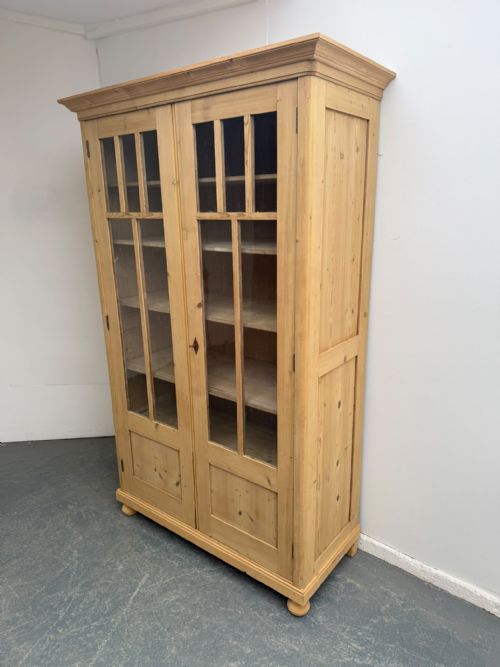


Antique Double Dresser
An antique double dresser offers substantial storage and presence, holding centuries of craftsmanship in its heavy timbers.
Antique Double Dresser
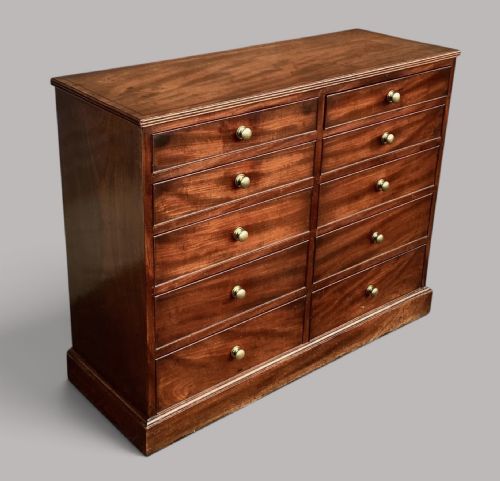
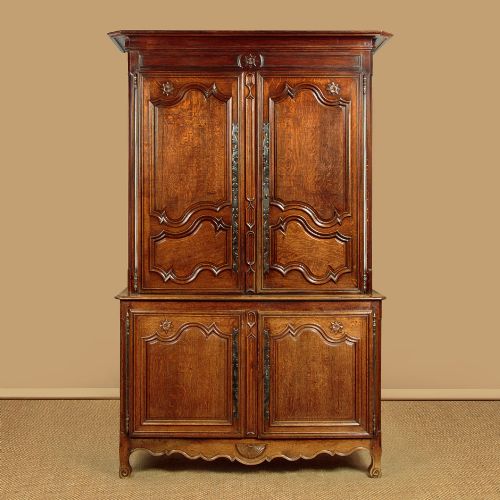
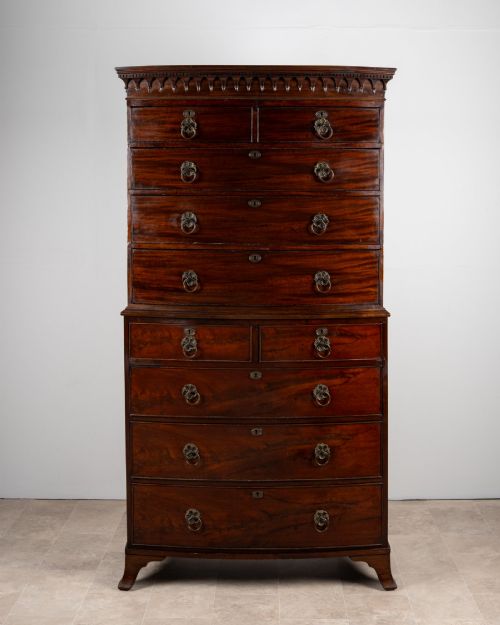
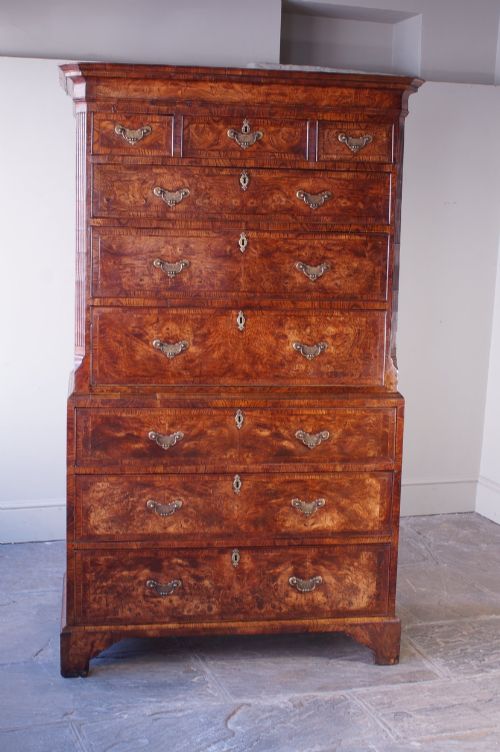
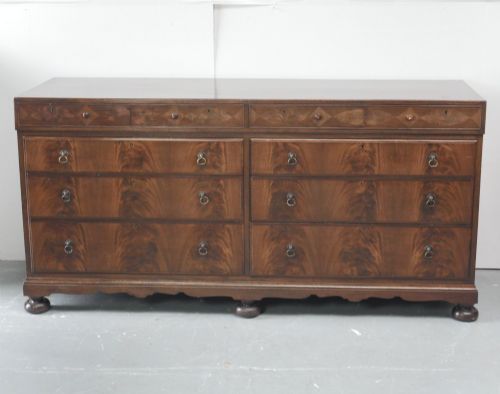
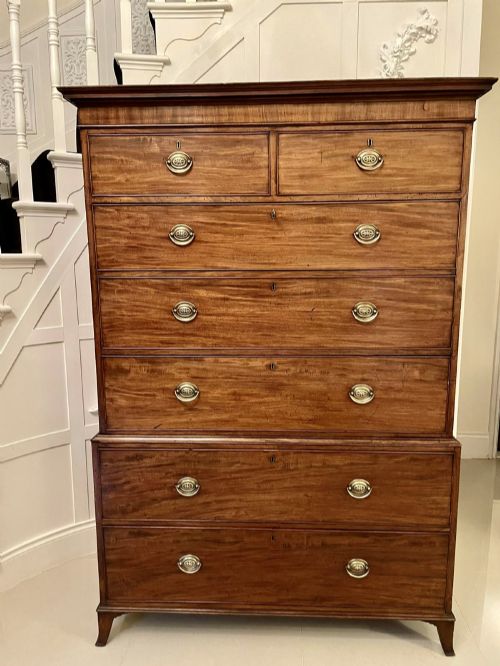
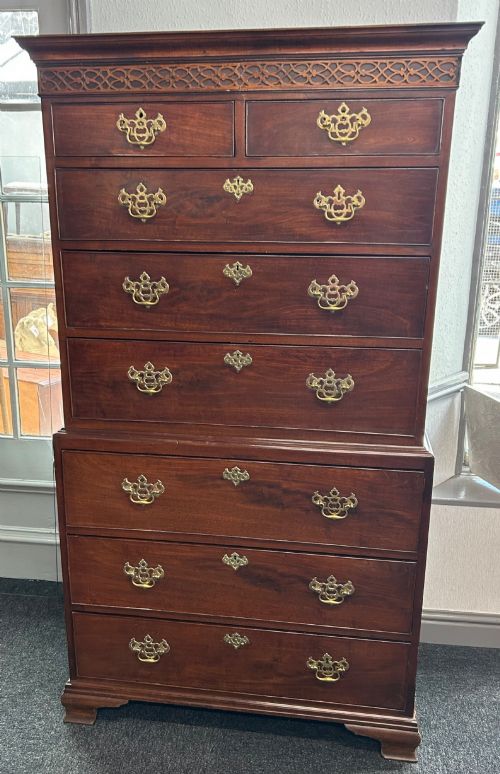
When you search for an antique double dresser on this page, you encounter pieces that often cross over with tallboys and chest on chest forms from various historic periods. The selection spans the eighteenth century through the Victorian era, showing how cabinetmakers solved storage needs with stacked drawers.
You are most likely to meet mahogany and walnut examples carrying Georgian or later stylistic traits. These larger storage units combine two distinct sections, creating a towering presence that dominates a bedroom or hallway.
The objects listed incorporate regional variations, including Scottish and Welsh pieces alongside English iterations. Each version displays the specific drawer configurations and timber choices favoured by its regional maker.
Assessing craftsmanship and condition
Superior examples demonstrate precision in the matching of veneer grains across multiple drawer fronts. The crispness of carved mouldings and the retention of original brass fittings elevate certain pieces above standard utility furniture.
Structural integrity depends on the stability of the timber joints and the smooth operation of deep drawers within their runners. Subtle details like secondary pine or oak linings reveal the original workshop standards.
Antique Double Dresser Retail Price Guide 2026
Typical asking prices for double dresser among the pieces listed under this phrase on Sellingantiques today, from the lower quarter to the upper quarter. They describe what is for sale here now, not the wider market.
Listings feature oak, mahogany, walnut, and brass across eighteenth-century and Victorian periods.
Whytock and Reid·Roberts and Belk·Linthorpe Pottery
The Antique Double Dresser Glossary
- Tallboy
- A tall chest of drawers made in two sections, where a smaller upper chest sits atop a wider base. This form maximises vertical storage capacity.
- Chest on chest
- An alternative term for a tallboy, describing the stacked construction method using two separate carcases. It provides grand proportions.
- Dovetail
- A joint formed by interlocking wedge-shaped fingers, used extensively in period drawer construction. It ensures durable corners.
- Escutcheon
- A protective plate surrounding a keyhole, usually cast in brass. It prevents the timber from wearing around the lock.
- Figured ash
- Wood harvested from ash trees showing distinctive, highly decorative grain patterns. Cabinetmakers used it selectively on primary display surfaces.
Antique Double Dresser: Frequently Asked Questions
How do I clean an antique double dresser?
Dust the timber surfaces regularly with a soft, dry cloth to prevent particulate buildup in the grain.
Apply high-quality beeswax sparingly to nourish the wood and maintain a gentle historic sheen.
Where should I place a double dresser?
Position the piece against a sturdy wall in a bedroom or dressing room with stable humidity levels.
Keep the timber away from direct heat sources and strong sunlight to prevent warping and fading.
Can I remove the top section?
Most tallboys and chest on chest forms separate into two distinct carcases for ease of transport.
Lift the upper section straight up and off the base once any securing brackets are undone.
What defines a Georgian piece?
Georgian furniture spans the reigns of the four Georges, noted for proportion, classical lines, and rich mahogany.
Cabinetmakers during this long era refined structural elegance and refined carving techniques.