



Antique Door Plates
These antique door plates protect timber and operate latches across Victorian, Edwardian, and Art Deco interiors.
Antique Door Plates
When you search for antique door plates, you find architectural hardware designed to protect timber around handles and keyholes. These items range from simple finger plates to complex assemblies featuring knockers, letter boxes, and matching pulls.
The pieces on this page span several stylistic movements, including Georgian, Victorian, Art Nouveau, and Art Deco. Brass and bronze examples dominate, alongside enamelled iron and glass variations.
Domestic and public buildings utilise these functional items to reduce wear on wooden doors. Many survive as sets or matched pairs, though individual plates appear frequently.
How they were made
Foundries manufactured these items primarily through casting methods in brass, bronze, and iron. Molten metal poured into moulds created the heavy relief patterns seen on Victorian and Art Nouveau examples.
Makers also applied enamel surfaces to metal bases for durable push plates, whilst other workshops combined cast brass with porcelain or black china inserts. Wrought iron and carved timber appear less frequently in specific hardware contexts.
Finishing techniques involved polishing, texturing, and mounting with matching screws. Artisans hand-finished many of the decorative motifs before assembly.
Antique Door Plates Retail Price Guide 2026
Typical asking prices for door plates among the pieces listed under this phrase on Sellingantiques today, from the lower quarter to the upper quarter. They describe what is for sale here now, not the wider market.
One remarkably polite enamel survivor insists that visitors please close the door.
What varies in quality
The weight and thickness of the metal define the foundation of quality in these items. Heavier castings provide greater rigidity and deeper relief in ornamental designs.
Crispness of detail in stylised motifs, such as floral Art Nouveau curves or geometric Art Deco lines, distinguishes superior production. Inferior examples show blurred edges from worn moulds.
Completeness alters the character of surviving hardware. Sets with original matching screws, handles, or striking plates retain higher integrity than isolated components.
The Antique Door Plates Glossary
- Finger plate
- A protective panel mounted on a door near the handle to prevent hand marks on the timber. These items appear in brass, glass, and enamel.
- Push plate
- A flat metal or enamel plate fixed to a door for the user to push against when opening. They frequently feature instructional text or decorative borders.
- Rim lock
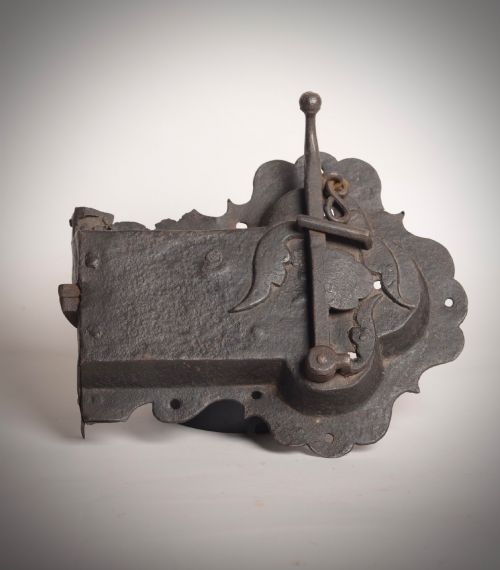
- A mechanical locking mechanism housed in a decorative box mounted directly onto the surface of a door. These units often include matching handles and plates.
- Letter box plate
- An exterior architectural opening lined with a hinged flap for posting mail. Victorian examples frequently incorporate integrated pull handles.
- Striking plate
- A metal plate fitted to a door jamb to receive and guide a latch bolt. They protect the surrounding wood from friction.
Antique Door Plates: Frequently Asked Questions
How do I clean antique door plates?
Wash surfaces gently with warm soapy water and a soft cloth to remove surface grime.
Avoid harsh chemical dips that strip away historic patination entirely.
Are these plates standard sizes?
Historic hardware predates modern standardisation and varies significantly in dimensions.
Measure existing screw holes and door clearances carefully before fitting replacement hardware.
How do I date an antique door plate?
Examine the decorative style, such as Georgian symmetry or Art Deco geometry, alongside the material composition.
Manufacturing techniques like sand casting marks also offer clues to the period of origin.
Can I use these on modern doors?
Many historic plates fit standard modern doors with minor adjustments to screw placements.
Check the backset and spindle dimensions if the plate incorporates a handle or lock mechanism.