


Antique Door Key
These antique door key finds are solid brass, iron and steel pieces of hardware that bring genuine period function and detail to a door.
Antique Door Key
When you search for an antique door key, you encounter utilitarian iron and brass items designed to operate traditional locks across several centuries. The selection ranges from early medieval examples to later Victorian and Edwardian hardware.
Many of these keys accompany larger items of architectural hardware such as stock locks and box locks, or appear alongside fitted cabinets and cupboards. You are most likely to meet steel, wrought iron and brass specimens paired with oak or pine housings.
The origin spans diverse British and French periods, touching upon Georgian, Victorian, Edwardian and much earlier medieval eras. Each piece represents the specific locking technology and craftsmanship of its respective decade.
How they were made
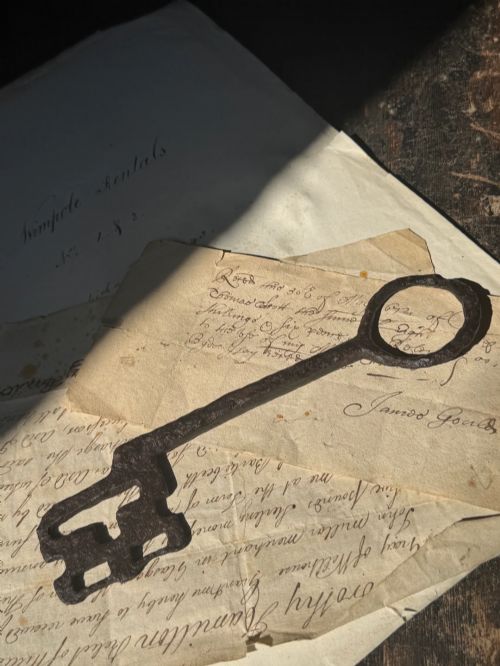
The physical evidence records forged iron and wrought iron alongside cast and polished steel components. Metalworkers shaped these keys by hand, cutting precise wards to match the intricate mechanisms of contemporary box locks and stock locks.
Combinations of brass embellishments, wooden cases in oak and mahogany, and glass elements occur within the associated hardware. Smiths utilised robust ferrous metals to ensure durability, while cabinetmakers housed the mechanisms in sturdy timber surrounds.
Listings span from the thirteenth century through to the Edwardian period, utilising wrought iron, brass, steel, oak and mahogany.
What varies in quality
Quality rests upon the purity of the metalwork, the complexity of the cut wards and the integrity of any accompanying box lock or keep. Early medieval wrought iron pieces demonstrate heavy hand-forging, whereas later Victorian examples show refined polishing and brass detailing.
The condition of the metal surface and the completeness of the original mechanism determine the standing of each piece. Superior examples retain their original steel and brass surfaces without excessive modern intervention.
The Antique Door Key Glossary
- Stock lock
- A lock enclosed in a wooden case, typically mounted to the surface of a door rather than mortised inside it.
- Box lock
- A self-contained metal or wood-cased lock mechanism operated by a matching key, common in Georgian and Victorian interiors.
- Wrought iron
- Iron that has been heated and shaped with tools by a blacksmith, showing distinctive surface texture from the forging process.
- Ward
- A projection inside a lock or on a key that prevents the wrong key from turning, dictating the specific shape of the key bit.
- Keep
- The metal bracket or plate attached to a doorframe into which the bolt of a lock engages when secured.
Antique Door Key: Frequently Asked Questions
How do I date an antique key?
Dating relies on the manufacturing technique, the weight of the metal and the complexity of the wards. Early examples display heavy hand-forging, while later pieces show machine finishing.
Comparing the key to documented periods like the Georgian or Victorian eras helps establish a clearer timeline based on stylistic traits.
Will these keys still open old locks?
Many of these keys are sold alongside their original locks, such as oak box locks and stock locks, meaning they remain fully functional.
Loose keys require careful measurement of the barrel, bow and wards to determine compatibility with existing period mechanisms.
What metals were used for these keys?
The evidence records wrought iron, steel, polished steel and brass across different centuries. Early medieval pieces are predominantly heavy iron.
Later Victorian and Edwardian hardware frequently incorporates brass embellishments and polished steel surfaces for a refined finish.
How should I clean rusted iron keys?
Maintenance involves removing active red rust gently while preserving the dark patina accumulated over centuries of use. Light oil and fine wire wool help stabilise the surface.
Harsh chemical dips should be avoided to protect the original forged texture of the metal.