




Antique Domestic Interior
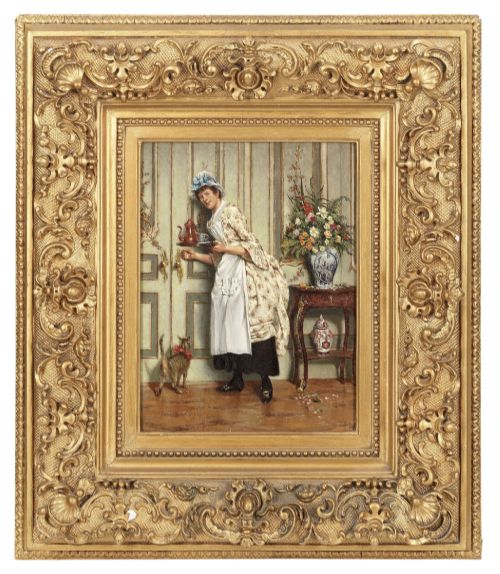
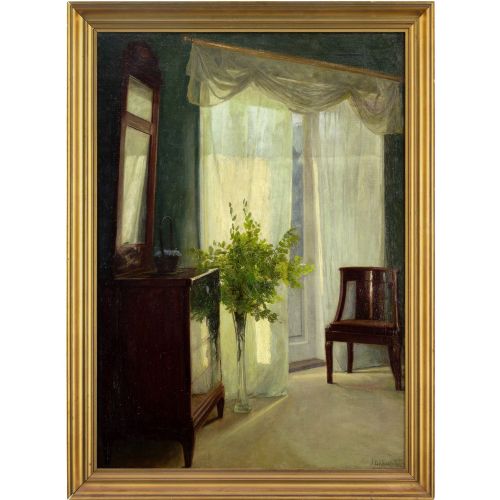
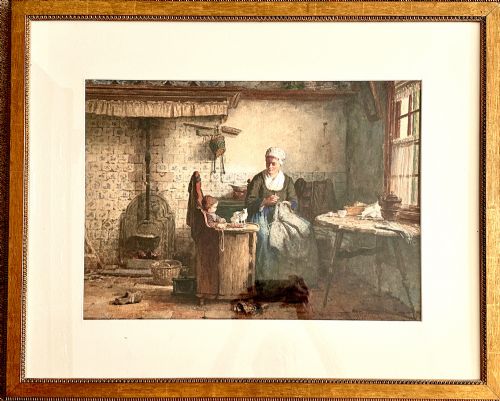
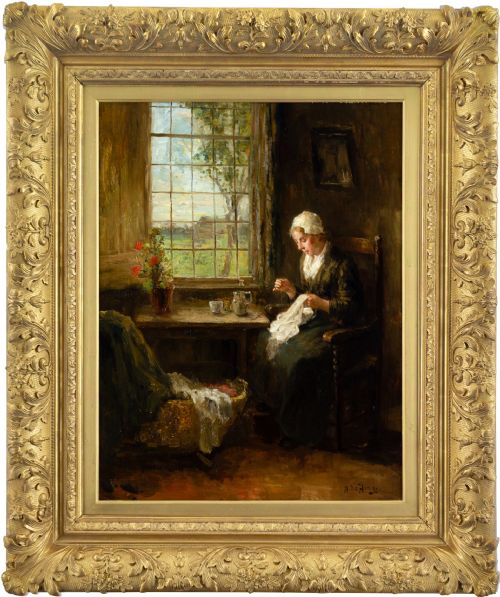
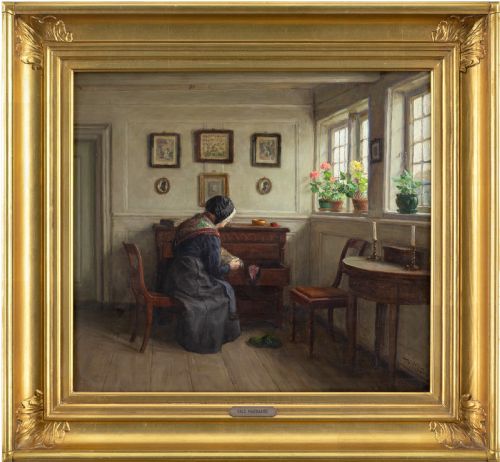
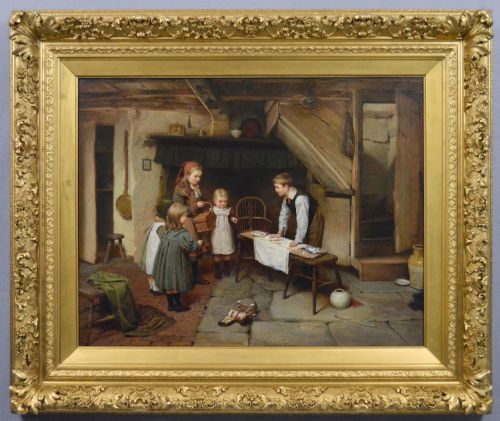
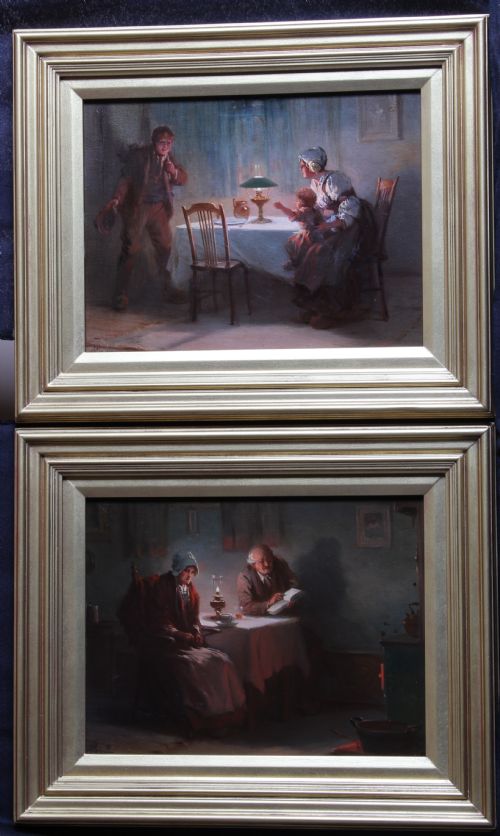
These pieces capture an antique domestic interior through oil paintings, watercolours, and drawings that record domestic life in cottage and country house settings.
Antique Domestic Interior
An antique domestic interior represents scenes of everyday life within cottages, country houses, and domestic rooms, captured predominantly through oil paintings and watercolours. You will frequently encounter works showing family scenes, tea times, fireside rests, and household chores set across the nineteenth and early twentieth centuries.
The selection ranges from detailed oil on canvas and panel works to delicate watercolours, graphite drawings, and mixed media on paper. These pieces document domestic routines, featuring figures engaged in spinning, reading, or sharing quiet moments indoors.
How they were made
Artists painted primarily with oil paint on canvas, wood panels, or copper plates, building up rich layers of pigment to capture indoor light and shadow. Watercolours and graphite drawings on paper formed another vital method for recording intimate home scenes with fine linear detail.
Many of these works retain their original framing materials, utilising wood, gesso, and gold leaf to house the artwork securely. The physical support often determines the texture of the brushwork, particularly where artists utilised oil on board or panel.
Listings feature works spanning the nineteenth and early twentieth centuries, created across British, French, Dutch, and Scandinavian artistic traditions.
What varies in quality
The distinction in quality rests upon the artist's command of light, handling of interior perspective, and the psychological depth of the figures portrayed. Superior examples capture the subtle play of sunlight through a doorway or the warmth of a hearth fire with convincing tonality.
Execution of detail in household furnishings and fabrics separates finer works from simpler compositions. The preservation of original surface texture, pigment stability, and framing materials also influences the standing of an individual piece.
Stephen Samuel Lewin·John Lübschitz·Hendrik Valkenberg·Bernard De Hoog·Valdemar Magaard·James Hayllar·Harry Brooker·Alexander Rosell·James Kyd·George Smith·Théophile Emmanuel Duverger·Henry Spernon Tozer·Rolinda Sharples·Pauline Delacroix Garnier·Alfred Provis·Henry Silkstone Hopwood·Ralph Hedley·Jonathan Pratt·Pierre-Louis Bouchard
The Antique Domestic Interior Glossary
- Genre painting
- Depiction of aspects of everyday life by depicting ordinary people engaged in common activities. These works focus on domestic scenes rather than historical or mythological events.
- Giltwood
- Wood that has been coated with gold leaf or gold paint. This material frequently appears on the frames enclosing nineteenth-century oil paintings.
- Oil on panel
- A painting executed on a flat wooden board rather than stretched canvas. This technique was widely utilised by artists seeking a rigid, smooth surface for fine detail.
- Watercolour
- A painting method in which the paints are made of pigments suspended in a water-based solution. Works in this medium rely on the white of the paper to provide luminosity.
Antique Domestic Interior: Frequently Asked Questions
What subjects appear in these works?
These pieces depict scenes of everyday life inside cottages and country houses, such as tea times, fireside gatherings, and household chores.
Artists focused on human activity, recording family moments, quiet rests, and cottage interiors populated by figures and domestic animals.
Which materials were used?
Artisans worked primarily with oil paint on canvas, wood panel, board, and copper, as well as watercolour and graphite on paper.
Frames were commonly built from wood and finished with gesso and gold leaf to complement the artwork.
How do I date these pieces?
Dating relies on recorded artist lifespans, stylistic movements such as Victorian genre painting or Hague School realism, and inscribed dates on the works or reverse labels.
The choice of medium and framing style also helps place a piece within the nineteenth or early twentieth century.
Where should I hang them?
These works suit traditional living spaces, studies, or hallways where their domestic subject matter can be viewed at close range.
Protecting them from direct sunlight helps preserve the integrity of oil pigments, watercolours, and giltwood frames.