


Antique Domed Box
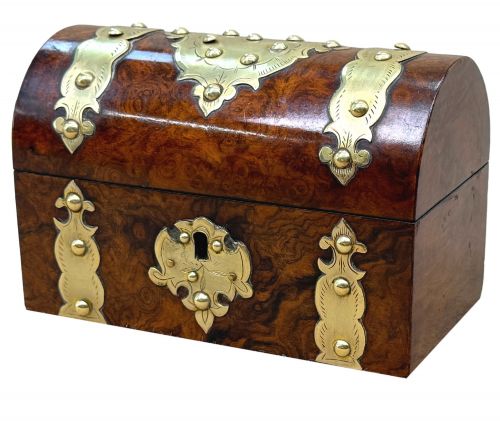
An antique domed box brings curved form and tactile timber into a room, holding papers, tea, or personal trinkets within a sturdy frame.
Antique Domed Box
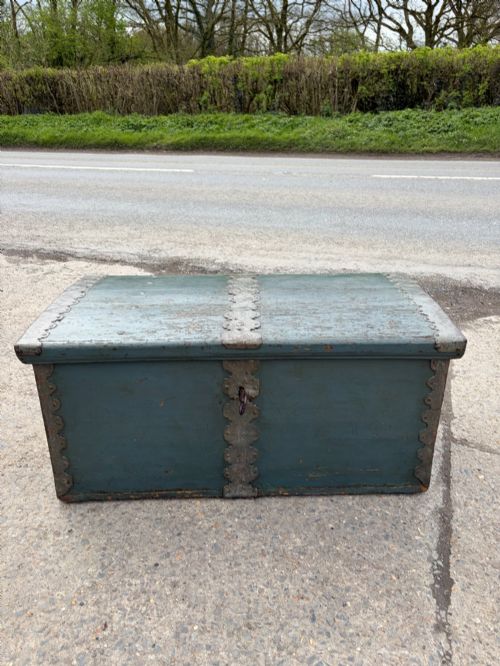
An antique domed box encompasses a wide variety of curved-lid vessels, ranging from small tea caddies and stationery boxes to larger trunks, coffers, and chests. The pieces span the eighteenth, nineteenth, and early twentieth centuries, crossing Georgian, Regency, and Victorian periods.
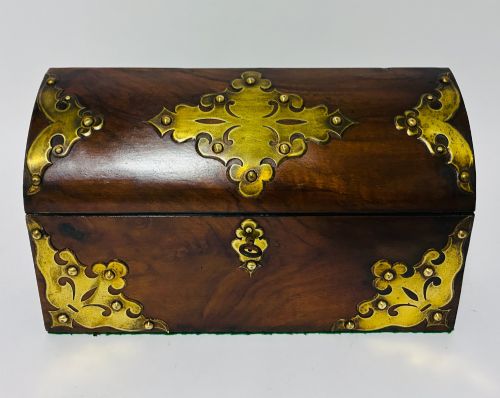
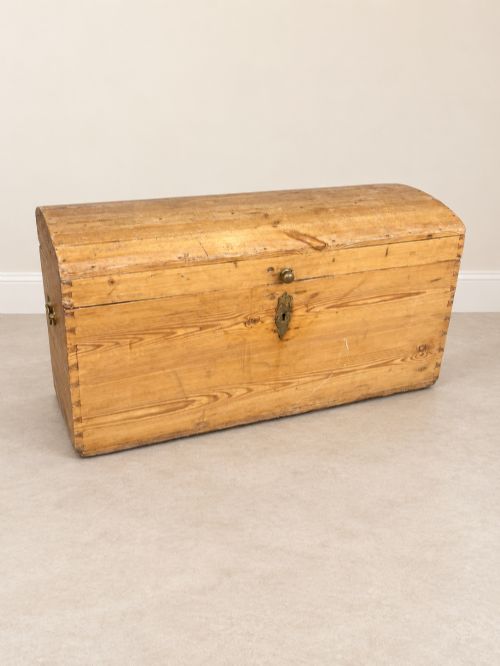
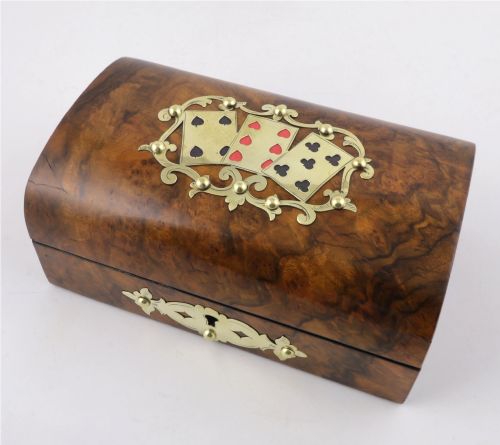
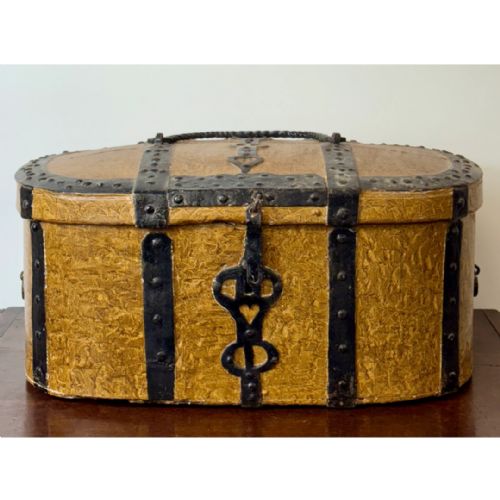
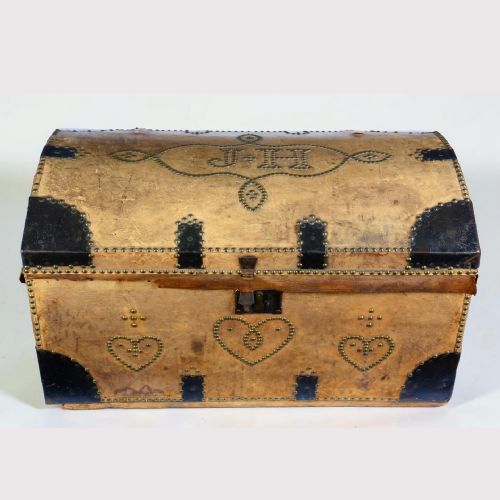
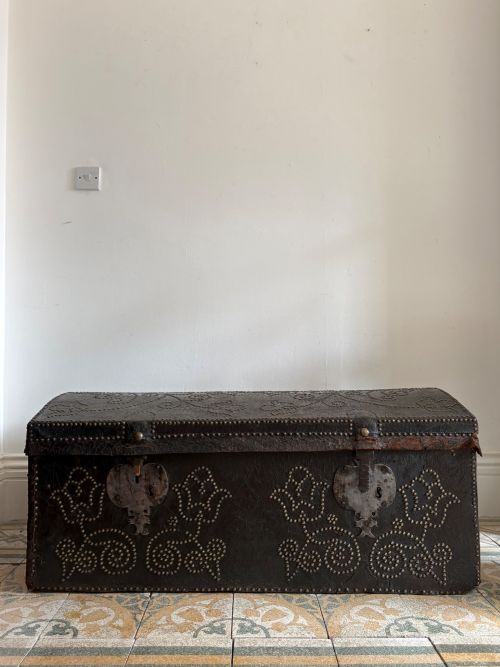
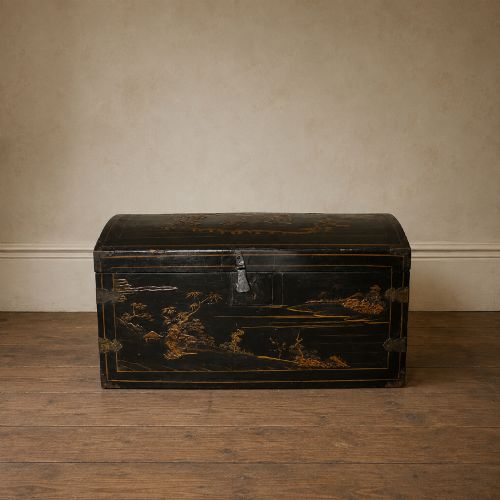
The most frequent examples found in this selection are Victorian walnut stationery boxes and nineteenth-century pine trunks, alongside painted Scandinavian folk art chests and Chinese export lacquer coffers. Smaller desk caskets sit alongside heavy iron, brass-bound, and leather-studded travel cases.
How they were made
Cabinet makers utilised dense native and exotic timbers such as walnut, mahogany, coromandel, and pine, often applying decorative veneers like burr walnut or amboyna over a solid core. Iron, steel, brass mounts, and studding reinforced structural corners and edges for travel.
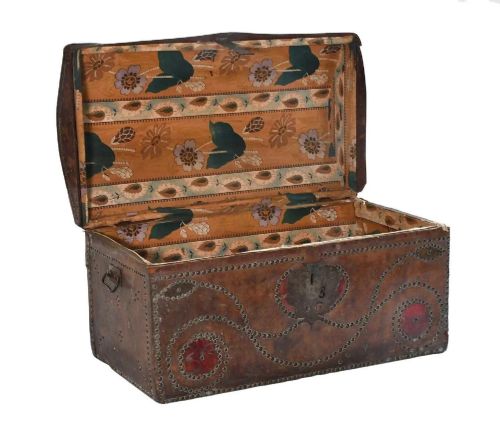
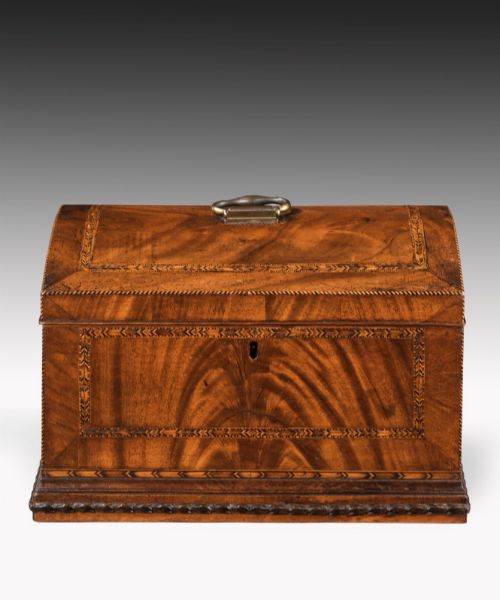
Surface decoration involved hand painting, black lacquer with gilt work, Tunbridge inlay, and leather or hide coverings secured with metal tacks. Interiors frequently combined silk or velvet linings with fitted wooden compartments for letters, cards, or bottles.
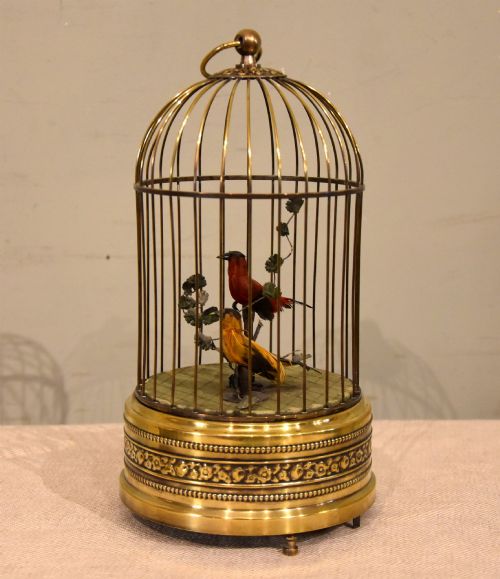
A pair of Victorian singing birds resting inside a brass cage keeps watch over the heavy wooden trunks and leather chests.
What varies in quality
The distinction between ordinary and superior pieces rests on the choice of timber and the precision of the brass binding or inlay. Grain selection in burr walnut or yew dictates visual depth, while dense dovetail joints ensure structural integrity.
Originality of surface finish and hardware plays a central role. Retaining original keys, untouched painted finishes, and matching internal fittings separates utilitarian items from high-status decorative caskets.
Chapple And Sons·Cunard Line
The Antique Domed Box Glossary
- Tea caddy
- A small box designed for storing loose tea leaves, often fitted with internal lids or compartments. They date predominantly from the Georgian and Victorian periods.
- Stationery box
- A desk accessory featuring stepped internal compartments or sloping slots for holding writing paper and envelopes. They frequently appear in burr walnut with brass mounts.
- Campaign case
- A portable trunk or box built for travel, typically reinforced with brass corners and flush handles. These pieces date from the Regency and Victorian eras.
- Tunbridge inlay
- A form of mosaic woodwork created from multiple tiny wood blocks arranged to form geometric or floral patterns. This technique decorates nineteenth-century boxes.
- Cofer
- A large strong box or chest with a domed lid, traditionally used for storing valuables or clothing. They often feature leather coverings and iron or brass studding.
Antique Domed Box: Frequently Asked Questions
How were tea caddies used?
Tea caddies served to store expensive loose tea leaves safely under lock and key in the parlour or dining room. Servants or hosts portioned the tea out using internal compartments.
Many examples include fitted glass mixing bowls or twin canisters to keep green and black tea separate. The locked lid protected the valuable contents from household theft.
What is a domed box made from?
Construction materials range from solid pine and oak to decorative hardwoods like walnut, mahogany, and coromandel. Trunks and chests often incorporate leather, hide, paint, iron, and steel.
Finer desk boxes utilise burr veneers and brass bindings, while folk art pieces feature hand-painted pine surfaces. Linings inside typically consist of paper, silk, or plain wood.
How do I date an antique box?
Dating relies on combining the timber choice, construction methods, lock types, and overall style. Georgian pieces often show simpler mahogany or yew lines, while Victorian examples favour heavy burr walnut and brass mounts.
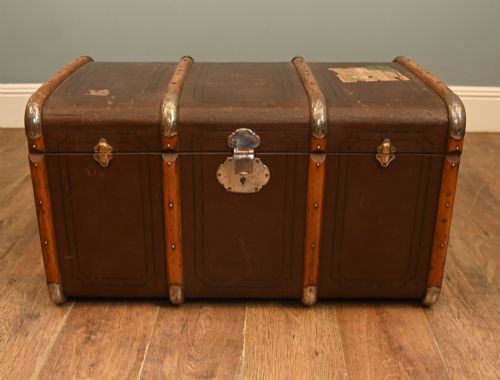
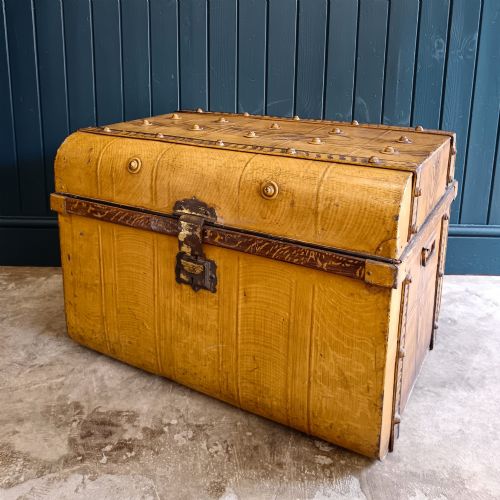
Nineteenth-century industrial manufacturing introduced steel trunks and painted metal steamer luggage. Comparing the interior fittings and hinges helps narrow the decade of production.
Where should I place a trunk?
Large domed trunks and leather chests function well as coffee tables or blanket storage at the base of a bed. Their flat or curved tops support books and decorative items.
Smaller stationery boxes and tea caddies suit tabletops, sideboards, or desk surfaces where their interior compartments remain accessible. Keeping them away from direct sunlight protects vulnerable wood veneers.