


Antique Dog Portrait Artwork
Antique dog portrait artwork captures canine companions through centuries of painting, drawing, and needlework, offering a direct window into historical human-animal bonds.
Antique Dog Portrait Artwork
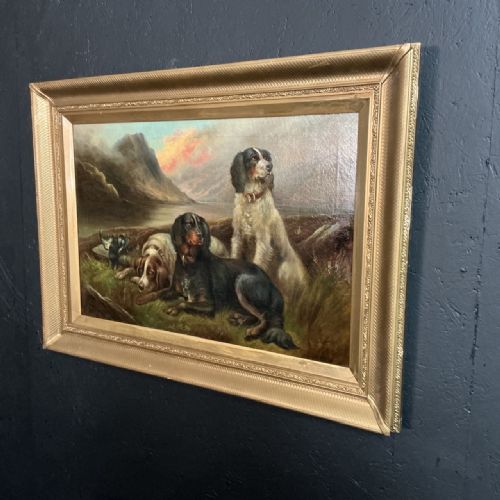
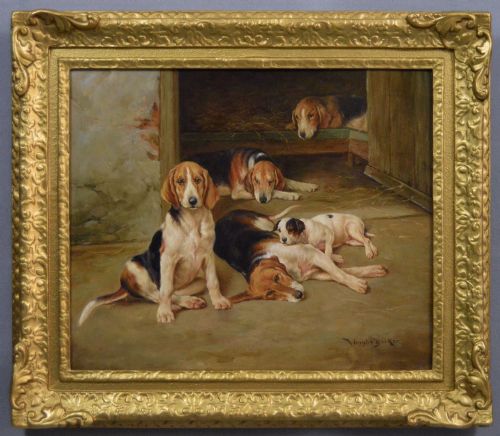
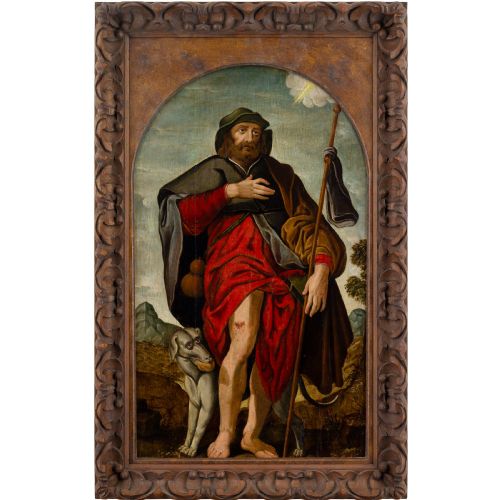
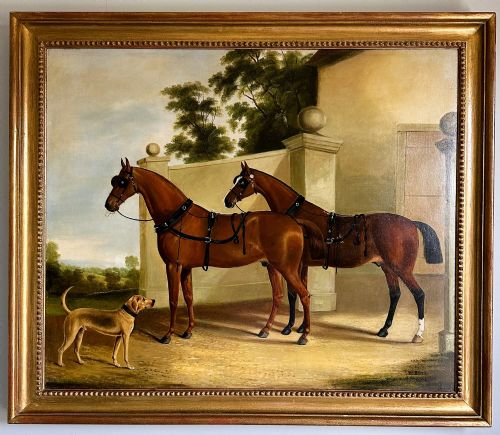
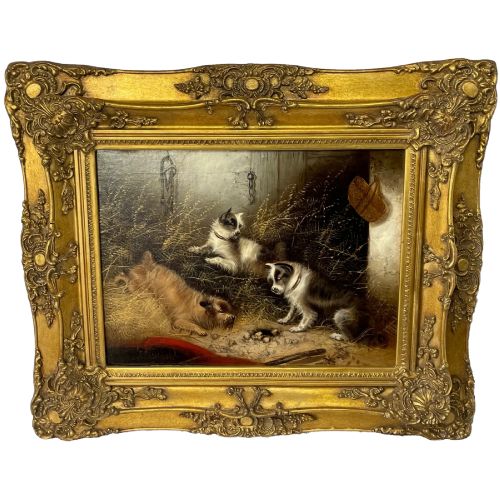
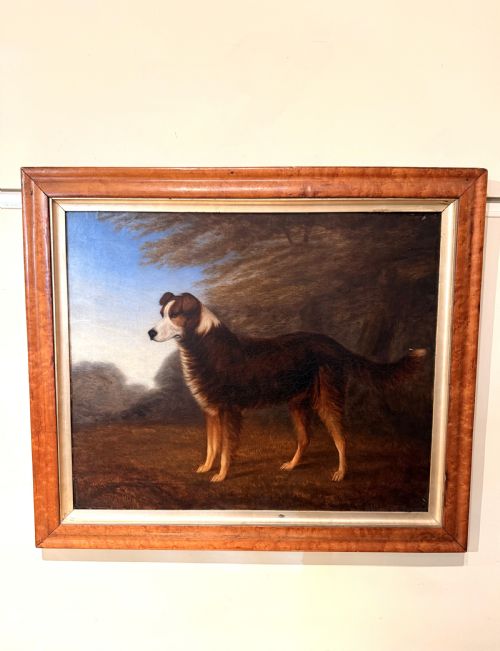
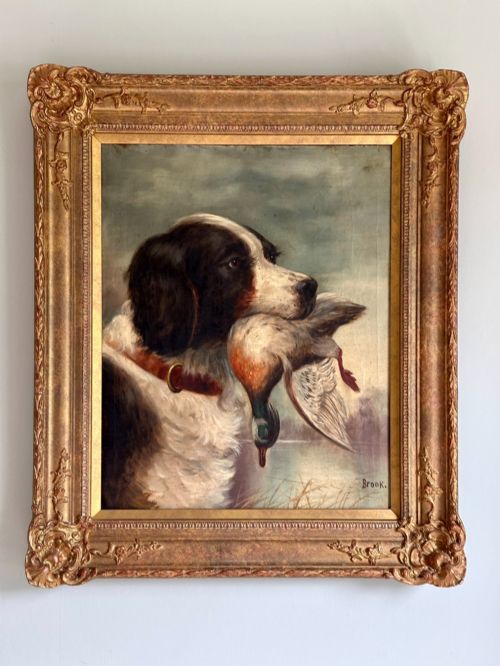
Antique dog portrait artwork encompasses paintings, drawings, prints, and needlework focused on canines, spanning the Georgian, Regency, Victorian, and Edwardian periods.
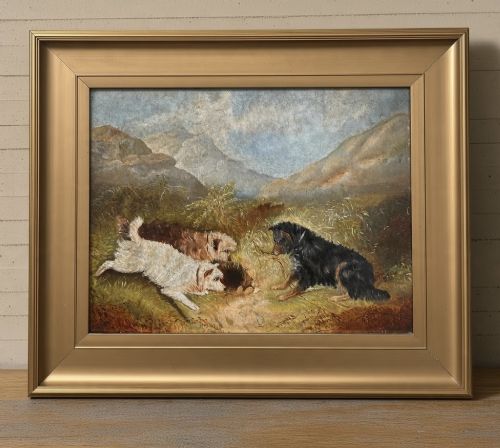
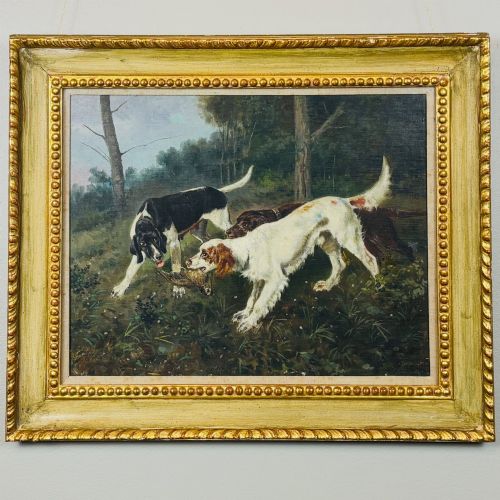
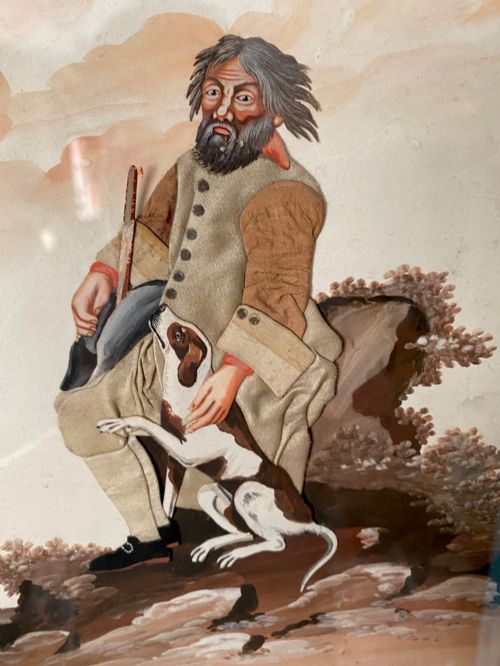
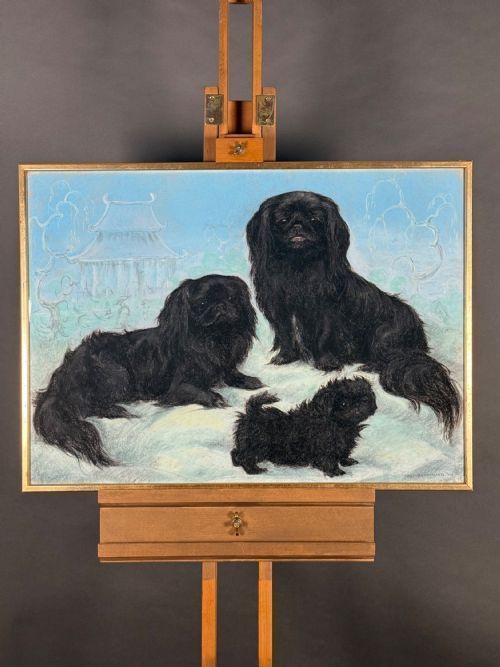
The selections on this page appear primarily as oil paintings on canvas or board, alongside works in watercolour, pastel, etching, gouache, and wool Berlin work.
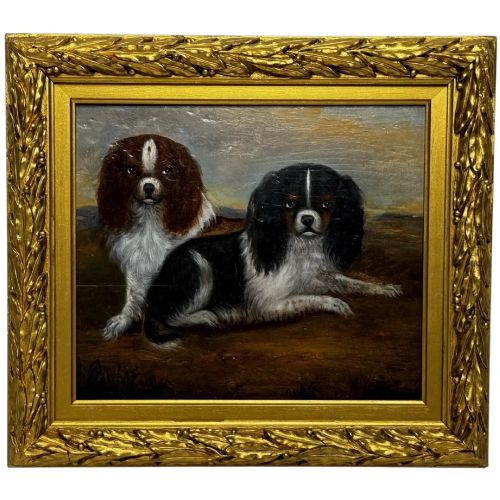
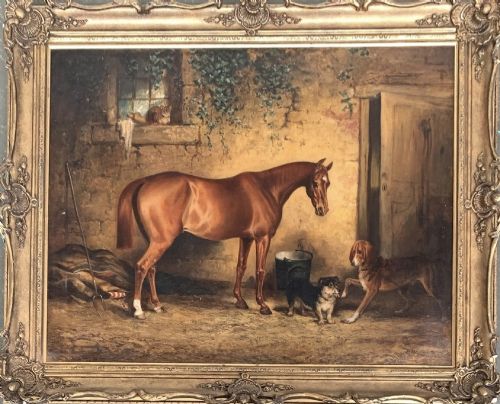
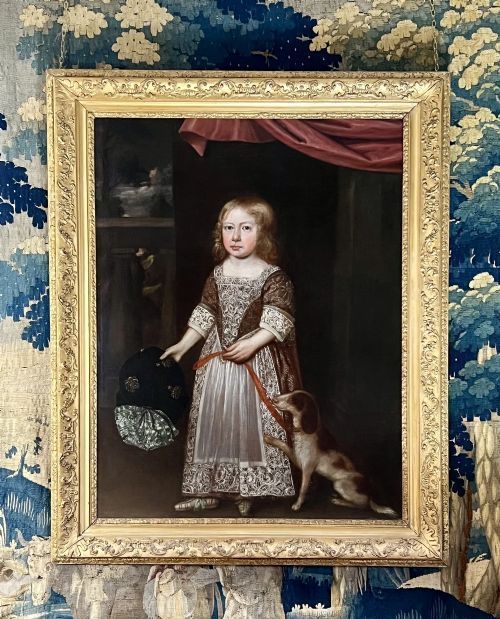
Subjects range from individual sporting dogs and working hounds to cherished pets posed beside children or within landscapes, created by British, French, and American makers.
How they were made
Makers applied oil paint to stretched canvas or wooden panels, building up layers of pigment to render the texture of fur and the depth of expression.
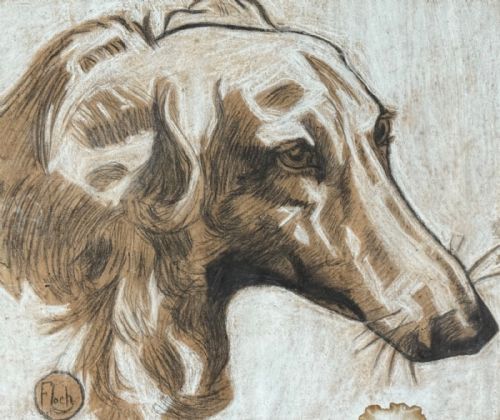
Works on paper utilise watercolour, gouache, charcoal, or pencil, frequently mounted behind glass within period wood frames or giltwood surrounds accented with gold leaf.
Textile pieces employ Berlin work needlework, stitching wool onto canvas to build lasting coloured images framed in burr maple.
Antique Dog Portrait Artwork Retail Price Guide 2026
Typical asking prices for dog portrait artwork among the pieces listed under this phrase on Sellingantiques today, from the lower quarter to the upper quarter. They describe what is for sale here now, not the wider market.
Canine subjects range from working terriers caught in mid-field to pampered lapdogs peering out permanently from behind original burr maple frames.
What varies in quality
Quality rests upon the skill of the draughtsman or painter in capturing the anatomical structure, weight, and individual personality of the animal.
The harmony between the artwork and its period frame alters the character of the piece, particularly where original giltwood or burr maple surrounds remain intact.
Depth of composition and handling of light separate simple records from accomplished fine art paintings that command lasting attention.
Henry Barraud·William James Hubard·Herbert Dicksee·Valentine T Garland·Martin Theodore Ward·John Sargent Noble·C R Breytle·John Emms·Arthur Wardle·William Barraud·Sir Edwin Landseer·Samuel Raven·Colin Graeme Roe
The Antique Dog Portrait Artwork Glossary
- Berlin work
- A style of nineteenth-century needlework using wool on canvas, charted on squared paper. It allowed makers to produce shaded pictorial designs like spaniels.
- Etching
- A printmaking process where acid bites lines into a metal plate to hold ink. Artists use this to create fine, detailed lines in animal studies.
- Giltwood
- Wood carved and coated with a thin layer of gold leaf. It forms the reflective decorative frames typical of nineteenth-century picture presentation.
- Naive art
- Work produced by artists without formal academic training, often characterised by flat perspective and direct charm. These pieces date across the Georgian and Victorian eras.
- Sporting art
- Depictions of animals associated with field sports, hunting, and rural pursuits. This genre forms a major part of nineteenth-century canine painting.
Antique Dog Portrait Artwork: Frequently Asked Questions
How do I identify a Victorian dog painting?
Victorian dog paintings often feature deep oil colours on canvas, heavy giltwood frames, and subjects that highlight the sentimental or working relationship between humans and animals. Artists from this era frequently signed their work or left distinct stylistic markers tied to British sporting and fine art traditions.
Examination of the canvas backing, stretcher bars, and framing materials also helps confirm the nineteenth-century origin of the piece.
What is needlework dog art?
Needlework pieces, such as Berlin work panels, use coloured wools stitched onto a canvas mesh to create detailed pictures of breeds like King Charles spaniels. These textile artworks were usually mounted behind glass within wooden frames to protect the fibres.
They represent a domestic craft tradition that ran parallel to traditional oil painting during the nineteenth century.
How should I frame antique paper drawings?
Drawings in pastel, gouache, or pencil require mounting behind glass with conservation-grade materials to prevent fading and moisture damage. Retaining or matching period wood frames preserves the historical integrity of works on paper from the Edwardian and later periods.
Direct contact between the drawing surface and the glass must be avoided by using window mounts.
Where were most of these dog portraits created?
The majority of these artworks originate from British and European schools, reflecting the strong regional traditions of animal portraiture and sporting art. Artists worked in studio settings or accompanied hunting packs to record specific animals in rural landscapes.
American and French variations also appear, demonstrating a broad international interest in canine subjects throughout the nineteenth and twentieth centuries.