




Antique Display Corbels
Antique display corbels are architectural wall supports and brackets carrying decorative shelves and figures, chosen to bring sculptural depth and period character to an interior.
Antique Display Corbels
When you search for antique display corbels, you are looking at architectural wall brackets and shelves designed to hold small objects or clocks above floor level. The pieces on this page span the Victorian era, the nineteenth century, and the early twentieth century, encompassing items dated from eighteen eighty to nineteen twenty.
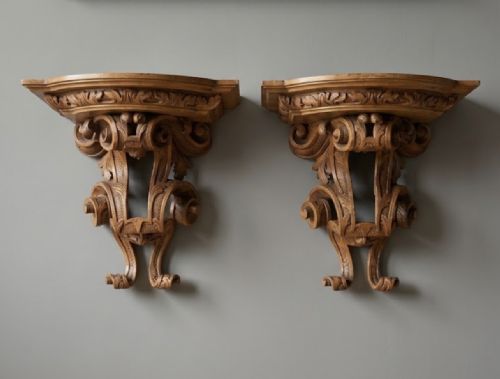
You are most likely to meet carved wood wall brackets and pairs of gilded or limewood shelves rather than masonry corbels. These items take the form of wall brackets, decorative display shelves, and cherub-adorned supports influenced by Baroque and Rococo revivals.
How they were made
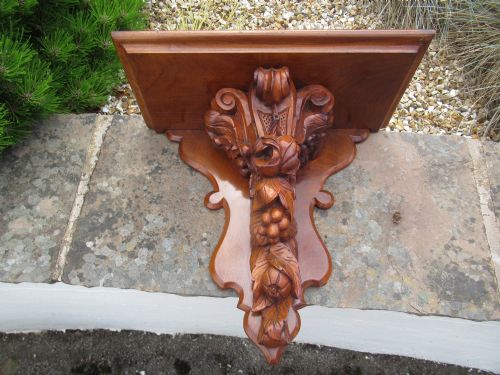
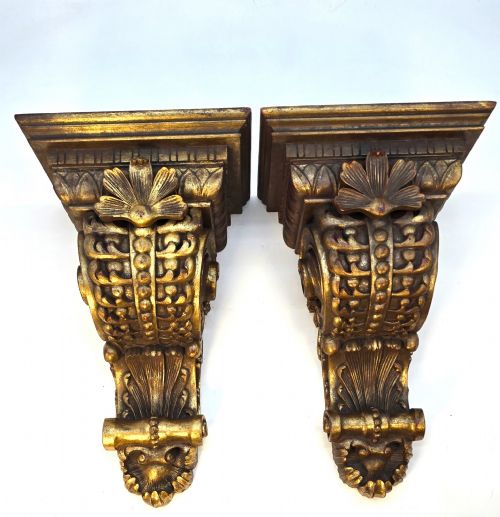
The makers of these corbels utilised carved timber such as walnut, mahogany, limewood, and pine, shaping them with hand tools to achieve high relief foliage, scrolls, and figures. Many pieces received a finish of gold leaf or giltwood, highlighting the intricate woodwork underneath.
Other examples incorporate wrought iron or porcelain elements, combining rigid metalwork or moulded ceramic cherubs with wooden wall plates. These varied construction methods reflect the stylistic shifts from Italian neoclassical symmetry to exuberant Rococo curves.
Antique Display Corbels Retail Price Guide 2026
Typical asking prices for display corbels among the pieces listed under this phrase on Sellingantiques today, from the lower quarter to the upper quarter. They describe what is for sale here now, not the wider market.
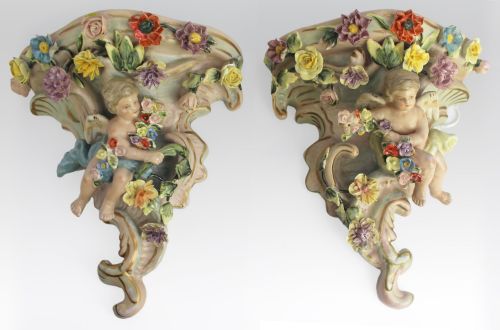
Several Victorian brackets feature wooden cherubs peering down from the wall, adding an earnest, watchful presence to your library.
What varies in quality
Quality in these wall brackets lies in the crispness and depth of the carving rather than the scale of the object. A piece carved from solid walnut or limewood with deep undercut foliage displays a higher level of artisan skill than a mechanically smoothed moulding.
The application of gold leaf also dictates the upper tier of the range, where burnished gilding reveals warm bole beneath rather than flat metallic paint. Furthermore, balanced pairs exhibit greater symmetry and harmony of proportion than isolated single brackets.
The Antique Display Corbels Glossary
- Corbel
- A structural or decorative projection from a wall designed to carry a weight above it, typically taking the form of a bracket. In domestic interiors, these support small display shelves or clocks.
- Giltwood
- Timber that has been coated with a thin layer of gold leaf. This technique was widely utilised during the Baroque and Rococo revival periods to create opulent wall fittings.
- Limewood
- A pale, fine-grained hardwood favoured by carvers because it holds intricate detail without splintering. It appears frequently in nineteenth-century decorative brackets.
- Baroque Revival
- An architectural and decorative style popular in the nineteenth century that mimics the heavy ornamentation, dynamic curves, and grandeur of the seventeenth-century Baroque era.
Antique Display Corbels: Frequently Asked Questions
How were antique display corbels originally used?
These brackets were fixed to drawing room and library walls to support clocks, porcelain figurines, and small busts. They raised decorative items to eye level to showcase them effectively.
In larger Victorian interiors, pairs of corbels often flanked doorways or fireplaces, creating symmetrical focal points for ornamental displays.
How do I mount a wall bracket safely?
Most antique brackets feature rear hanging loops or screw holes positioned through the backplate. Securing them directly into wall studs or using heavy-duty wall anchors ensures stability.
Because many pieces are carved from dense timbers like walnut or mahogany, checking the weight distribution before mounting is essential.
What periods do these wall brackets represent?
The pieces available here predominantly date from the Victorian era and the late nineteenth to early twentieth centuries. Stylistic influences span Baroque Revival, Rococo, and Italian Neoclassical designs.
Dates range from eighteen eighty through to nineteen twenty, reflecting the Victorian and Edwardian fondness for historicist interior decoration.
How do I tell a pair of brackets apart from singles?
Pairs of wall brackets are carved as mirror images, curving inward toward one another to frame a central view or object. Single brackets usually display symmetrical scrollwork without a directional orientation.
Matching pairs command greater architectural presence when installed on either side of a mirror, doorway, or mantelpiece.