
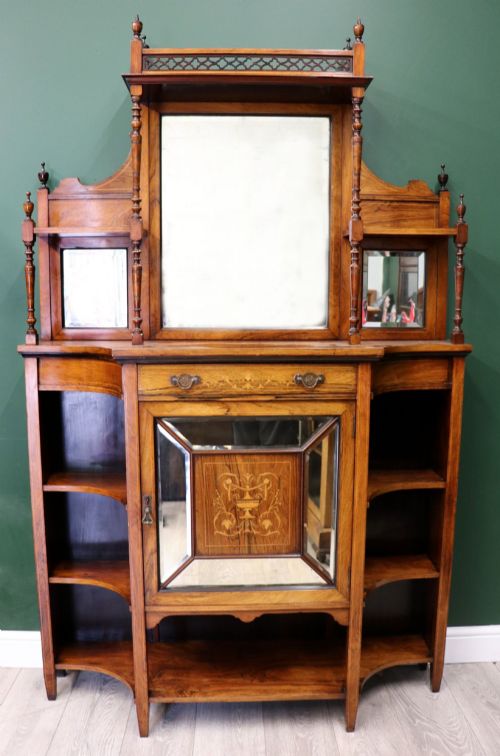
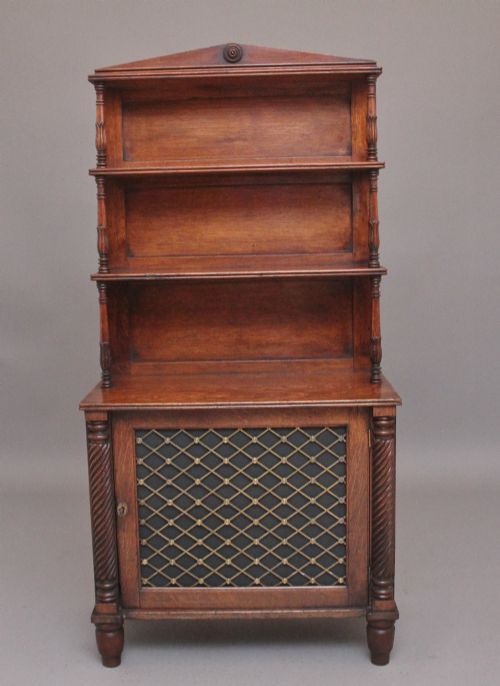
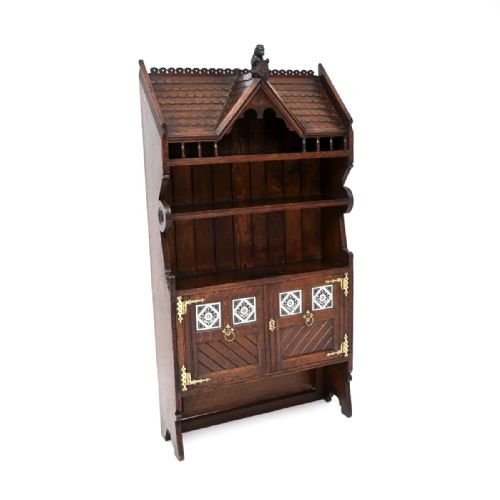
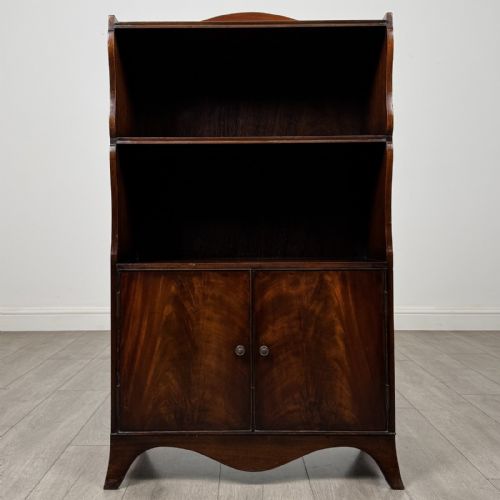
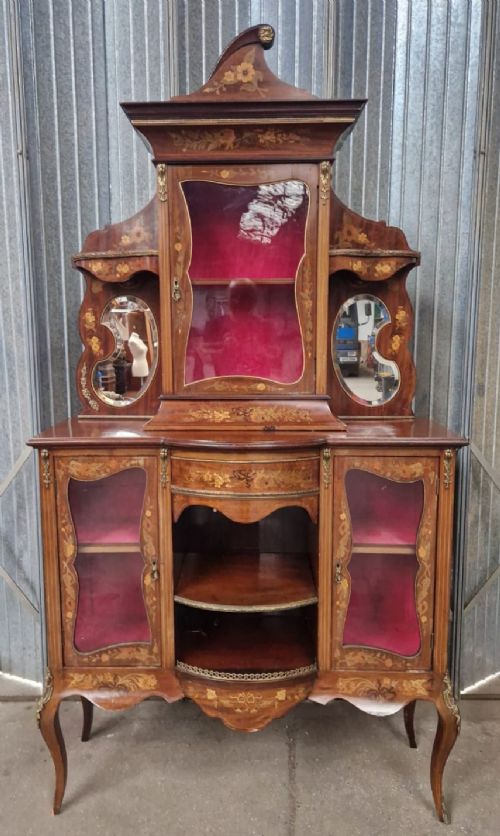
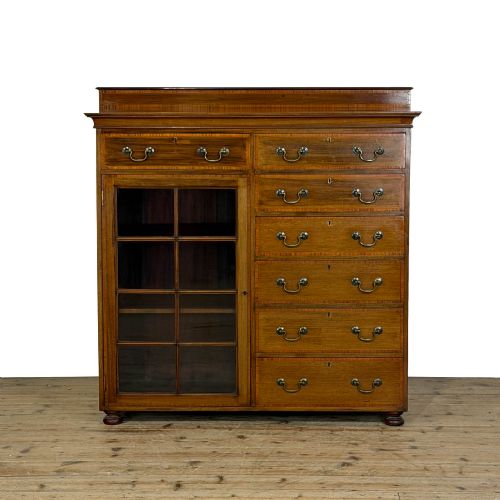
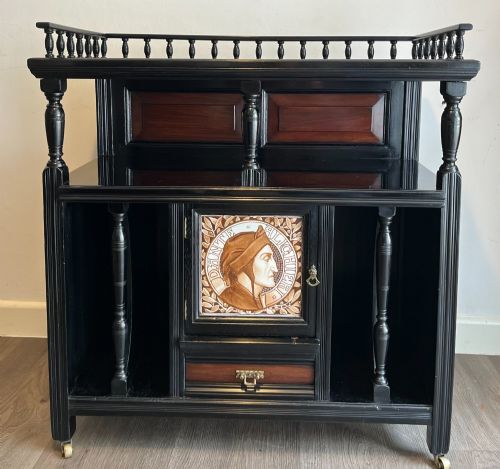

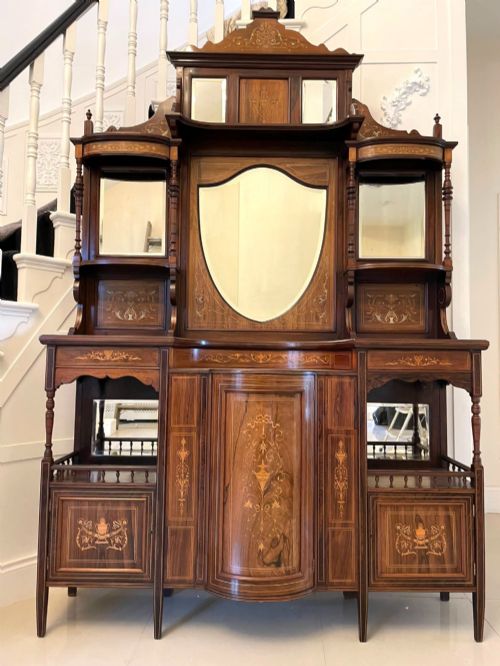
Antique Display Chiffonier Cabinet
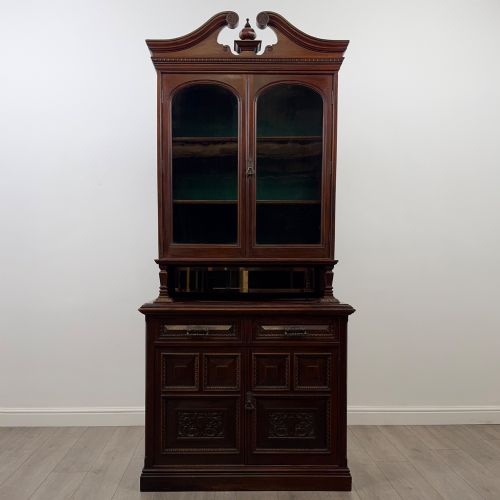
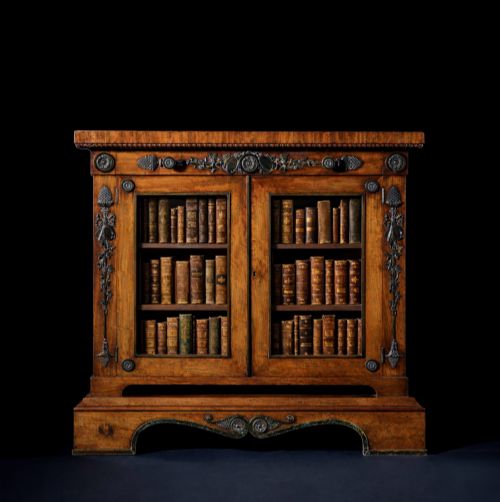
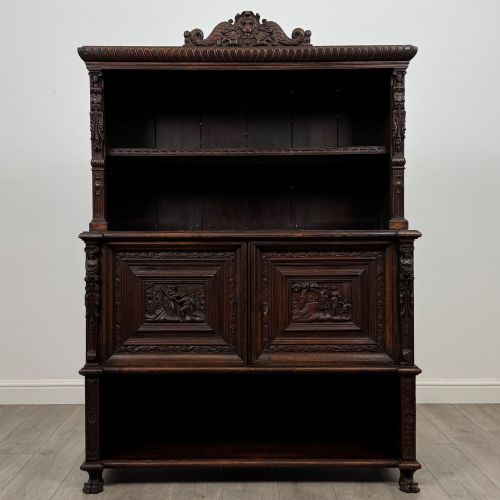
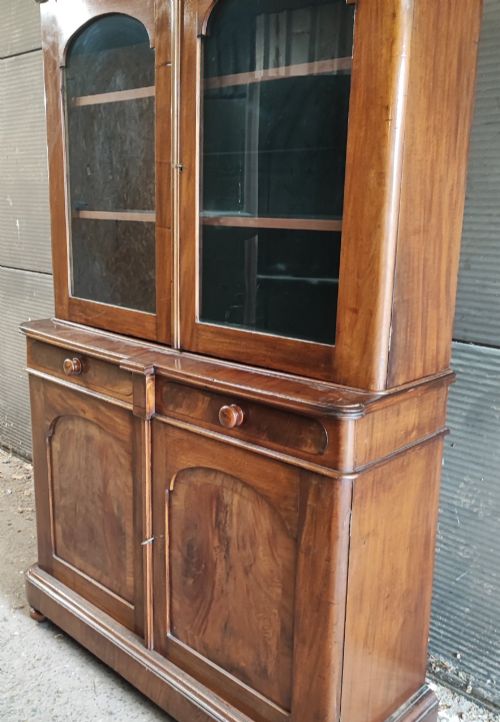
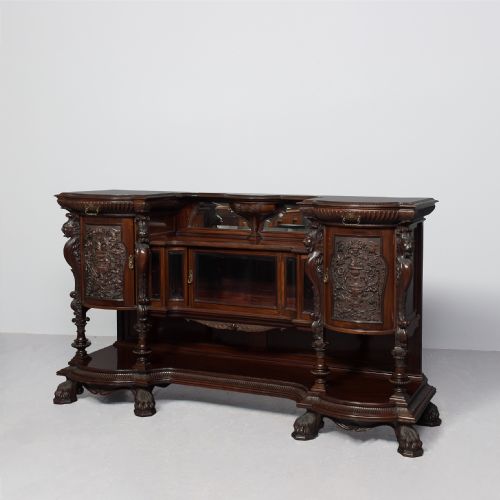
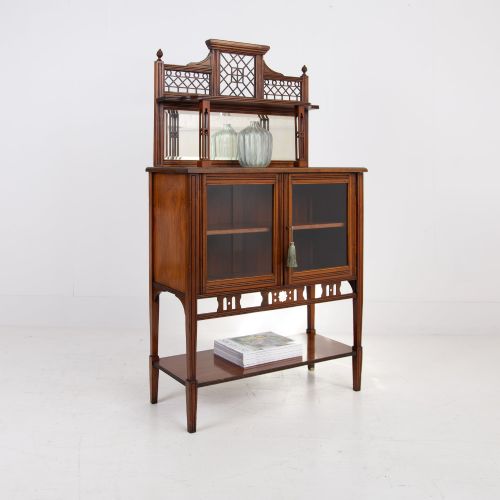
These antique display chiffonier cabinets combine timber storage with visible shelving, offering a practical centrepiece for holding books and displaying ceramics.
Antique Display Chiffonier Cabinet
An antique display chiffonier cabinet serves as a low storage base combined with upper display shelving or enclosed glazed compartments. These pieces emerge primarily from the nineteenth century, spanning Regency, Victorian, and Aesthetic Movement eras.
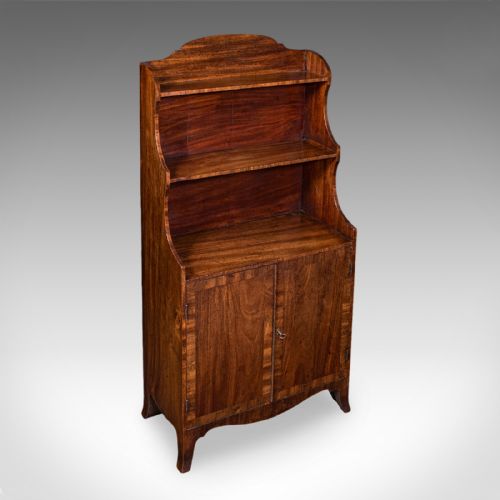
The layout typically incorporates lower wooden cupboards paired with open shelves, mirrored backs, or glass doors. Shorter waterfall bookcases and narrow side cabinets also appear frequently within this grouping.
Originating largely from English workshops, these items function equally well as refined sideboards in dining spaces or as bookcase units in studies and drawing rooms.
Materials and Construction
Cabinetmakers utilised dense hardwoods including mahogany, rosewood, burr walnut, and pollard oak as the primary structural timbers. Surfaces frequently feature decorative marquetry inlay, satinwood banding, or contrasting ebonised details.
Fittings incorporate cast brass handles, hinges, and occasional castors supporting the base. Upper sections commonly integrate silvered mirrors, glazed panel doors, and ormolu mounts to lighten the substantial wooden frames.
Listings feature pieces spanning the eighteenth to early twentieth centuries, dominated by Victorian walnut and Regency rosewood examples.
Assessing the Standard
Excellence in these cabinets lies in the selection of figured wood veneers and the crispness of hand-carved or inlaid details. Finer examples display meticulous grain matching across doors and drawer fronts.
Structural integrity depends on the original joining methods and the preservation of secondary timbers within the carcass. Superior pieces retain matching hardware and uncompromised glass panels without modern replacements.
Liberty & Co.·Garnett & Sons
The Antique Display Chiffonier Cabinet Glossary
- Chiffonier
- A low sideboard cabinet featuring lower doors beneath a raised shelf or upper tier. This form evolved during the nineteenth century to store dining silver or display porcelain.
- Marquetry
- The art of forming decorative patterns using fitted pieces of differing wood veneers. Craftsmen apply these thin timber slices to create floral or geometric motifs across the cabinet doors.
- Ormolu
- Gilded bronze mounts applied to furniture for decorative accent. These metal details appear frequently on Regency and Victorian display pieces.
- Waterfall bookcase
- A tiered shelving unit where each successive shelf steps back from the one below. These items often incorporate a small enclosed cupboard section at the base.
- Burr walnut
- Timber taken from the gnarled growth of a walnut tree, yielding an intricate swirled grain pattern. Cabinetmakers select these highly decorative veneers for prominent door panels.
Antique Display Chiffonier Cabinet: Frequently Asked Questions
How were these cabinets used originally?
Households utilised them in dining rooms, parlours, and libraries to store tableware, linens, or bound volumes. The upper display surfaces held ornaments, clocks, and small collections.
Enclosed lower cupboards kept less decorative items out of sight while protecting delicate books from dust and direct sunlight.
How do I date a Victorian chiffonier?
Dating relies on examining the primary timber, construction methods, and decorative motifs present on the carcass. Mahogany and rosewood typify early examples, while burr walnut and ebonised finishes become common later in the century.
Inlay styles also shift from simple brass stringing in the Regency era to profuse marquetry and Aesthetic Movement details by eighteen-ninety.
Will these cabinets fit in a modern room?
Their compact proportions make them adaptable for contemporary living spaces, functioning effectively as sideboards, media consoles, or hallway storage. Petite waterfall variants and narrow side cabinets integrate easily into smaller rooms.
Careful measurement of ceiling height and floor space ensures the upper mirror-back or bookcase portions balance the scale of the interior.