

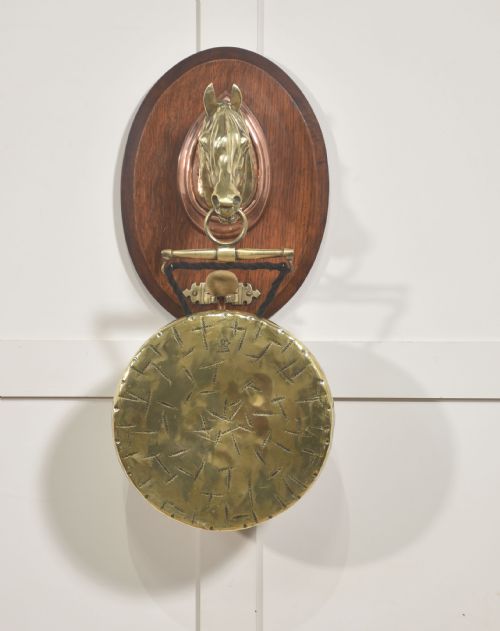


Antique Dinner Call Gong
An antique dinner call gong brings the resonant chime of a bygone era into the modern home.
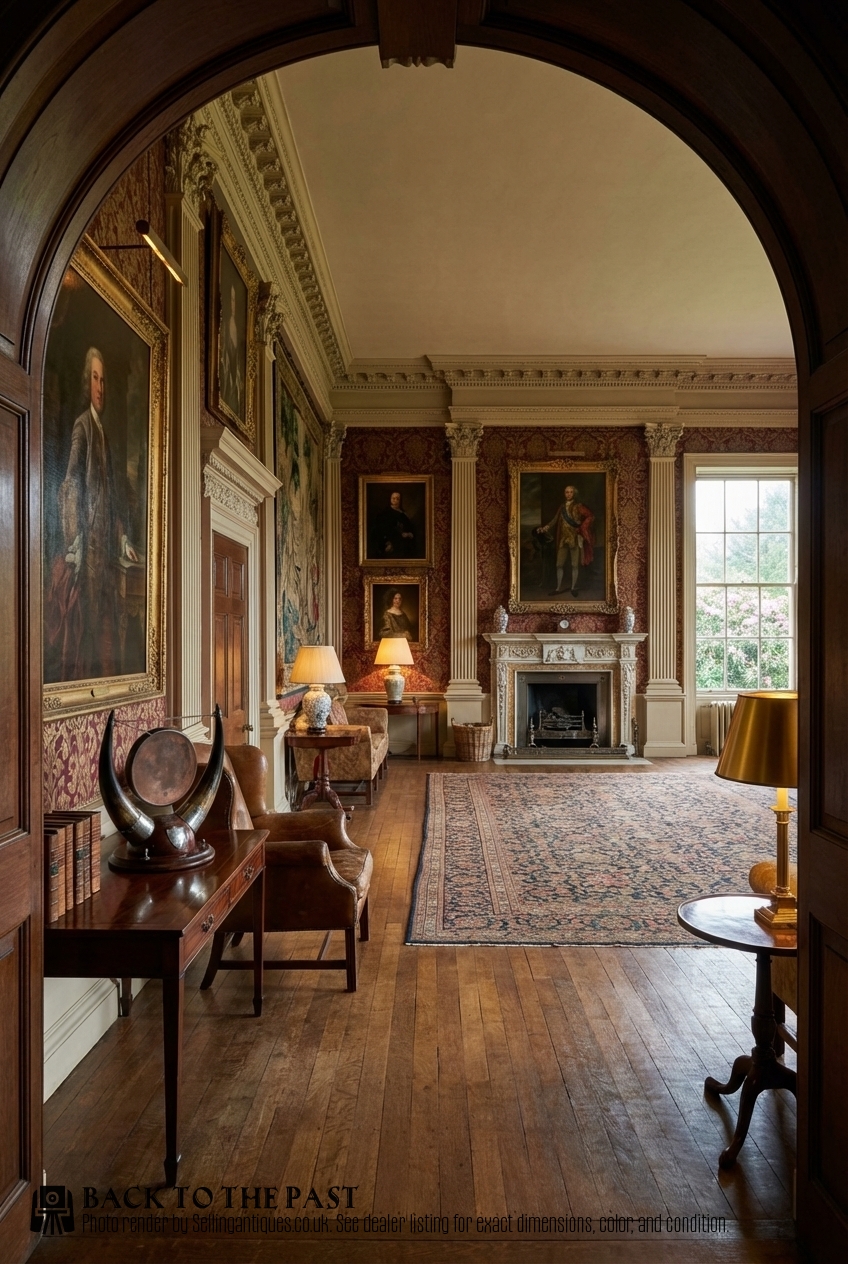
Antique Dinner Call Gong
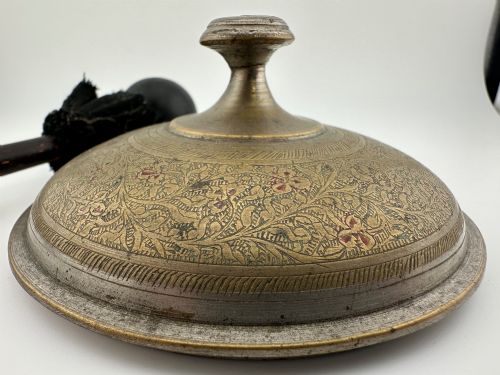
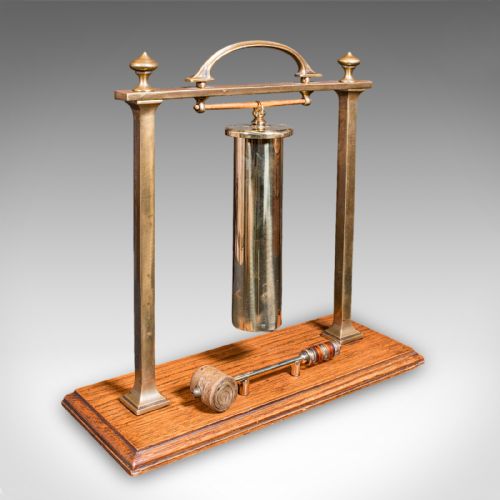
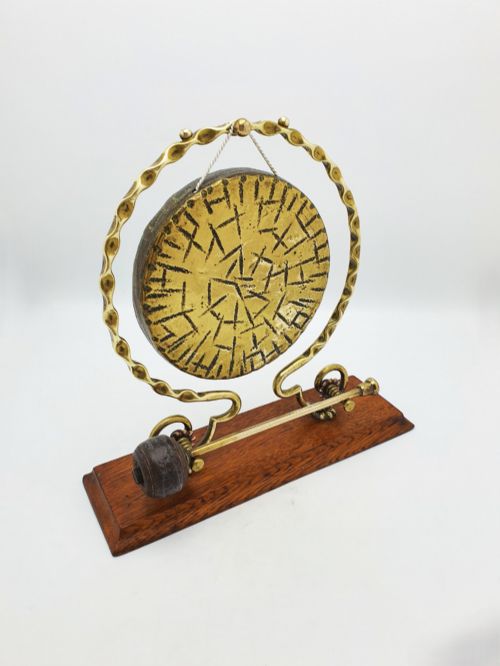
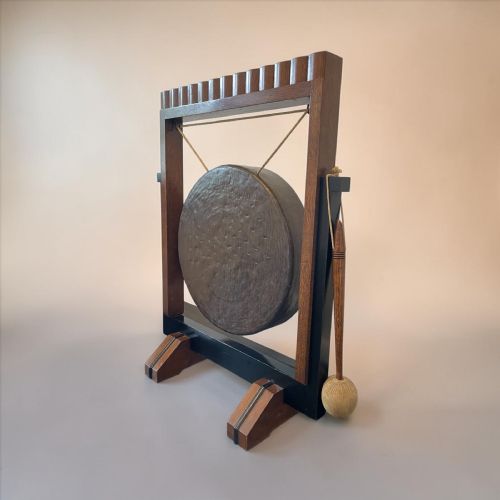
An antique dinner call gong serves as a striking method for summoning household members to meals, combining utility with decorative presence. These objects span from the nineteenth century through the Edwardian period, the 1900s, 1910, 1920, and into the 1930s, reflecting changing domestic habits. The form appears in various configurations, including table gongs, wall-hanging versions, floor-standing pieces, and veranda supper bells.
Most examples encountered on this page pair metal sound elements with timber mountings or frames. Oak and mahogany provide stable structural bases, while brass, bronze, copper, and cast or wrought iron form the resonant plates, bells, or gongs themselves. Some pieces incorporate textile cords, cattle horn mounts, or horse head mounts for distinct visual character.
Stylistic diversity runs through the selection, encompassing Victorian, Victorian Gothic Revival, Victorian Equestrian, Edwardian, Arts and Crafts, Art Nouveau, and Art Deco designs. Simpler oak-framed table models sit alongside elaborate Italian palazzo wall chimes and Scottish country house pieces. Each style dictates how the gong integrates into an interior scheme, whether as a tabletop accessory or a floor-standing centrepiece.
How they were made
Makers constructed the frames primarily from seasoned hardwoods such as oak and mahogany, joined to withstand the vibration of repeated striking. Wrought iron and cast iron also provided sturdy, sculptural framing for industrial or Gothic interpretations. Materials like cattle horn and brass mounts were secured to these timber backplates using period fixings.
The sound-producing elements relied on metalworking techniques involving brass, bronze, and copper cast or beaten into plates, bowls, or tubes. Textile cords suspended the metal gongs within their wooden or iron frames, allowing maximum acoustic resonance. Handheld strikers, often tipped with matching metal or wood, accompanied the gongs to complete the set.
Antique Dinner Call Gong Retail Price Guide 2026
Typical asking prices for dinner call gong among the pieces listed under this phrase on Sellingantiques today, from the lower quarter to the upper quarter. They describe what is for sale here now, not the wider market.
Listings feature pieces spanning the 19th Century, Edwardian era, 1900, 1910, 1920, and 1930.
What varies in quality
Construction methods determine the structural integrity of the frame, distinguishing robust joinery from simpler assembly. The choice of materials dictates the baseline refinement, with dense hardwoods and heavy cast bronzes offering superior resonance compared to lighter alloys and thinner timbers. The fidelity of period details, such as hand-hammered metalwork or carved wood mounts, separates standard domestic items from high-status country house examples.
Acoustic performance remains central to quality, relating directly to the purity of the metal alloy and the method of suspension. Original hanging cords and well-balanced strikers preserve the intended tone and sustain of the chime. Provenance and stylistic cohesion, such as unified Arts and Crafts or Art Nouveau design schemes, elevate particular pieces above utilitarian counterparts.
The Antique Dinner Call Gong Glossary
- Dinner Gong
- A resonant metal plate or bowl suspended in a frame and struck with a mallet to summon people to meals. These objects were common in large Victorian and Edwardian households.
- Striker
- The mallet or handheld rod used to hit the gong and produce sound. Strikers typically feature a wooden handle with a padded, metal, or leather head.
- Wall Chime
- A gong mounted on a backplate designed to hang securely from a wall. Palazzo examples often incorporate elaborate architectural or heraldic motifs.
- Table Gong
- A compact version designed to sit on a dining table or sideboard. These pieces use smaller wooden or metal frames for close-range use.
- Arts and Crafts
- A design movement prioritising traditional craftsmanship and simple forms. Pieces from this style emphasise visible construction and natural materials.
Antique Dinner Call Gong: Frequently Asked Questions
How were antique dinner call gongs used in the home?
These gongs were positioned in hallways, dining rooms, or verandas to announce that meals were served. Household staff or hosts struck the metal plate with a mallet to produce a clear, far-carrying tone.
Beyond domestic summoning, they functioned as prominent decorative items reflecting the taste and scale of the household.
What materials are common in these gongs?
The frames predominantly use oak and mahogany, though wrought iron and cast iron also appear. Sound components rely on brass, bronze, and copper.
Additional elements such as textile cords, brass horse head mounts, and cattle horn provide decorative contrast and structural support.
How do I date an antique dinner gong?
Dating relies on stylistic indicators, materials, and construction techniques associated with periods like the Victorian era, Edwardian period, or Art Deco movement. Simple oak frames often point to the turn of the twentieth century, while clean geometric lines suggest the 1930s.
Matching the hardware, wood finish, and mounting style helps place a piece within its historical decade.
Where should I place a dinner gong in a modern interior?
Tabletop gongs suit sideboards, entrance tables, or open shelving where their materials can be appreciated. Wall-hanging versions require secure fixings into studs or masonry to support the weight of the frame and sound element.
Floor-standing gongs work well in larger hallways or reception rooms as focal points.