
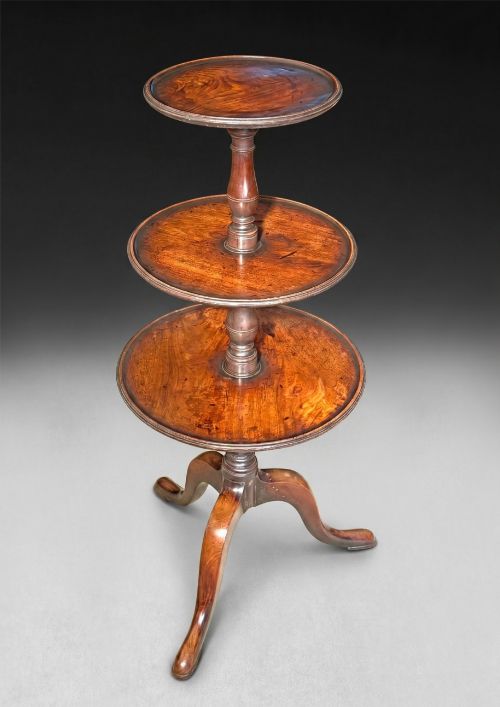


Antique Dining Room Waiter
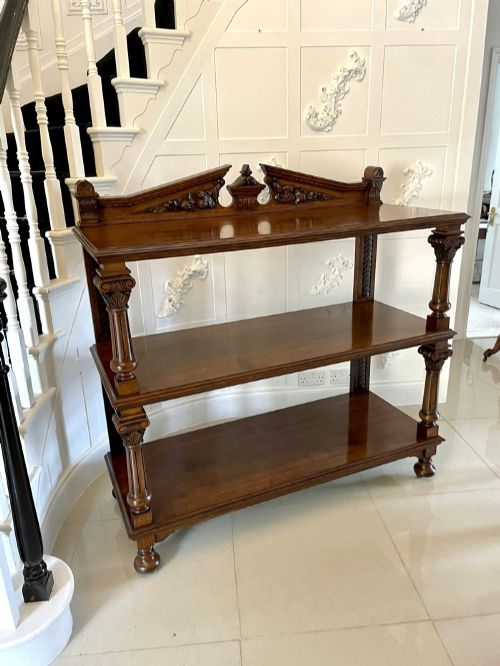
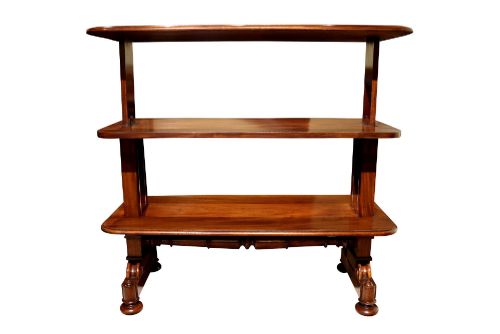
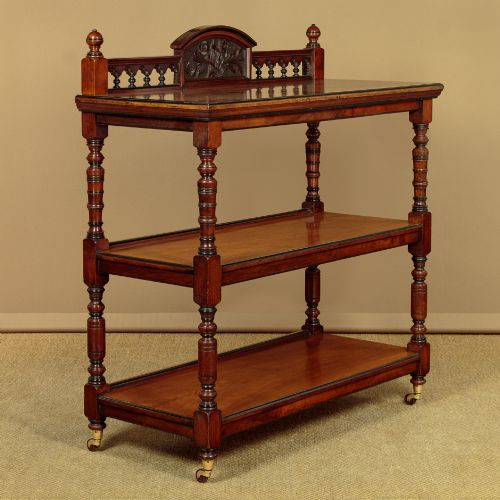
These antique dining room waiter pieces are tiered serving stands and heavy wooden buffets designed to hold dishes near the table.
Antique Dining Room Waiter
An antique dining room waiter typically takes the form of a tiered dumb waiter, a buffet, or a serving table intended to assist with meal service. Buyers seeking this phrase encounter multi-level revolving stands and substantial sideboards designed to hold plates, glasses, and dishes close at hand.
The pieces span several distinct eras, with George III and Regency examples appearing alongside robust Victorian, William IV, and Edwardian interpretations. Three-tier revolving mahogany designs dominate the selection, often featuring graduated circular shelves supported on central turned pillars and tripod legs.
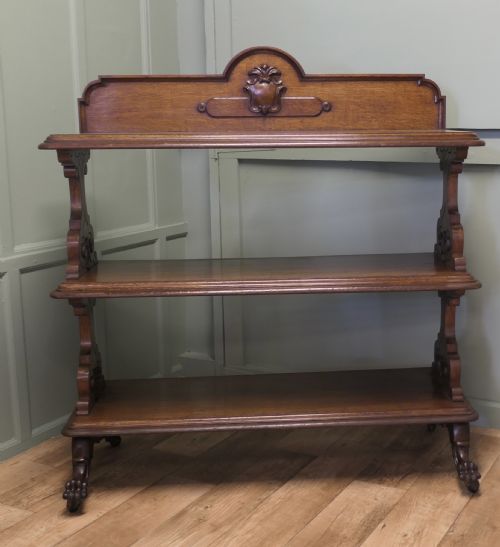
Alongside the traditional tiered dumb waiter, the listings include larger oak, walnut, and pollard oak buffets, serving tables, and occasional tables with cabinets. These variations reflect the changing needs of nineteenth-century dining rooms, where extra surface space for food and drink became essential.
Materials and construction
Cabinet makers relied heavily on solid and veneered mahogany, oak, walnut, and pollard oak to build these functional dining pieces. Brass mechanisms appear on rise and fall or metamorphic versions, allowing shelves and sections to adjust in height or transform for different uses.
Turning, carving, and joinery define the construction, from the slender vase-turned columns of Georgian dumb waiters to the heavy carved decoration seen on Victorian oak buffets. Timber selection governed the visual weight, with fiddleback mahogany and figured walnut chosen for prominent display surfaces.
Materials recorded across the inventory include mahogany, oak, walnut, pollard oak, brass, and ceramic elements.
Markers of distinction
The calibre of timber and the crispness of hand-carving set finer examples apart from simpler utility pieces. Selecting choice cuts of mahogany or pollard oak with strong grain patterns elevates the visual presence of a dumb waiter or buffet.
The sophistication of the mechanism in rise and fall or metamorphic pieces dictates the technical merit of the construction. Smooth operation of rotating tiers and adjustable shelves demonstrates the original maker's skill and attention to mechanical detail.
The Antique Dining Room Waiter Glossary
- Dumb waiter
- A freestanding tiered stand with revolving circular shelves used to serve meals without servants present. These pieces typically feature three graduated trays supported on a central pillar.
- Buffet
- A heavy dining room side table or cabinet used for serving food and displaying plate. They provide enclosed storage or surface space supplementary to the main dining table.
- Metamorphic
- Describing furniture designed to transform from one form or height into another. In these pieces, mechanical elements allow the structure to alter its configuration for varied utility.
- Rise and fall
- A mechanism enabling shelves or surfaces to adjust vertically. This engineering allows the height of the tier to shift according to the user's requirements.
- Fiddleback mahogany
- Mahogany timber featuring a wavy, rippled grain pattern resembling the back of a violin. Cabinet makers prized this wood for its reflective, decorative quality.
- Pollard oak
- Oak timber taken from pollarded trees, exhibiting dense, clustered knot formations. The resulting wood displays a highly figured, swirling pattern used on select nineteenth-century surfaces.
Antique Dining Room Waiter: Frequently Asked Questions
What is a dumb waiter?
A dumb waiter is a multi-tiered wooden stand designed to hold dishes, glasses, and bottles during a meal. The rotating shelves allowed diners to help themselves without domestic staff in the room.
Most traditional examples feature three graduated circular trays mounted on a central turned column with tripod or claw feet. They originated in the eighteenth century and remained popular through the Victorian era.
How were buffets used?
Buffets served as auxiliary tables in the dining room for holding heavy serving dishes, carving joints, and storing tableware. They relieved the main dining table of clutter during large meals.
Larger Victorian examples often incorporated enclosed cabinets and drawers for linen and cutlery. They stood against the dining room wall as both functional furniture and statements of domestic order.
How do I spot a Georgian piece?
Georgian dumb waiters, particularly from the George III period, display restrained proportions, elegant turned columns, and fine mahogany timber. Their lines lean toward classical proportion without heavy Victorian ornamentation.
They frequently feature tripod bases with pad or spade feet and graduated circular trays fixed or pivoting on birdcage mechanisms. The joinery relies on pegged tenons and traditional hand-cut joints.
Can I use a dumb waiter today?
These tiered stands function well in modern spaces as lamp tables, plant stands, or side tables for holding drinks. Their compact footprint makes them practical for corners and beside seating.
In the dining room, they retain their original purpose by holding bottles and glassware during gatherings. The rotating shelves allow items to be reached easily from any angle.