



Antique Diamond Watch
An antique diamond watch is a wearable piece of period jewellery that tells the time while carrying the unmistakable elegance of past decades.
Antique Diamond Watch
When you search for an antique diamond watch, you encounter refined timepieces designed primarily as ladies' cocktail watches and dress accessories from the twentieth century. These pieces bridge the gap between fine jewellery and horology, often featuring intricate gem-setting alongside mechanical movements. The selection spans distinct eras, from the geometric precision of the 1930s Art Deco period through to mid-century modern designs.
The chronological range extends from late Victorian and Edwardian examples up to pieces from the 1960s. Art Deco items from the 1920s and 1930s dominate the offerings, characterised by symmetrical lines and crisp white metals. Mid-century examples from the 1940s, 1950s, and 1960s continue this preference for precious white metals paired with brilliant-cut stones.
How they were made
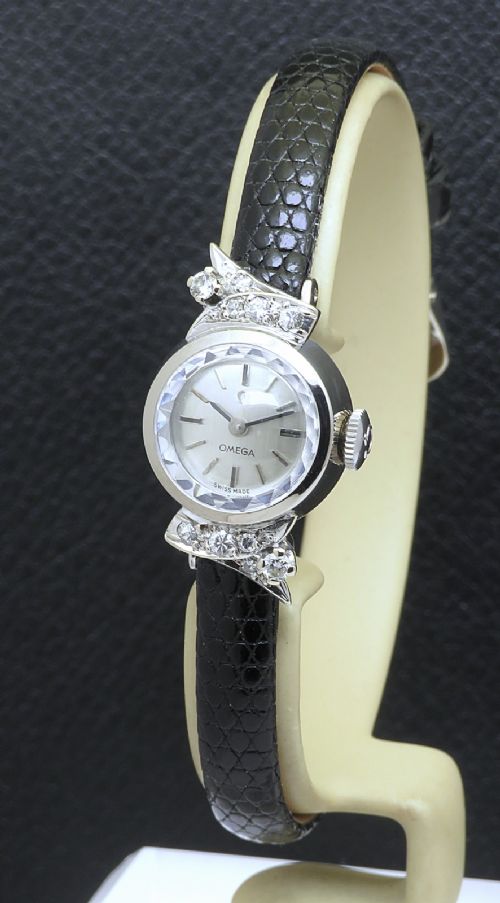
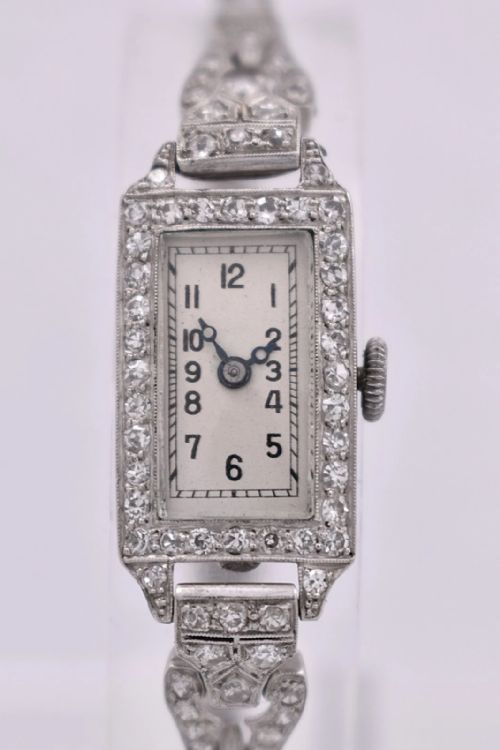
Makers relied heavily on platinum and white gold, including 14ct and 18ct varieties, to form the mountings for these small timepieces. Platinum provided the strength needed to hold intricate diamond pavé settings securely without adding excessive bulk to delicate wristbands. Fabric straps, leather bands, and flexible mesh bracelets in matching white gold completed the physical structure of the watches.
Gemstones, specifically diamonds, were selected to cover the bezels, lugs, and surrounding bracelet links in glittering pavé or channel arrangements. Movements housed within these precious metal cases were typically Swiss mechanical calibres, often featuring jewelled lever escapements for precision. Glass crystals protected the small dial faces, which frequently displayed understated numerals and minimalist hands to keep attention on the surrounding stones.
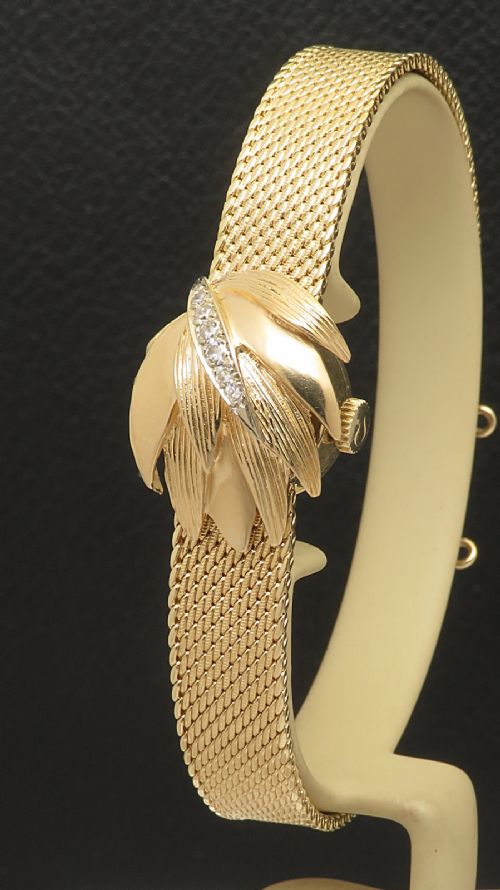
Some tiny cocktail watches are so discreetly proportioned that the dial nearly hides beneath a single sparkling diamond.
What varies in quality
The calibre of the movement and the reputation of the original maker heavily influence the standing of an individual piece. Signed dials from established watchmakers command greater attention from collectors who value both mechanical reliability and jewellery artistry. The integration between the watch case and the bracelet shows the level of thought given to the overall design.
Stone selection and setting work dictate the visual impact of the piece at the top of the range. Uniformity in diamond size, colour, and clarity, combined with tight, even metalwork, separates exceptional pieces from standard productions. The preservation of original components, from the dial face to the clasp, maintains the integrity of the object.
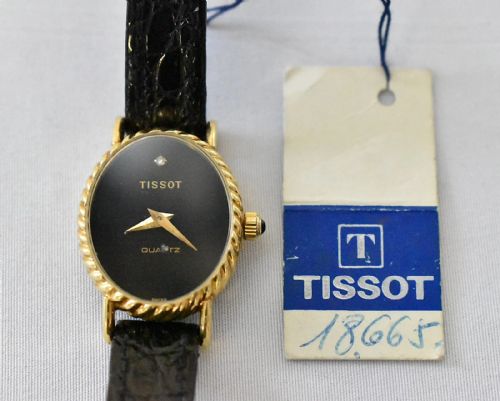
Bucherer·Asprey·Vertex·Movado·Omega·Tissot·Longines·Invicta
The Antique Diamond Watch Glossary
- Cocktail watch
- A small ladies' dress watch designed for evening wear, heavily ornamented with diamonds and precious stones. These timepieces prioritised aesthetic brilliance and decorative appeal over strict practicality.
- Art Deco
- A design style spanning the 1920s and 1930s characterised by geometric symmetry, stylised motifs, and linear clarity. In watches, this translated to rectangular or square cases flanked by stepped diamond patterns.
- Platinum
- A dense, durable white metal favoured for high-end jewellery because it holds small diamond settings securely. Its strength allowed artisans to create remarkably thin bezels and delicate filigree work.
- Jewelled lever
- A mechanical escapement component utilising small gemstones to reduce friction and improve timekeeping accuracy. Swiss movements of the period frequently incorporated this mechanism.
- Fob watch
- A pocket watch attached to a ribbon, chain, or strap designed to be pinned to clothing rather than carried loosely. Some examples were convertible to wristwatches.
- Manual wind
- A mechanical movement requiring the wearer to wind the mainspring by hand via the crown. These watches do not rely on batteries and contain intricate gear trains.
Antique Diamond Watch: Frequently Asked Questions
How do I wind a manual antique watch?
Gently turn the crown between your thumb and forefinger clockwise until you feel slight resistance. Stop immediately at that point to avoid over-winding and damaging the delicate internal mainspring.
Perform this action at a consistent time each day if you wear the piece regularly. Handle the crown with care given the vintage nature of the internal gears.
Can I wear an antique cocktail watch daily?
These delicate timepieces were created for evening gatherings rather than rugged daily tasks. Their intricate metalwork and small diamond settings require mindful wear to prevent accidental knocks or loss of stones.
Reserve the watch for special occasions or careful daytime outings to preserve its condition. Regular exposure to water and heavy impacts should be strictly avoided.
What is the difference between Art Deco and mid-century watches?
Art Deco watches from the 1920s and 1930s feature sharp geometric lines, rectangular cases, and stepped diamond shoulders. The aesthetic leans toward architectural symmetry and dramatic contrast.
Mid-century pieces from the 1940s onwards often introduce softer contours, rounded cases, and integrated mesh bracelets. The focus shifted slightly toward organic shapes while retaining lavish diamond embellishments.
How are watch bracelets sized?
Many period bracelets feature fixed lengths or fold-over clasps with limited adjustment points. Some designs incorporate flexible mesh or cord bands that accommodate a range of wrist sizes.
Consult the specific dimensions listed for each piece to ensure a proper fit before acquisition. A specialist jeweller can advise on safe adjustment options if necessary.