





Ladies Diamond Wristwatch
These ladies diamond wristwatch pieces are delicate timepieces designed to double as jewellery, combining precious stones with fine metalwork for evening wear.
Ladies Diamond Wristwatch
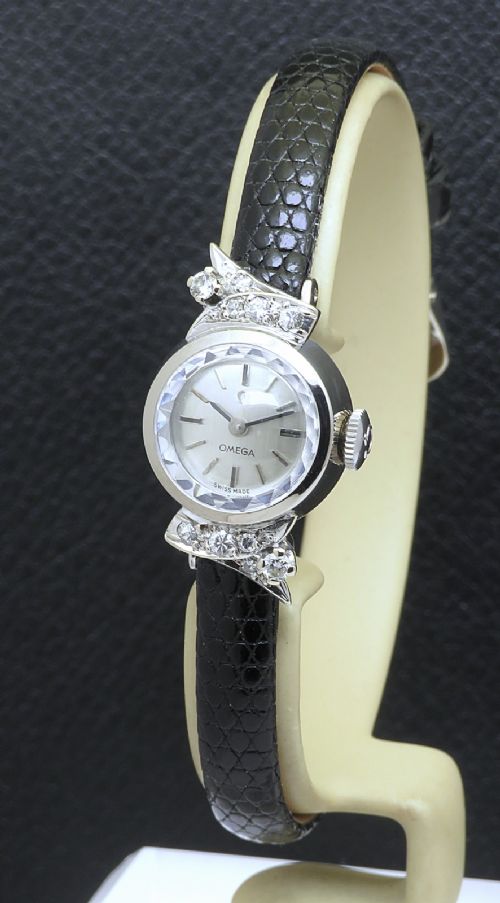
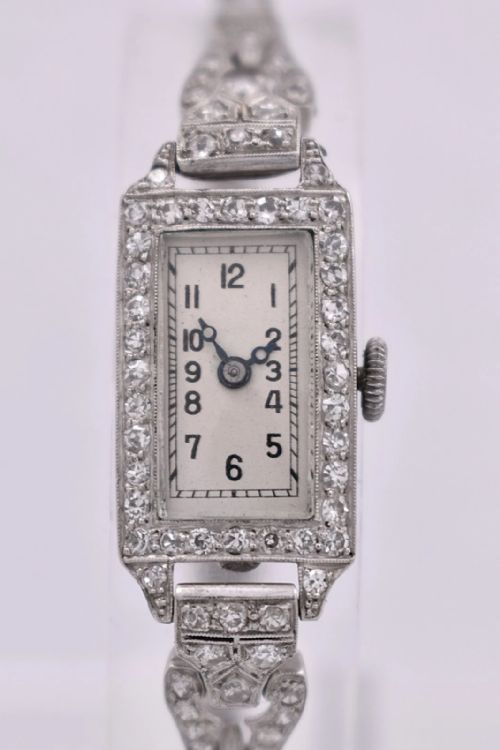
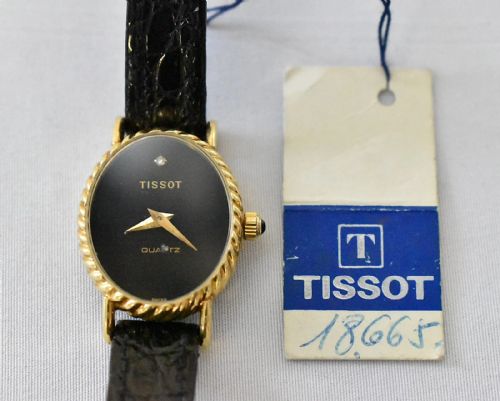
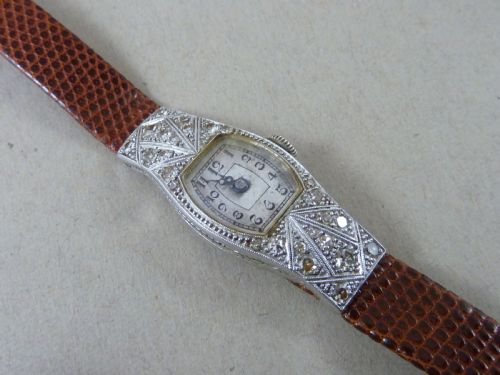
When you search for a ladies diamond wristwatch, you find intricate pieces spanning from the 1920s to later than 1960. The most common form on this page is the cocktail watch, designed specifically for formal evening wear rather than timekeeping alone.
The inventory covers several distinct design eras, most notably the geometric lines of Art Deco pieces alongside later Mid-Century Modern and 1950s styles. These items typically pair precious metals with sparkling stones in compact formats meant to sit snugly on the wrist.
How ladies diamond wristwatch pieces were made
Makers constructed these watches using platinum and various purities of white gold, including 14ct and 18ct, often forming flexible mesh bracelets or intricate geometric mountings. Diamonds are set alongside materials such as glass, leather, fabric, and occasionally black onyx.
Movements within these cases rely on Swiss jewelled lever mechanisms or manual wind technology to maintain precision within a tiny housing. The integration of stones required meticulous setting work to ensure the metalwork held the diamonds securely while remaining visually light.
Many of these tiny marvels were built so discreetly that checking the time at a dull dinner party looked like you were simply admiring your bracelet.
What varies in quality
The distinction between tiers often lies in the calibre of the movement and the weight and clarity of the diamond pavé work. Pieces featuring signed movements from established makers carry a different level of horological prestige than unsigned equivalents.
Build integrity in the bracelet construction and the crispness of the platinum or white gold metalwork also set examples apart. Original boxes, unpolished cases, and retained components elevate the completeness of a piece.
Omega·Tissot·Bucherer·Asprey·Vertex·Movado·Longines·Rolex
The Ladies Diamond Wristwatch Glossary
- Cocktail watch
- A small, decorative ladies watch designed primarily for evening social occasions rather than daily timekeeping. These pieces function essentially as wearable jewellery that happens to tell the time.
- Swiss jewelled lever
- A mechanical escapement mechanism utilising small synthetic rubies to reduce friction on moving parts. This system represents a standard of accuracy and craftsmanship in fine watchmaking.
- Platinum
- A dense, durable, and naturally white precious metal favoured in Art Deco jewellery for its strength. It allows for ultra-fine settings that secure diamonds with minimal visible metal.
- Mesh bracelet
- A flexible strap woven from fine metal wire, offering a supple and smooth texture against the skin. This style was particularly popular in mid-century designs.
- Manual wind
- A mechanical movement requiring regular hand-winding via the crown to store power in the mainspring. Unlike automatic or quartz pieces, it contains no battery or self-winding rotor.
Ladies Diamond Wristwatch: Frequently Asked Questions
How do I wind a vintage watch?
Turn the crown gently between your thumb and forefinger clockwise until you feel light resistance. Stop immediately at that point to avoid over-winding and damaging the internal spring.
Set the time by pulling or pressing the crown depending on the specific mechanism, then push it fully back in. Handle these delicate components with care given their age.
Can I wear a cocktail watch daily?
These delicate pieces were originally intended for occasional evening wear rather than rugged everyday use. Their intricate metalwork and small components require a gentle lifestyle.
Reserve them for special occasions to protect the fine platinum or white gold settings and the vintage internal movements from undue shock.
How do I know the period of a watch?
Examine the overall design language, looking for geometric Art Deco lines from the 1920s and 1930s or cleaner mid-century forms from the 1950s and 1960s. Case materials and bracelet styles also offer strong clues to the era of manufacture.
Internal movement signatures and hallmarks stamped on the precious metal case provide additional verification for dating the piece accurately.