






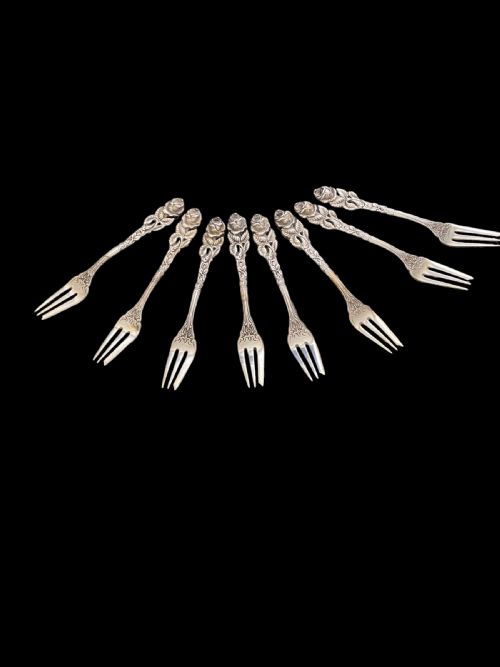


Antique Dessert Forks
These antique dessert forks are refined table implements spanning the Georgian, Victorian, and Edwardian eras, prized for elevating formal dining.
Antique Dessert Forks
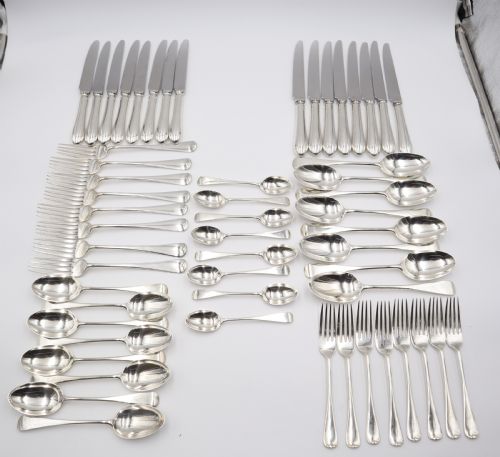
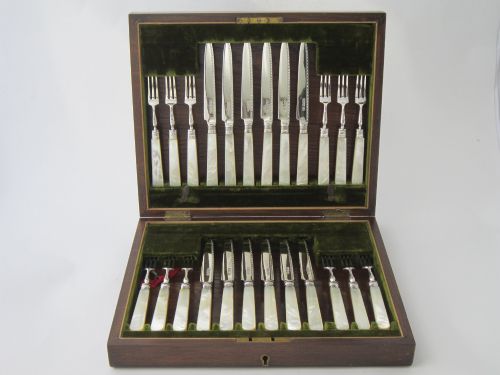
When you search for antique dessert forks, you encounter a specialised category of dining cutlery designed specifically for the final course of a meal. These pieces range from Georgian three-pronged examples to Victorian and Edwardian sets featuring mother of pearl handles and silver plate or sterling silver.
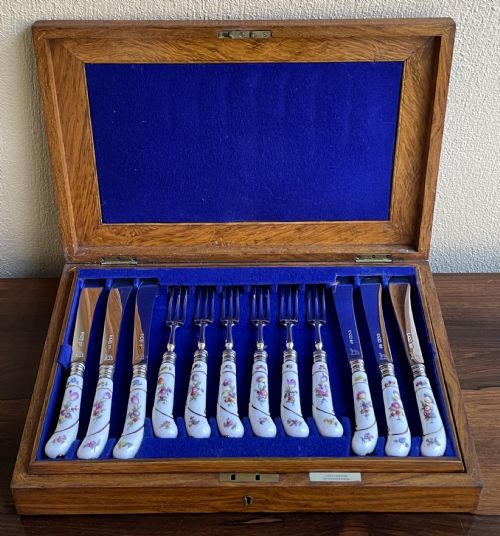
The assortment on this page includes individual cutlery sets, boxed canteens, and related serving pieces such as cake forks and hors d'oeuvres forks. Materials span silver, sterling silver, steel, and silver plate, often paired with organic handles like mother of pearl or agate.
Most items you will meet date from the nineteenth and early twentieth centuries, reflecting the changing social rituals of dessert and fruit courses during the Victorian and Edwardian periods. Earlier eighteenth-century pieces, such as those by E Coker, occasionally appear to mark the height of formal dining history.
How they were made
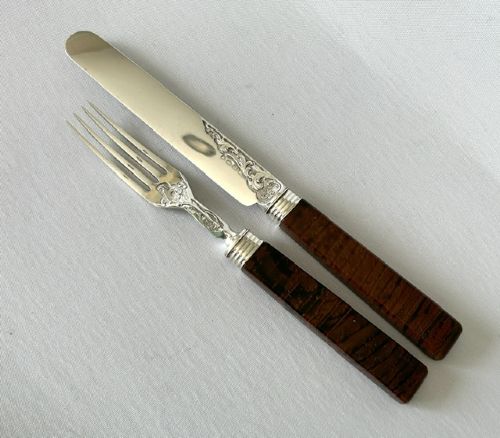
Silversmiths shaped the functional parts of these implements from solid sterling silver or coated base metals with silver plate, whilst combining them with durable steel for cutting edges on knives. Handles required specialist craft, utilising natural materials such as mother of pearl, agate, wood, and silk-lined presentation boxes.
Traditional manufacturing involved hand-shaping metal components, evident in older three-pronged fork designs and bespoke maker marks. Assembly often demanded precise fitting where metal tines met organic handles secured by pins or ferrules.
Antique Dessert Forks Retail Price Guide 2026
Typical asking prices for dessert forks among the pieces listed under this phrase on Sellingantiques today, from the lower quarter to the upper quarter. They describe what is for sale here now, not the wider market.
Some Victorian diners required dedicated cutlery just to tackle fruit and cheese without staining their fingers.
What varies in quality
Quality in these implements rests upon the integrity of the materials and the prestige of the maker. Sterling silver sets demonstrate superior craftsmanship compared to silver plate alternatives, while natural handle materials like mother of pearl or agate elevate the refinement of a set.
The presence of original fitted boxes, complete canteens, and documented maker attributions such as E Coker or Carrington distinguish exceptional collections from standard utilitarian cutlery sets.
E Coker·Carrington
The Antique Dessert Forks Glossary
- Sterling silver
- A silver alloy containing 92.5 percent pure silver and 7.5 percent other metals, usually copper, ensuring durability for cutlery use.
- Silver plate
- A base metal coated with a thin layer of pure silver, offering the appearance of solid silver at a different tier of manufacture.
- Mother of pearl
- An iridescent internal layer of shells used traditionally to fashion decorative and tactile handles for fine dining implements.
- Canteen
- A fitted box or case designed specifically to store a complete matching set of cutlery securely.
- Three-pronged
- An older fork configuration commonly found on eighteenth-century dessert pieces before the four-tine standard became widespread.
Antique Dessert Forks: Frequently Asked Questions
What are antique dessert forks?
These are specialised dining implements created during the Georgian, Victorian, and Edwardian periods for consuming the final course of a meal. They encompass various forms including cake forks, fruit knives, and hors d'oeuvres forks.
They reflect the formal dining customs of past centuries, often incorporating decorative handles made from mother of pearl or agate alongside silver and silver plate.
How do I date antique dessert forks?
Dating relies upon hallmarks stamped onto the silver components, stylistic indicators such as handle materials, and the presence of original fitted oak or silk-lined presentation cases. Victorian and Edwardian examples often show distinct aesthetic shifts compared to earlier Georgian items.
Examining the number of tines, such as three-pronged versus four-pronged formats, also helps determine the era of manufacture.
Can I use antique dessert forks daily?
Many people choose to use these historic implements for special occasions or everyday dining, provided they receive appropriate care. Hand washing is essential to protect delicate organic handles like mother of pearl and silk-lined boxes.
Regular gentle use helps maintain the silver and keeps these functional pieces connected to modern dining traditions.
What is the difference between silver and silver plate?
Solid silver, or sterling silver, consists primarily of precious metal throughout its structure and carries official assay office hallmarks. Silver plate involves a base metal substrate covered by a thin outer layer of pure silver.
Both materials appear frequently across historic dining cutlery sets, each representing different tiers of period manufacturing.