




Antique Desktop Humidor
These antique desktop humidor selections are solid wooden boxes and cabinets built to keep cigars right.
Antique Desktop Humidor
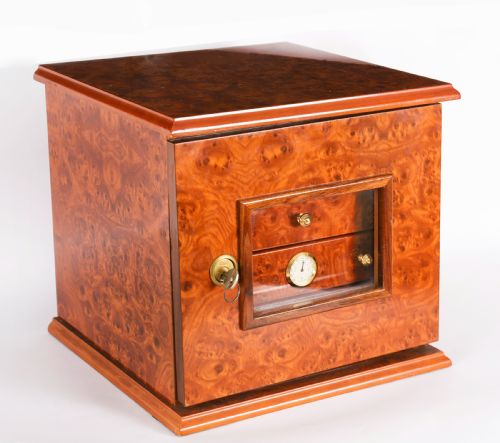
An antique desktop humidor is a compact wooden cabinet or box designed specifically for storing and preserving cigars, appearing in forms such as smoking cabinets, smoker's boxes, and desktop collector cases. Buyers searching for an antique desktop humidor encounter pieces originating across the nineteenth and twentieth centuries, spanning the Regency, Victorian, and Edwardian periods.
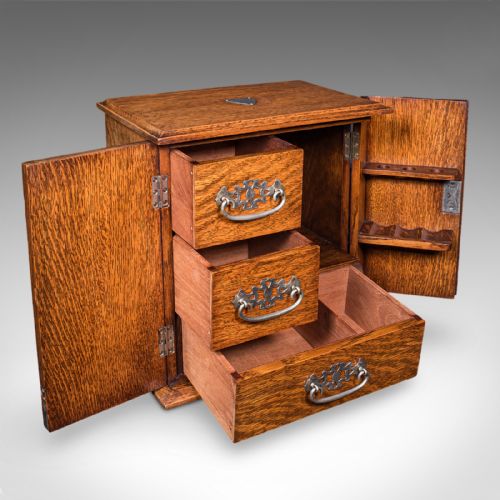
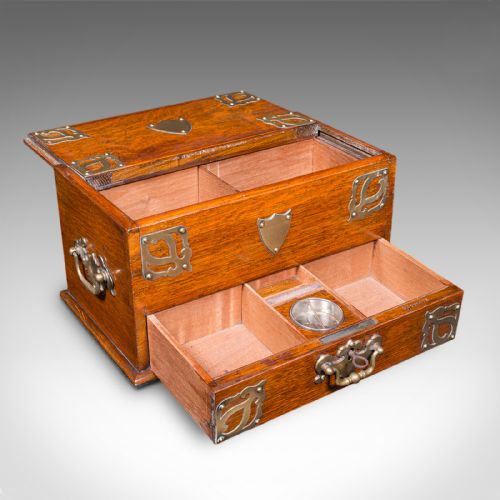
The most common versions met on this page include tabletop cigar cabinets with multiple drawers, tambour doors, or lifting lids, often fitted with internal compartments for tobacco and smoking accessories. These items range from simpler oak smoker's boxes to larger gentleman's cigar cabinets intended for club lounges or studies.
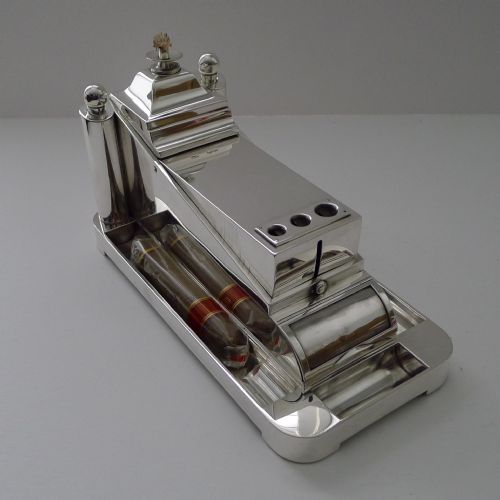
Cabinet makers constructed these pieces as functional furnishings for the desktop, frequently combining cigar storage with compartments for pipes, matches, and tobacco. The diverse object types listed show that form followed the specific habits of the smoker, resulting in specialised configurations from simple lidded boxes to elaborate compendiums.
How they were made
Cabinet makers utilised choice hardwoods such as oak, walnut, and burr elm, often selecting timber for striking grain patterns like burr walnut and satinwood veneers. These woods provided the necessary structural stability for desktop containers intended to withstand regular opening and closing.
Metal fittings played a fundamental role in construction, with brass hinges, locks, and handles securing the heavy lids and doors of these desktop cabinets. Silverplating appeared on specialised cigar boxes, while glass components sometimes formed part of internal display sections or cabinet doors.
The listings show pieces constructed from oak, burr walnut, burr elm, and satinwood, spanning the Regency, Victorian, and Edwardian periods.
What varies in quality
The choice of timber veneer and cabinet construction dictates the primary distinction between simpler smoker's boxes and elaborate gentleman's cabinets. Elaborate grain selection in burr walnut or burr elm combined with multiple fitted drawers signals higher craftsmanship.
The sophistication of the internal mechanism, such as tambour shutters that slide smoothly or functioning brass locks with matching keys, separates standard utility boxes from superior desktop furnishings.
Alfred Dunhill
The Antique Desktop Humidor Glossary
- Humidor
- A specialised box or cabinet designed to maintain a controlled interior environment for keeping cigars fresh. These containers incorporate wood and metal elements to seal the contents safely.
- Tambour
- A flexible door constructed from narrow strips of wood glued to a fabric backing, allowing it to slide smoothly around a curve. This mechanism appears on select oak cigar cabinets.
- Burr walnut
- A highly figured wood veneer obtained from the growth excrescences of walnut trees, prized for its swirling patterns. Cabinet makers utilised this material on decorative cigar boxes.
- Smoking cabinet
- A larger desktop or freestanding furniture piece equipped to hold cigars, tobacco, and related smoking gear. These items frequently feature multiple drawers and locking doors.
- Compendium
- A comprehensive collection box or case containing various fitted compartments for different items. In smoking accessories, this describes multi-use tabletop storage pieces.
Antique Desktop Humidor: Frequently Asked Questions
What is an antique desktop humidor?
An antique desktop humidor is a wooden box or small cabinet built in past centuries to store and protect cigars. These pieces sit on tables or desks and often feature specialised internal compartments.
They combine practical tobacco storage with decorative cabinet work, utilising timber and metal hardware.
How do I tell Victorian from Edwardian pieces?
Victorian humidors often display heavier proportions, rich burr walnut veneers, and ornate brass hardware characteristic of nineteenth-century design. Edwardian examples tend to show lighter golden oak or alternative styling appropriate to the early twentieth century.
Examining the construction details and timber choices helps clarify the period of origin.
Were these cabinets used only for cigars?
Many desktop boxes served multiple smoking purposes, holding tobacco, pipes, and matches alongside cigars. Some examples incorporate drawers specifically designated for collector items or general desk supplies.
Makers tailored the interior layouts to match the preferences of the owner.
What woods were used for these humidors?
Craftsmen utilised a variety of timbers including oak, burr walnut, burr elm, and satinwood. Grain patterns played a major role in the exterior appearance of the boxes.
Brass and leather frequently complemented the primary wooden structure.