





Antique Desk Stationery Tidy
An antique desk stationery tidy keeps correspondence and writing tools ordered, bringing practical utility and period character to a tabletop.
Antique Desk Stationery Tidy
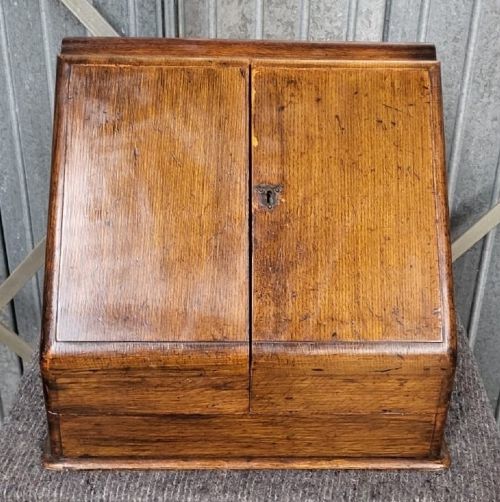
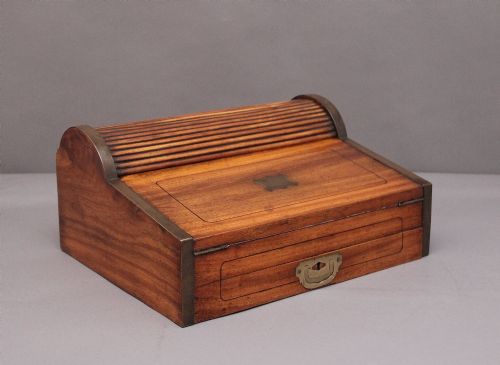
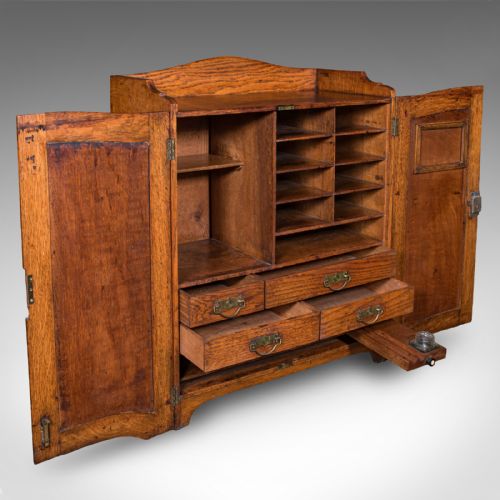
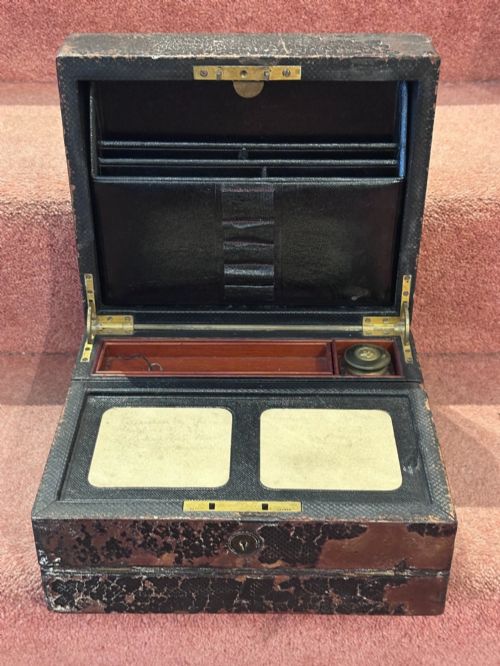
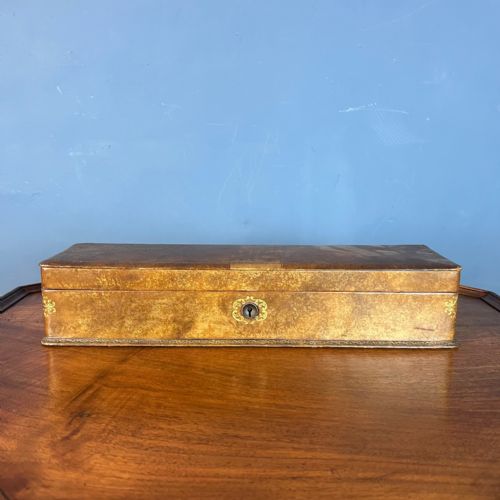
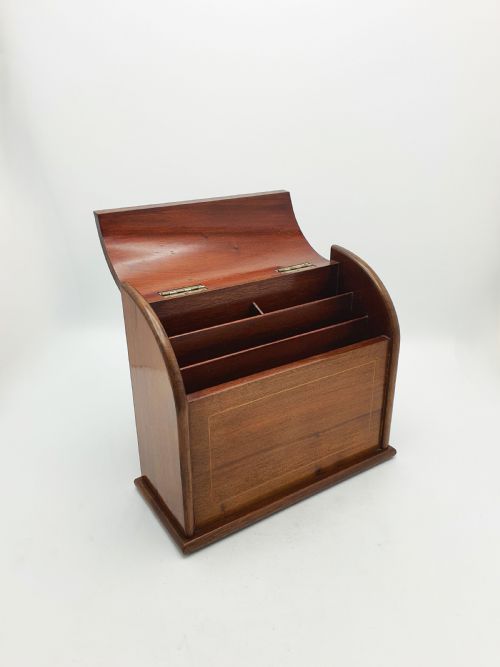
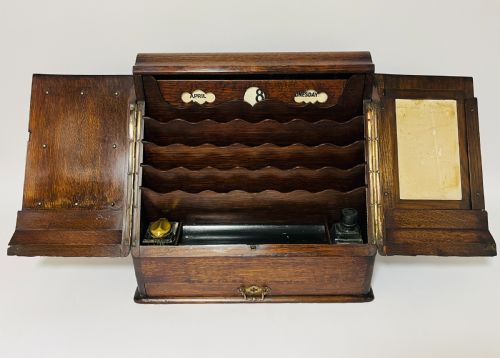
An antique desk stationery tidy encompasses various fitted accessories designed for organising letters, papers, and writing implements on a writing surface. The selection spans Victorian and Edwardian periods, featuring forms such as stationery boxes, correspondence cabinets, letter racks, and inkstands.
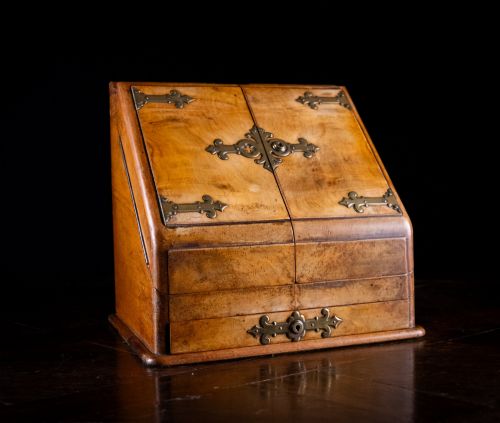
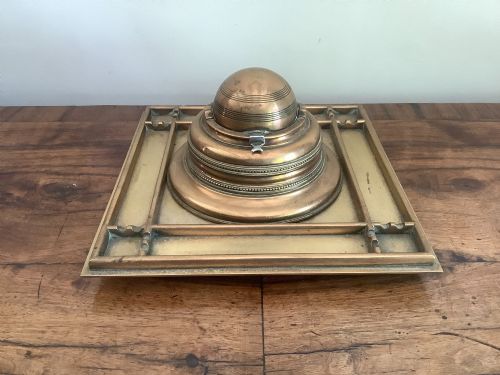
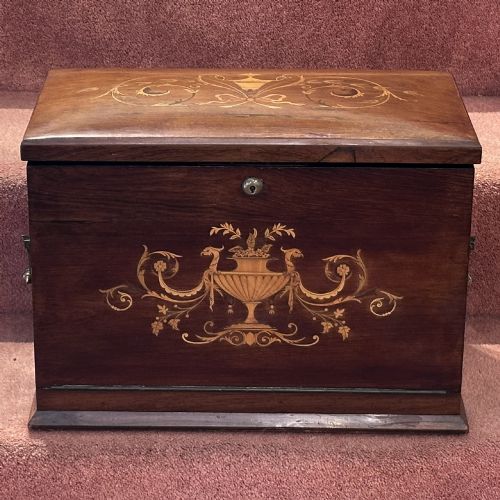
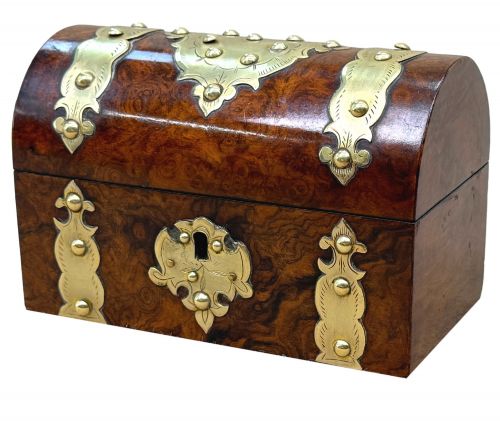
Makers utilised timber, brass, and leather to construct these desktop pieces, incorporating styles from plain oak country house designs to ornate Louis XV revival or Arts and Crafts copper work. Buyers will frequently encounter walnut and mahogany stationery boxes alongside brass-bound desk sets from the nineteenth century.
Materials and Construction
Cabinetmakers built these items primarily in hardwoods like oak, walnut, mahogany, and rosewood, frequently employing fine veneers such as burr walnut or satinwood for decorative surfaces. Joinery included dovetailed boxes and hinged lids, often paired with brass mounts, hinges, and carrying handles.
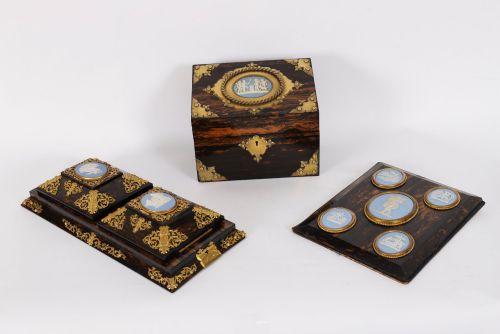
Surface ornamentation involved inlay, tooled leather, carved bone, and pokerwork, alongside cast or ormolu mounts on French and revival pieces. Glass inkwells and silver-plated fittings were integrated into stands and inkstands to complete the functional desk equipment.
Antique Desk Stationery Tidy Retail Price Guide 2026
Typical asking prices for desk stationery tidy among the pieces listed under this phrase on Sellingantiques today, from the lower quarter to the upper quarter. They describe what is for sale here now, not the wider market.
Listings for an antique desk stationery tidy feature prominent use of oak, walnut, and mahogany across the Victorian and Edwardian eras.
Design and Execution
The distinction between standard items and superior pieces lies in the choice of cabinet timbers, the crispness of brass casting, and the refinement of internal fittings. Heavier gauge metals, precise wood inlays, and integrated secret drawers or adjustable dates demonstrate greater skill.
Design ambition separates basic utility boxes from elaborate examples featuring bespoke leather work, hand-carving, or matched veneers. The cohesion of the original components, such as matching glass inkwells within a brass standish, determines the integrity of the piece.
The Antique Desk Stationery Tidy Glossary
- Stationery box
- A lidded container or cabinet specifically constructed to hold writing paper and envelopes upright.
- Standish
- An inkstand or tray holding inkwells, pen holders, and sometimes a sander or wafer box for correspondence.
- Cartonnier
- A desktop cabinet with multiple compartments or shelves designed for holding papers and documents.
- Pokerwork
- A decorative technique using a heated tool to burn designs into wooden surfaces, found on Arts and Crafts pieces.
- Ormolu
- Gilt bronze mounts applied to furniture and desk accessories, typical of French revival styles.
Antique Desk Stationery Tidy: Frequently Asked Questions
What is a desk stationery tidy?
A desk stationery tidy is a portable or desktop accessory designed to hold letters, envelopes, and writing implements neatly in one place.
These pieces range from simple wooden letter racks to fitted cabinets with compartments for paper and inkwells.
How were stationery boxes used?
They sat upon writing desks to keep daily correspondence, note cards, and stamps sorted and protected from dust.
Many included hinged lids or fall fronts that opened to reveal stepped interior partitions sized for standard Victorian letter formats.
How do I style one at home?
Place a wooden or brass stationery box on a modern desk or side table to introduce practical storage with historical character.
They work well holding actual mail, notebooks, or pens while adding tactile warmth from materials like oak, walnut, and leather.
How are Victorian pieces identified?
Victorian tidies often display dense hardwoods like rosewood or walnut, frequently accented with brass banding, campaign-style handles, or heavy ormolu mounts.
Makers of this era favoured substantial construction, sometimes incorporating lockable compartments and tooled leather panels.