
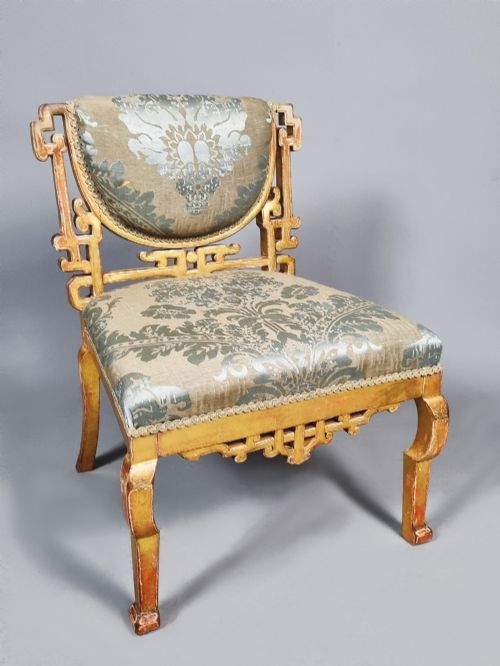
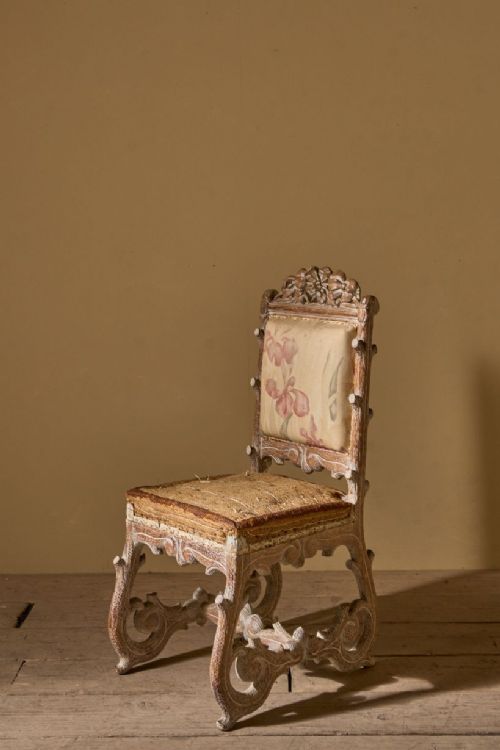
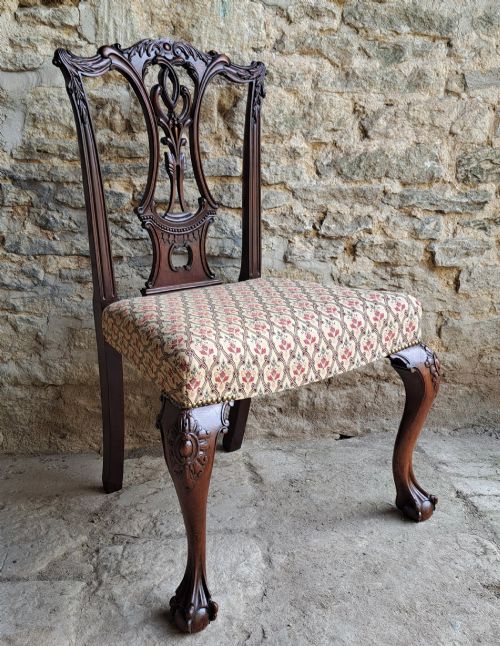
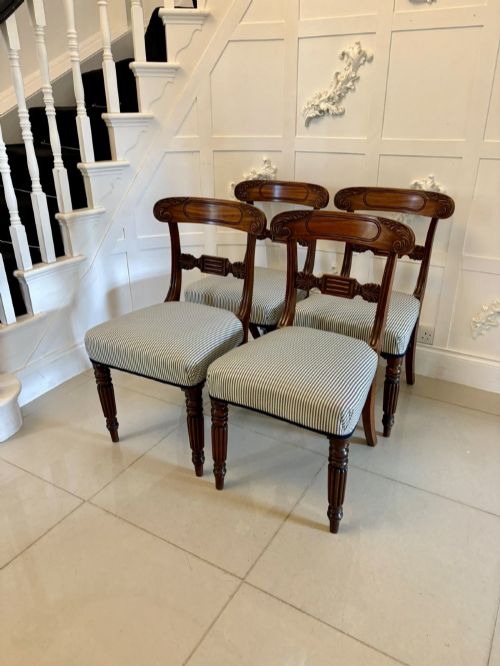
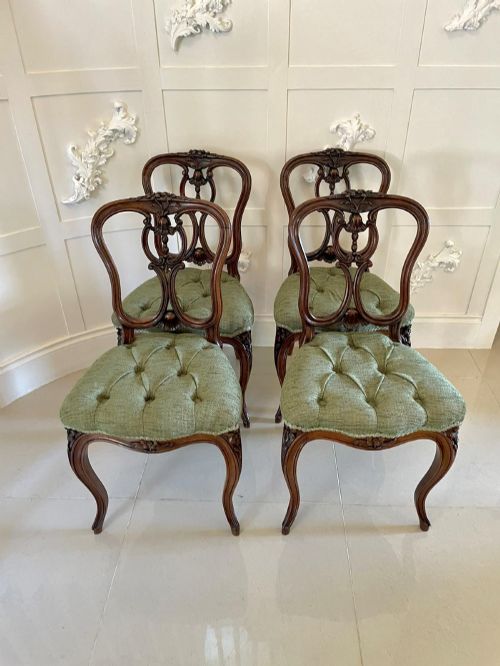
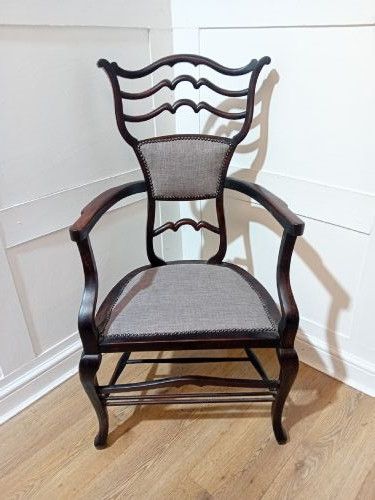
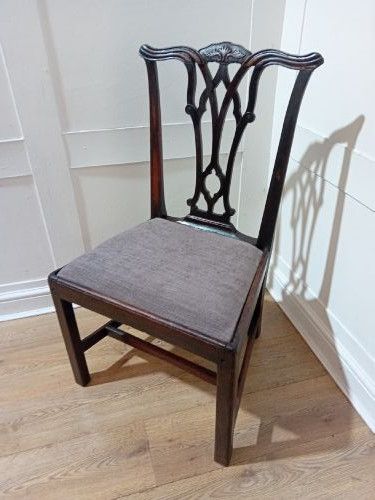

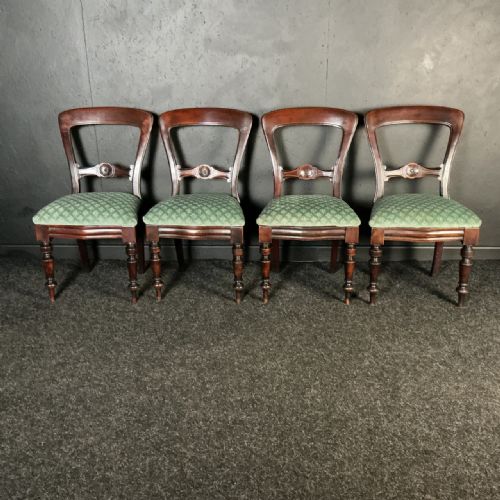
Antique Desk Side Chairs
Antique desk side chairs offer compact timber framing and sturdy upright seating, bringing period character directly to a home workspace.
Antique Desk Side Chairs
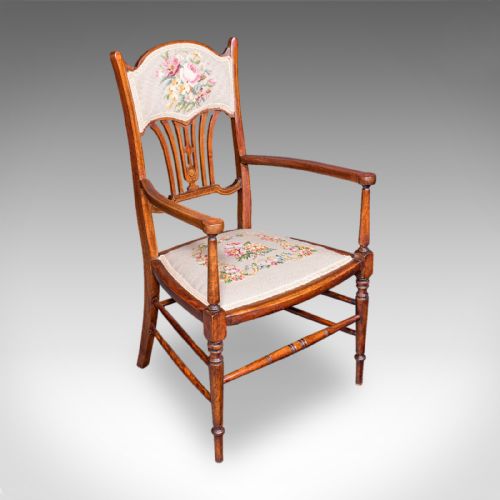
These pieces are compact seating forms originally built for domestic workspaces, libraries, and studies, designed to fit neatly beneath a writing table. When you search for antique desk side chairs, you encounter single seats and small pairs spanning the eighteenth, nineteenth, and early twentieth centuries.
The selections on this page lean heavily toward mahogany, walnut, and oak examples produced in Georgian, Regency, and Victorian workshops. Many items share DNA with dining and hall seating, adapted over generations for writing tasks.
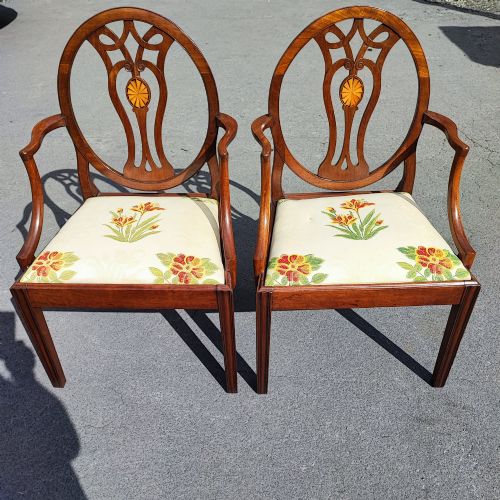
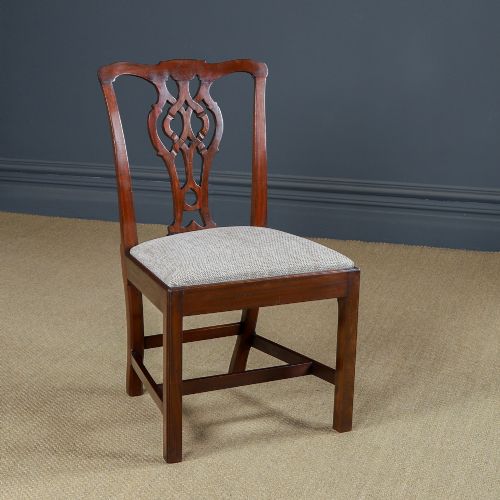
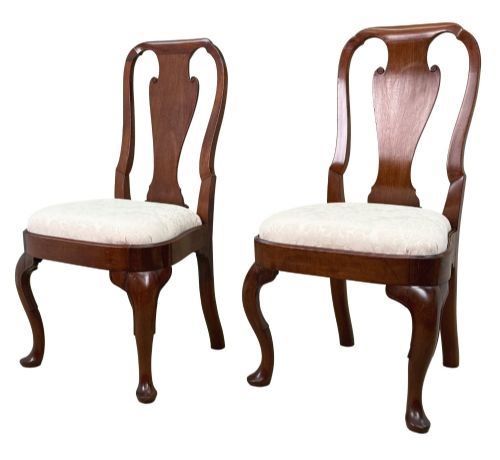
Makers drew on established stylistic vocabularies such as Chippendale, Sheraton, and Queen Anne, resulting in upright timber frames fitted with solid wooden panels, drop-in pads, or upholstered inserts.
How they were made
Workshops relied predominantly on dense hardwoods such as mahogany, walnut, and oak, often reinforced with beech or fruitwood for internal structural members. Timber was seasoned, hand-sawn, and joined using mortise and tenon construction to withstand the daily strain of shifting weight.
Carving, turning, and parquetry ornamentation were executed by hand, utilising brass mounts, mother of pearl inlay, or ormolu details on select regional interpretations. Upholstery involved stuffing horsehair or textiles over webbing and canvas, secured with iron tacks.
The listings on this page span walnut, mahogany, and oak materials across multiple periods including Georgian, Victorian, and Edwardian styles.
What varies in quality
The tier of a piece depends heavily on the crispness of the hand-carving and the density of the primary timber selected by the workshop. Superior examples show confident joinery, tight grain alignment, and harmonious proportions between the backrest and the supporting legs.
Subordinate versions often utilise secondary woods or simplified turning, reflecting regional production rather than elite urban craftsmanship. The integrity of the original framing elements and the retention of period surface finishes ultimately separate standard utilitarian seating from distinguished specimens.
Charles Tozer·Gillows·Gill and Reigate
The Antique Desk Side Chairs Glossary
- Cabriole leg
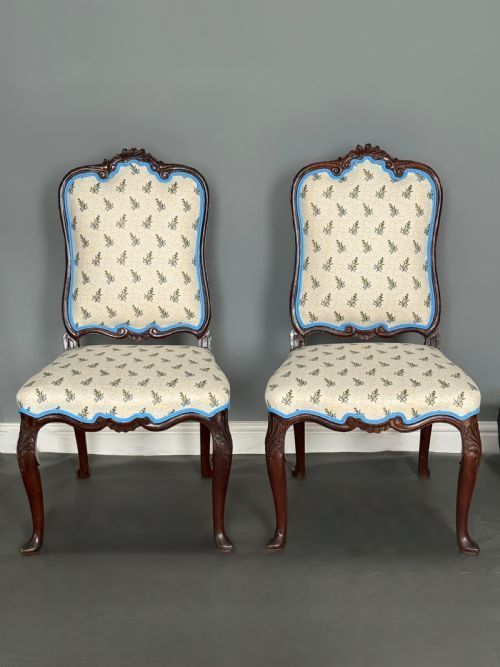
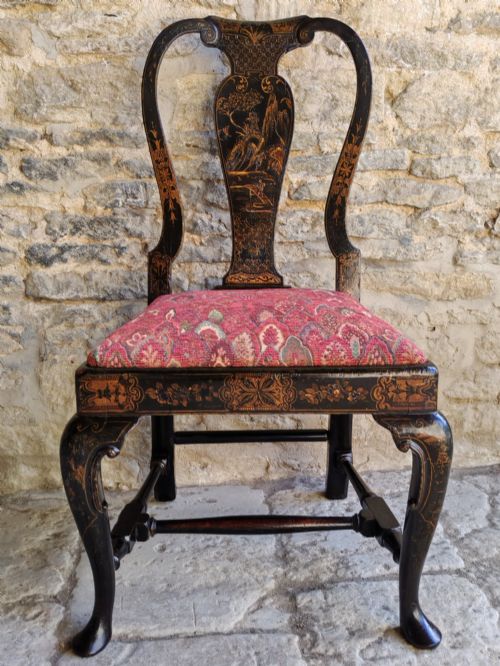
- A furniture leg that curves outward at the knee and tapers inward toward the ankle, commonly ending in a pad or claw foot. This profile gained prominence during the eighteenth century across walnut and mahogany seating.
- Chippendale style
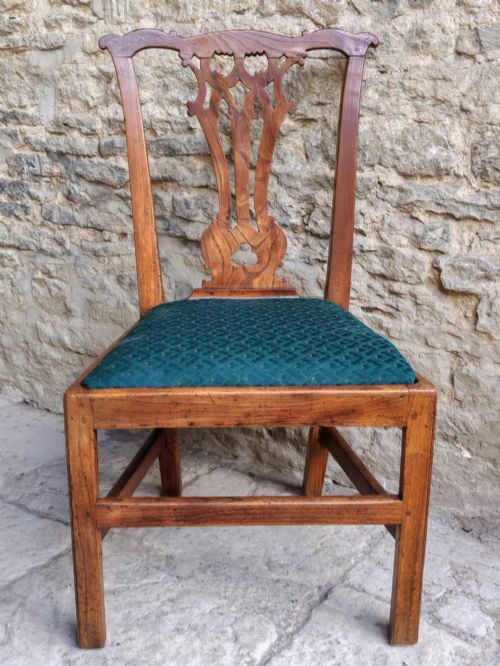
- A decorative vocabulary inspired by the mid eighteenth-century London cabinetmaker Thomas Chippendale, characterised by interlaced ribbon backs and carved cabriole legs. These designs recur frequently in library and desk seating.
- Elbow chair
- An alternative term for an armchair or carver, featuring low supporting arms designed to clear the underside of a writing table. They provide additional lateral support compared to armless side variants.
- Library chair
- A sturdy seating form constructed for reading and study environments, often built with substantial timber frames and upholstered inserts. They frequently incorporate broader proportions than standard dining furniture.
- Gothic Revival
- A nineteenth-century design movement that reinterpreted medieval architectural motifs, featuring pointed archwork, heavy tracery, and columned supports. Oak chairs from this tradition display distinct vertical emphasis.
Antique Desk Side Chairs: Frequently Asked Questions
Were these chairs used at desks originally?
Many examples served multiple domestic functions, moving between bedrooms, hallways, libraries, and writing spaces as household needs shifted. Their lightweight frames made them easily portable around private chambers.
Over time, specific proportions with low or open arms were refined to accommodate the drawers and pedestals of traditional writing furniture.
How do I live with one daily?
Placing a period timber seat at a modern or antique desk adds immediate texture and historical grounding to a workspace. Pairing the wood tone with existing room elements creates a cohesive interior.
Routine care involves dusting the timber surfaces gently and avoiding placement near direct heat sources that might dry out historic glues and wood.
How do I tell Georgian chairs apart?
Georgian pieces generally display restrained classical proportions, rectilinear or gently curved splats, and dense native hardwoods like mahogany or walnut. Craftsmanship relies on hand-cut joinery and subtle carved details.
Later Victorian and Edwardian interpretations often introduce heavier mouldings, ebonised finishes, or revival motifs that reflect the industrial techniques of those periods.