
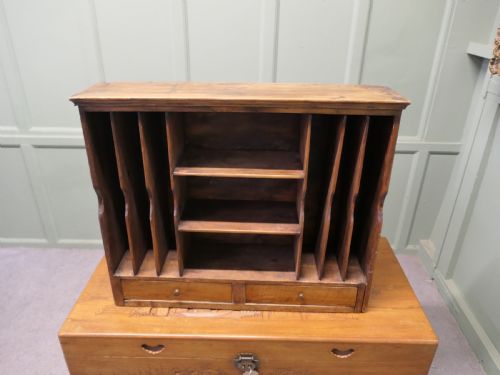


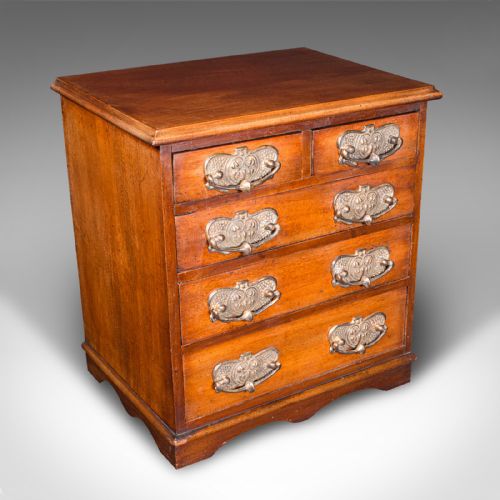


Antique Desk Organiser Drawers
These antique desk organiser drawers bring practical order to a workspace, combining period charm with compact storage.
Antique Desk Organiser Drawers
Antique desk organiser drawers encompass miniature chests, stationary cabinets, filing shelves, and desk tidies designed to keep correspondence and small items in order. When searching for antique desk organiser drawers, buyers typically encounter compact wooden pieces intended for desktop use.
The selection ranges from Georgian apprentice pieces and oak kneehole desks to Victorian specimen cases and Edwardian writing inkstands. Materials such as mahogany, oak, rosewood, and brass hardware define these functional accessories.
How they were made
Cabinet makers utilised dense hardwoods like mahogany and oak, often constructing miniature chests of drawers and desk boxes with dovetailed joints to withstand daily use. Brass drop handles, inlaid brass details, and glass inkwells were incorporated to finish the pieces.
Specialised storage forms feature fall fronts, secret drawers, and multi-tiered stationery compartments, reflecting the precise organizational needs of 18th, 19th, and early 20th century offices and homes.
The selection spans pieces from the 18th century through to 1900, incorporating mahogany, oak, brass, and glass.
What varies in quality
Quality rests on the selection of timber, such as figured mahogany or quarter-sawn oak, and the precision of the joinery in the drawer construction. Finer examples display thoughtful proportions, integrated secret compartments, and original brass hardware.
The sophistication of the internal layout distinguishes standard utility pieces from exceptional cabinet work, particularly in fitted stationery cabinets and collectors cases.
Amberg
The Antique Desk Organiser Drawers Glossary
- Standish
- A portable desk stand or tray holding writing implements, typically fitted with inkwells and a drawer. It served as a complete writing accessory set on a desk.
- Specimen case
- A small cabinet or box housing a collection of natural history or geological samples in shallow drawers. They feature tightly fitted drawers to protect delicate contents.
- Kneehole desk
- A small writing desk with a central recess for the user's knees, flanked by pedestals of small drawers. Miniature versions provide compact surface and storage space.
Antique Desk Organiser Drawers: Frequently Asked Questions
What is an apprentice piece?
An apprentice piece is a small-scale model built by a craftsman in training to prove their woodworking abilities. These items closely replicate larger furniture designs.
They offer functional storage on a smaller footprint, making them popular choices for desktop organisation.
How were inkstands used?
Inkstands held inkwells, quill pens, and sanders for blotting, sitting on top of a writing desk for daily correspondence.
Many examples include a small drawer for storing nibs and wax.
What is a specimen case?
A specimen case contains multiple shallow drawers designed to organise and display natural history items or small collectibles.
The enclosed drawers protect delicate objects from dust and light.
How do I date a mahogany desk organiser?
Dating relies on construction methods, timber choice, and hardware styles such as brass drop handles or brass inlay. Georgian pieces often feature hand-cut dovetails, while late Victorian and Edwardian items show more standardised manufacturing.
Comparing the secondary woods and lock mechanisms helps narrow the period of origin.