



Antique Desk Compendium Box
An antique desk compendium box brings together tidy stationery slots and compartmentalised storage to keep a working surface orderly.
Antique Desk Compendium Box
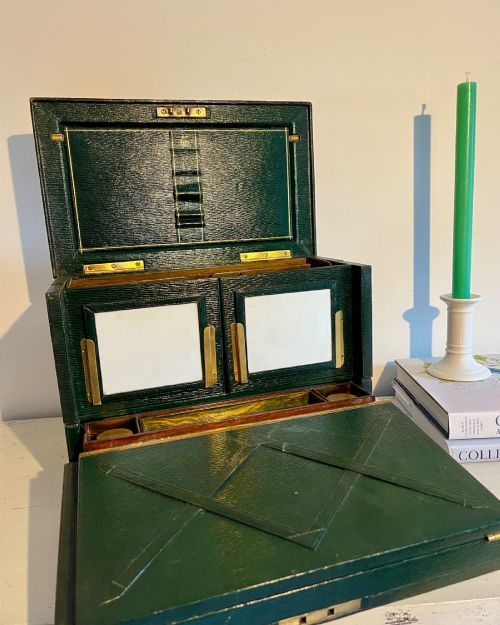
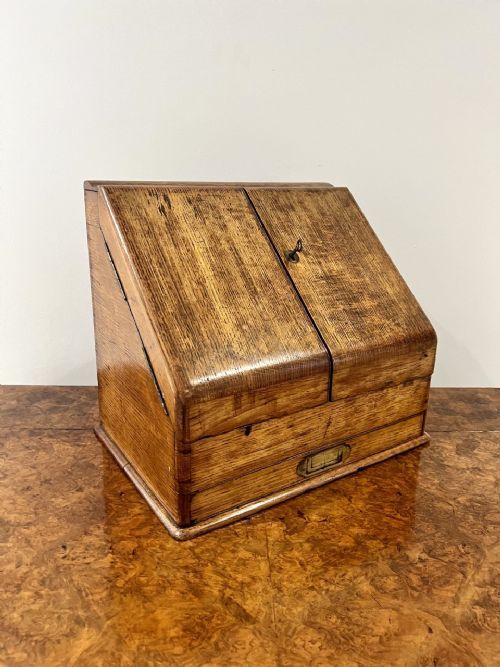
An antique desk compendium box is a fitted desktop receptacle designed to house writing materials, smoking requisites, or games, bringing order to Victorian and Edwardian studies. When searching this phrase, a buyer meets everything from fall-front stationery cabinets in golden oak to novel silver-mounted smoking compendiums shaped like coal wagons and fire carriages.
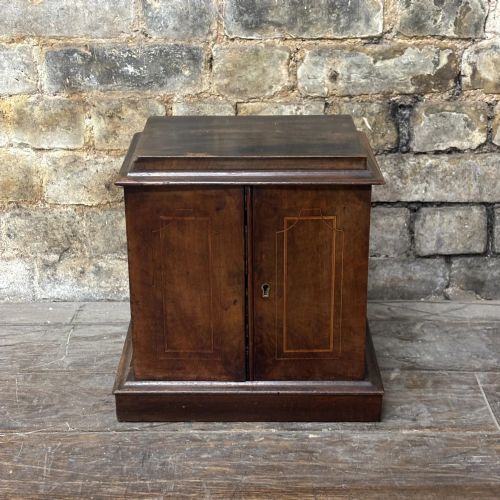
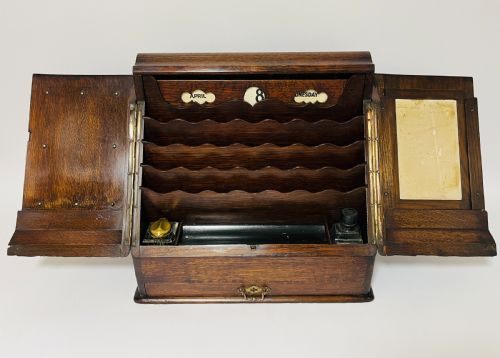
The objects span the nineteenth and twentieth centuries, taking the form of stationery boxes, writing cabinets, and gentleman's cigar cases. Oak, mahogany, and coromandel predominate, often housing adjustable dates, inkwells, and compartments tailored for correspondence.
Makers such as Houghton and Gunn, F Waller, and Mappin and Webb produced these pieces in styles ranging from Arts and Crafts to Victorian Gothic Revival and Meiji period lacquer. The selection balances utilitarian desk tidies with elaborate novelty compendiums intended for display.
How they were made
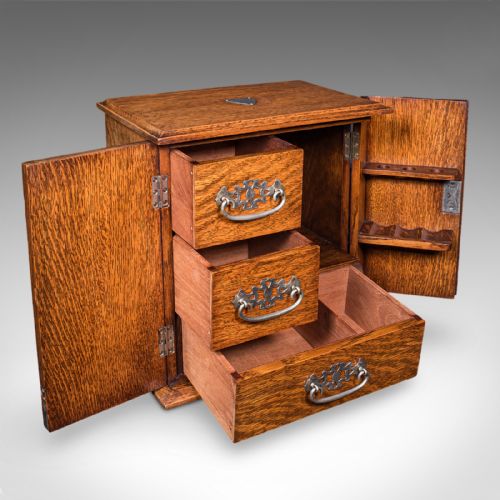
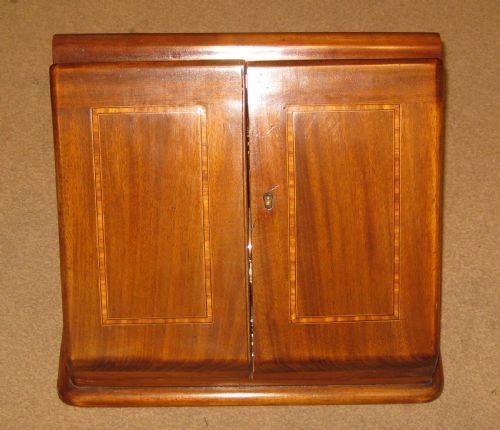
Cabinetmakers constructed these compendiums in hardwoods such as oak, mahogany, walnut, rosewood, and coromandel, frequently utilising fall fronts and drop fronts to conceal internal pigeonholes and drawers. Selected examples incorporate brass hinges, locks, and handles, alongside inlaid veneers.
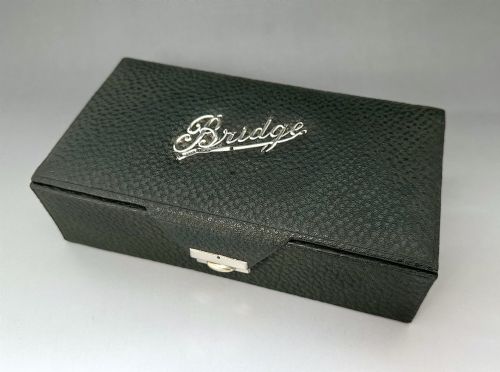
Silversmiths and metalworkers mounted leather, glass, and sterling silver onto frames to create smoking compendiums and bridge boxes. Japanese lacquer work also appears, showing specialist finishing applied to writing boxes.
Listings feature oak, mahogany, walnut, coromandel, and silver across Victorian and Edwardian stationery cabinets and smoking compendiums.
What varies in quality
The calibre of timber selection and cabinet joinery dictates the upper tier of these pieces, seen in figured burr walnut, olivewood, and coromandel rather than plain commercial woods. Superior examples retain original working brass locks, functioning adjustable date mechanisms, and fitted glass or silver elements.
The inclusion of maker's stamps, retail signatures like Houghton and Gunn or Mappin and Webb, and bespoke internal layouts elevate a piece. Novelty compendiums modelled as railway wagons or fire carriages demonstrate greater sculptural ambition than standard stationery boxes.
Houghton and Gunn·Mappin and Webb·F Waller·Hermes Paris
The Antique Desk Compendium Box Glossary
- Stationery cabinet
- A desktop box fitted with vertical dividers, pigeonholes, and shelves designed to organise letters, envelopes, and paper. These often feature fall fronts or doors that lock.
- Smoking compendium
- A desktop cabinet or fitted case dedicated to tobacco storage, housing cigars, cigarettes, matches, and pipes. They frequently incorporate sterling silver mounts and glass wells.
- Fall front
- A hinged panel that folds downward to reveal an interior writing surface or compartments. It secures the contents when closed and locked.
- Bridge box
- A specialised container designed to hold playing cards, score pads, and pencils for the card game bridge. They often feature leather coverings and silver mounts.
- Coromandel
- A dense, heavily figured exotic timber from Asia with dark brown and black grain patterns. It was favoured for high-end Victorian luxury boxes.
Antique Desk Compendium Box: Frequently Asked Questions
What is an antique desk compendium box?
An antique desk compendium box is a fitted desktop cabinet or box designed to organise stationery, smoking items, or writing materials. These pieces provide compartmentalised storage for correspondence and desk accessories.
They date primarily from the Victorian and Edwardian eras, appearing in woods like oak, mahogany, and coromandel with brass and silver fittings.
How were stationery cabinets used?
Stationery cabinets were kept on desks to hold writing paper, envelopes, stamps, and ink supplies in an orderly fashion. Drop fronts and fall-front doors kept private correspondence concealed.
Many included adjustable date calendars or small drawers for pens and seals, serving as the central hub for Victorian correspondence.
How do I date a desk box?
Dating relies on timber choices, construction techniques, and accompanying hardware such as brass locks and hinges. Victorian pieces often use heavy oak and mahogany with Gothic or Arts and Crafts influences.
Edwardian examples tend towards lighter woods and specific novelty designs, while maker labels and silver hallmarks provide exact decades.