


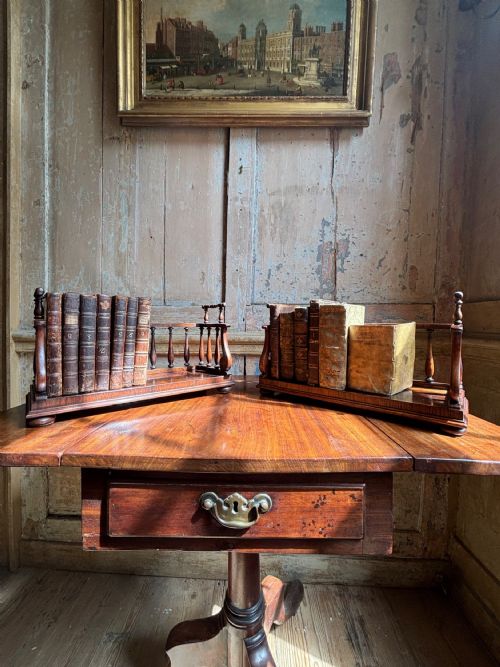


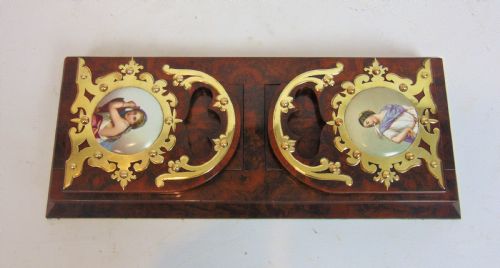


Antique Desk Book Slide
An antique desk book slide keeps ledgers, volumes and reference books tidy on a writing surface, offering a clever expanding mechanism that every library or bureau needs.
Antique Desk Book Slide
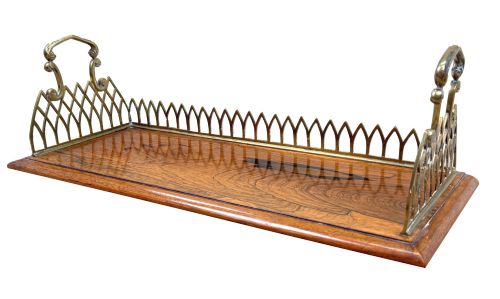
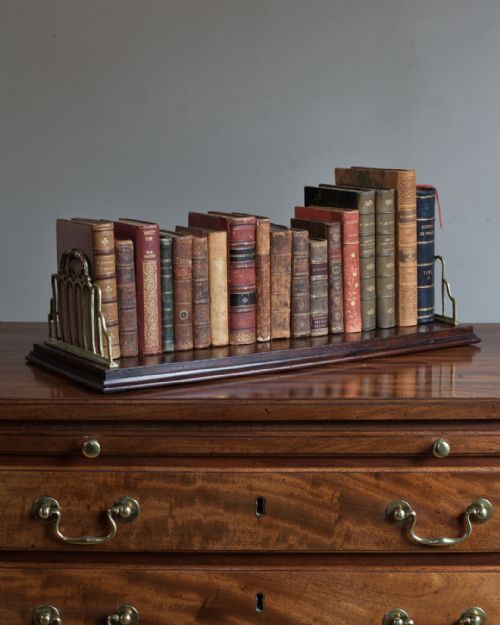
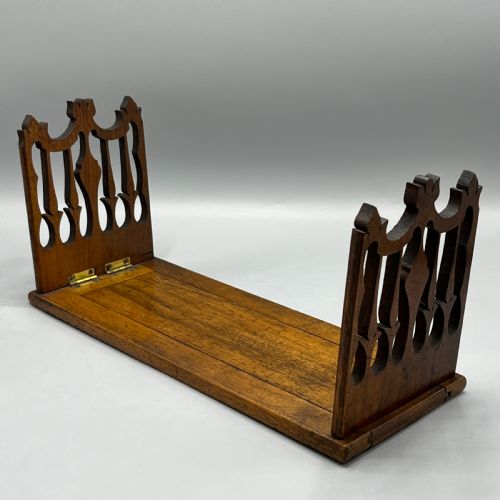
An antique desk book slide sits upon a writing table or library desk to hold volumes upright between two hinged or sliding ends. The design expands or retracts to accommodate varying numbers of books, serving as a functional desk accessory for the study.
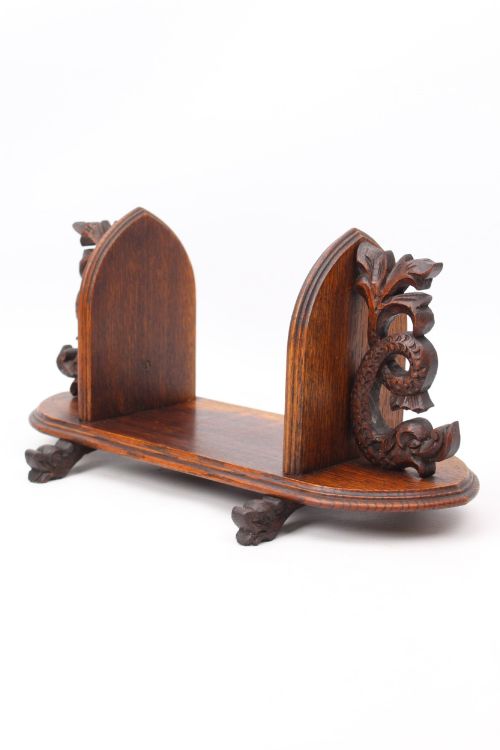
The versions met most frequently on this page belong to the Victorian period, though examples stretch from the Regency era into the early twentieth century. Makers fashioned them from timbers including walnut, rosewood, oak and coromandel, often mounting them with brass or incorporating decorative panels.
Alternative forms in the listings include book stands, book racks, book rests and bookends, alongside occasional desk sets and reading stands. These pieces range from simple, robust timber racks to elaborate designs featuring Tunbridge ware, porcelain plaques or patent actions.
Materials and construction
Cabinetmakers utilised dense hardwoods like walnut, rosewood and oak for the main body and expanding leaves of the desk book slide. Many examples employ exotic timbers such as coromandel and olive wood, occasionally displaying intricate Tunbridge ware mosaic decoration or carved teak.
Brass mountings provide structural reinforcement and decorative contrast, frequently appearing as hinges, bracket feet or applied strapwork. Some pieces incorporate painted porcelain plaques, bone, boxwood or ormolu mounts to enhance the visual appeal of the desk accessory.
Patent mechanisms, such as those associated with Betjemanns, rely on internal folding actions or sliding tracks concealed within the wooden base. These mechanical elements allow the sides to move smoothly outward while keeping the book rest stable on the desk.
Antique Desk Book Slide Retail Price Guide 2026
Typical asking prices for desk book slide among the pieces listed under this phrase on Sellingantiques today, from the lower quarter to the upper quarter. They describe what is for sale here now, not the wider market.
The site records various object forms including book slides, desk accessories, bookends, book stands, book racks and book rests.
Distinctions in quality
The caliber of an antique desk book slide depends heavily on the choice of timber and the precision of its expanding mechanism. Finer pieces display figured grain, such as burr walnut or richly grained coromandel, paired with substantial brass mounts rather than thin plated alternatives.
Decorative embellishments separate standard utility items from high-end library accessories. Examples featuring hand-painted porcelain plaques, intricate Tunbridge ware mosaics or specialised patent actions demonstrate a higher level of craftsmanship from the maker.
The integrity of the folding or sliding action dictates daily usability. A superior piece operates smoothly without slack in the joints, maintaining rigid support for heavy volumes whether fully extended or closed.
Gillows·Betjemanns·Tiffany and Co
The Antique Desk Book Slide Glossary
- Extending book slide
- A desk accessory with a moving base that lengthens to hold more volumes. The sides remain upright as the central platform stretches.
- Tunbridge ware
- Woodwork decorated with tiny mosaic tesserae forming geometric or pictorial patterns. Craftsmen in Kent produced these characteristic inlaid desk items.
- Coromandel
- A dense, dark brown timber with contrasting black grain imported from Asia. Cabinetmakers favoured it for luxury Victorian library pieces.
- Patent mount
- Mechanical hardware registered by an inventor to improve sliding or folding functions. These metal additions often bear maker stamps on the brasswork.
- Gothic Revival
- A nineteenth-century design style drawing inspiration from medieval architecture. Pieces in this taste often feature pointed arches, cusping and heavy oak construction.
Antique Desk Book Slide: Frequently Asked Questions
How do desk book slides work?
An antique desk book slide uses a concertina action or overlapping wooden leaves that pull apart to increase the length of the base. This allows the user to fit more volumes between the two stationary or hinged ends.
As the platform extends, internal brass linkages or wooden tracks keep the upright ends parallel. This mechanism ensures books stay supported even when the shelf is adjusted on the desk.
Were these used only for books?
Libraries and offices utilised these pieces for holding ledgers, account books and daily reference volumes close at hand. They kept heavy bindings upright on flat surfaces without needing full wall shelving.
Beyond working desks, Victorians placed them on occasional tables and parlor surfaces to display current reading material. Their compact footprint suited domestic spaces where large bookcases were impractical.
How do I date a book slide?
Dating relies on timber choices, decorative styles and patent stamps found on the brass hardware. Regency and early nineteenth-century examples often feature rosewood with simple brass inlay, while mid-Victorian pieces frequently incorporate walnut and brass mounts.
Later Edwardian and 1920s versions tend towards simpler oak or imported woods like Kashmiri carvings. Patent dates stamped onto the metalwork provide a reliable point of reference for manufacture.
What maintenance do wooden slides need?
Wooden desk accessories require a stable indoor environment away from direct heat sources and strong sunlight. Applying a traditional wax polish occasionally preserves the finish of walnut, rosewood and coromandel timbers.
Moving brass mechanisms benefit from remaining clean and free of dust to ensure smooth sliding action. Gentle handling of extending leaves prevents strain on the internal nineteenth-century joints.