






Antique Delft Platter
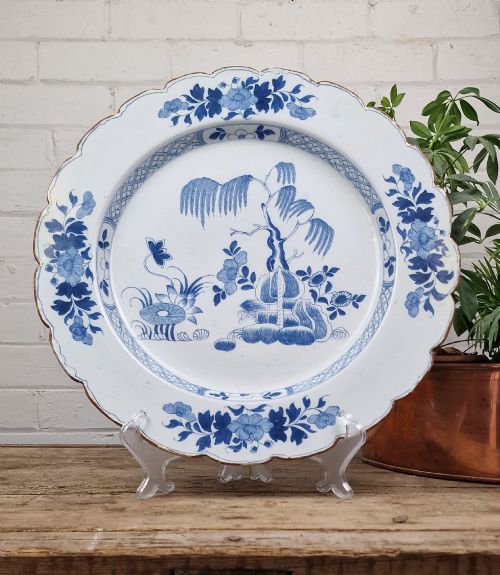
An antique delft platter brings broad tin-glazed earthenware circles into a room, offering bold blue and white patterns that catch the eye on any wall or surface.
Antique Delft Platter
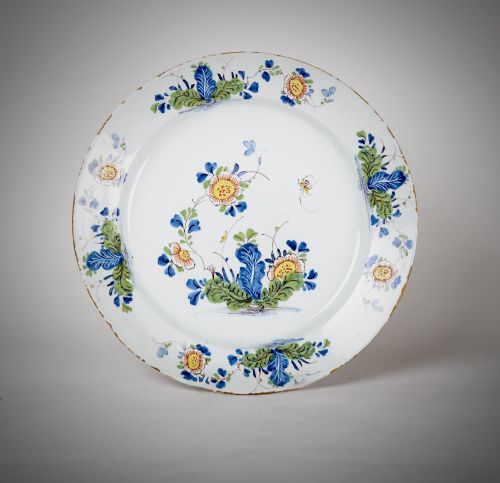
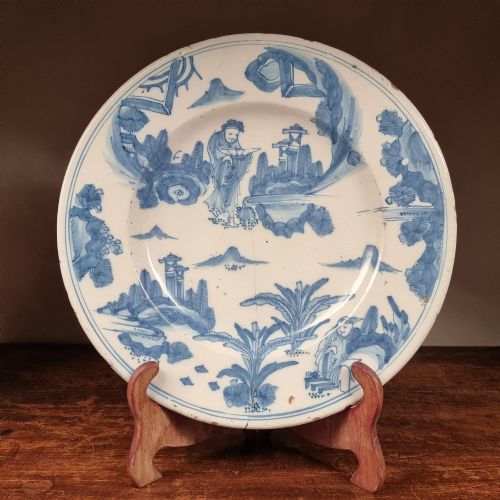
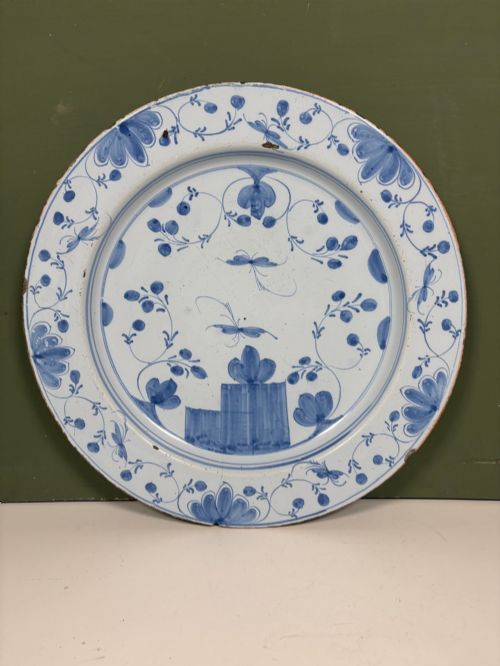
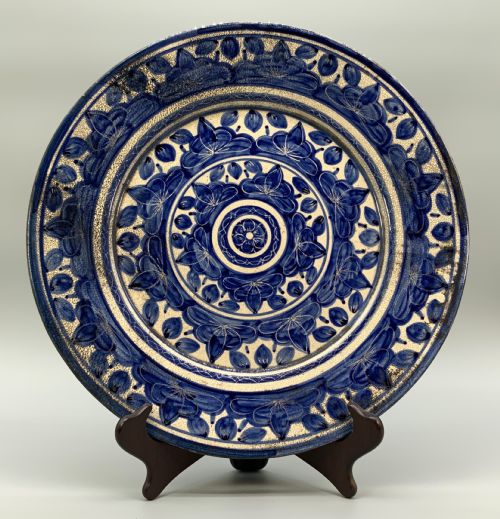
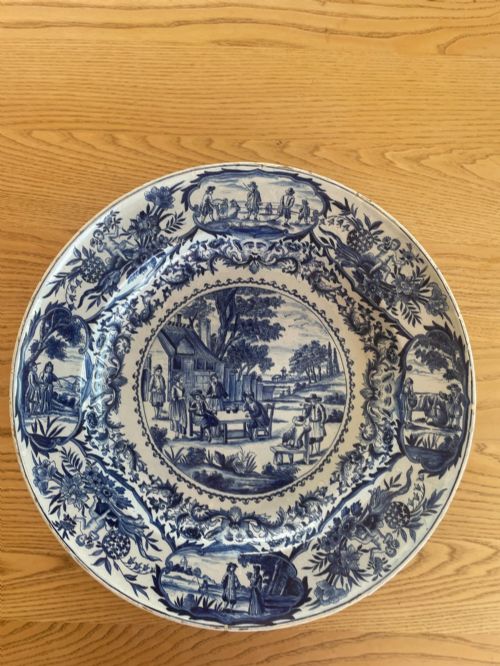
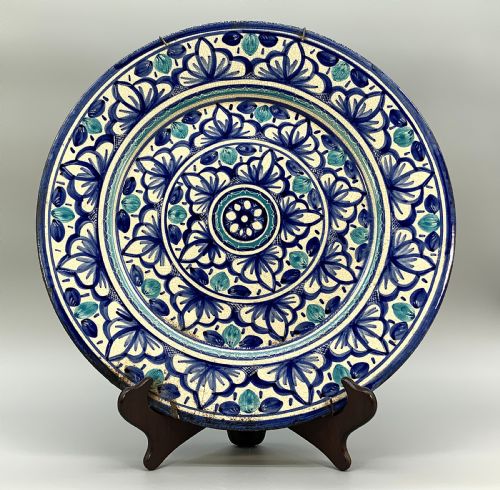
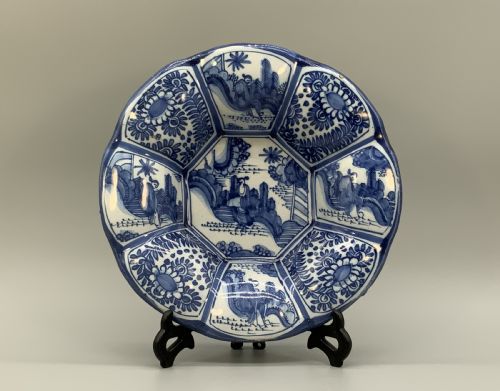
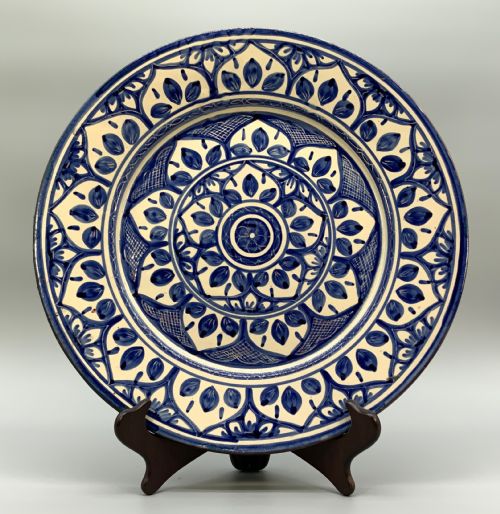
An antique delft platter takes the form of wide chargers and decorative plates designed primarily for display rather than dining. These substantial ceramic pieces span several centuries, appearing in forms from deep circular dishes to lobed serving vessels.
The selections encountered here stretch across the seventeenth, eighteenth, and nineteenth centuries, alongside mid-twentieth-century Continental pieces. English workshops, Dutch kilns, and French faience centres all contributed to this diverse group of ceramics.
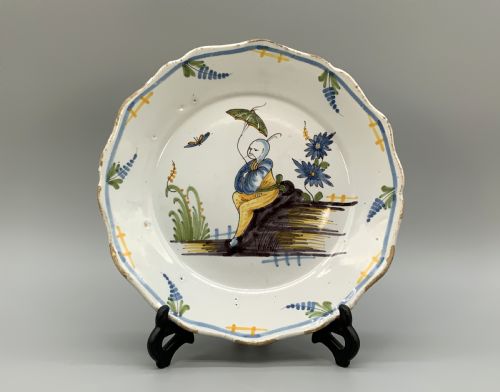
Buyers will find blue and white designs dominating the selection, supplemented by manganese, yellow, and polychrome palettes. Styles range from traditional Dutch Baroque and Kraak-influenced motifs to Moorish revival patterns and Chinoiserie scenes.
Materials and construction
Potters formed these platters from earthenware clay, applying a distinctive tin-glazed surface that provided an opaque white background for painting. This tin glaze served as the canvas for liquid pigments containing cobalt oxide or manganese.
Makers applied cobalt pigment directly onto the unfired or raw glaze in processes such as grand feu firing, allowing the colour to fuse with the tin layer. Polychrome examples incorporated additional mineral pigments to introduce yellow and other hues before the final glaze firing.
Antique Delft Platter Retail Price Guide 2026
Typical asking prices for delft platter among the pieces listed under this phrase on Sellingantiques today, from the lower quarter to the upper quarter. They describe what is for sale here now, not the wider market.
Distinguishing quality in delftware
The crispness of the painted brushwork defines the upper tier of these platters, where cobalt pigment or manganese flows with surety and precision. Finer examples display balanced compositions, whether executing intricate Chinoiserie landscapes or complex geometric Moorish revival patterns.
The smoothness and opacity of the tin glaze also signal superior manufacture, showing minimal pitting or pooling across the wide surface of a charger. Greater ambition in the scale of the piece combined with controlled firing results in platters that command attention.
De Witte Ster
The Antique Delft Platter Glossary
- Tin-Glazed Earthenware
- Earthenware pottery covered with a lead glaze made opaque by the addition of tin oxide. This creates the smooth white surface characteristic of delftware.
- Charger
- A large decorative plate or platter intended for display on a wall or dresser rather than for holding food at the table. These wide vessels provide a generous canvas for painted scenes.
- Grand Feu
- A ceramic firing technique executed at high temperatures where pigments sink into the raw tin glaze. This method produces deep integration of the cobalt blue with the white ground.
- Manganese
- A metallic oxide pigment used on tin-glazed earthenware to produce purple, brown, or plum tones. It often appears alongside or instead of cobalt blue on eighteenth-century pieces.
- Chinoiserie
- European artistic styles reflecting Chinese motifs and landscapes. These whimsical designs frequently decorate blue and white delft chargers from the seventeenth and eighteenth centuries.
Antique Delft Platter: Frequently Asked Questions
How were delft platters used?
These large ceramic circles served primarily as decorative chargers rather than functional tableware. Owners mounted them on walls or displayed them prominently on dressers to showcase their painted scenes.
Their substantial size made them focal points in domestic interiors, protecting the walls while adding colour and pattern to the room.
How do I tell English and Dutch delft apart?
English delft chargers often exhibit slightly different clay bodies and glaze characteristics compared to their Dutch counterparts. Bristol and other English centres developed distinct palettes and potting techniques during the eighteenth century.
Examining the foot ring, rim shape, and the tone of the tin glaze helps distinguish between the workshops of different regions.
What causes the different colours on these platters?
Cobalt pigment creates the iconic deep blue shades seen on most traditional delftware. Other minerals, such as manganese, produce rich purple and brown tones.
Polychrome examples combine these metallic oxides with yellow pigments to create multi-coloured floral and figurative compositions.
How should I display an antique charger?
Antique platters require secure wall hangers designed specifically for heavy earthenware dishes. Placing them away from direct sunlight preserves the integrity of the tin glaze and painted pigments.
Ensure the mounting hardware supports the full weight of the charger without putting undue pressure on the rim.